

Why Hands-On Medical Assistant Training Matters for Career Success
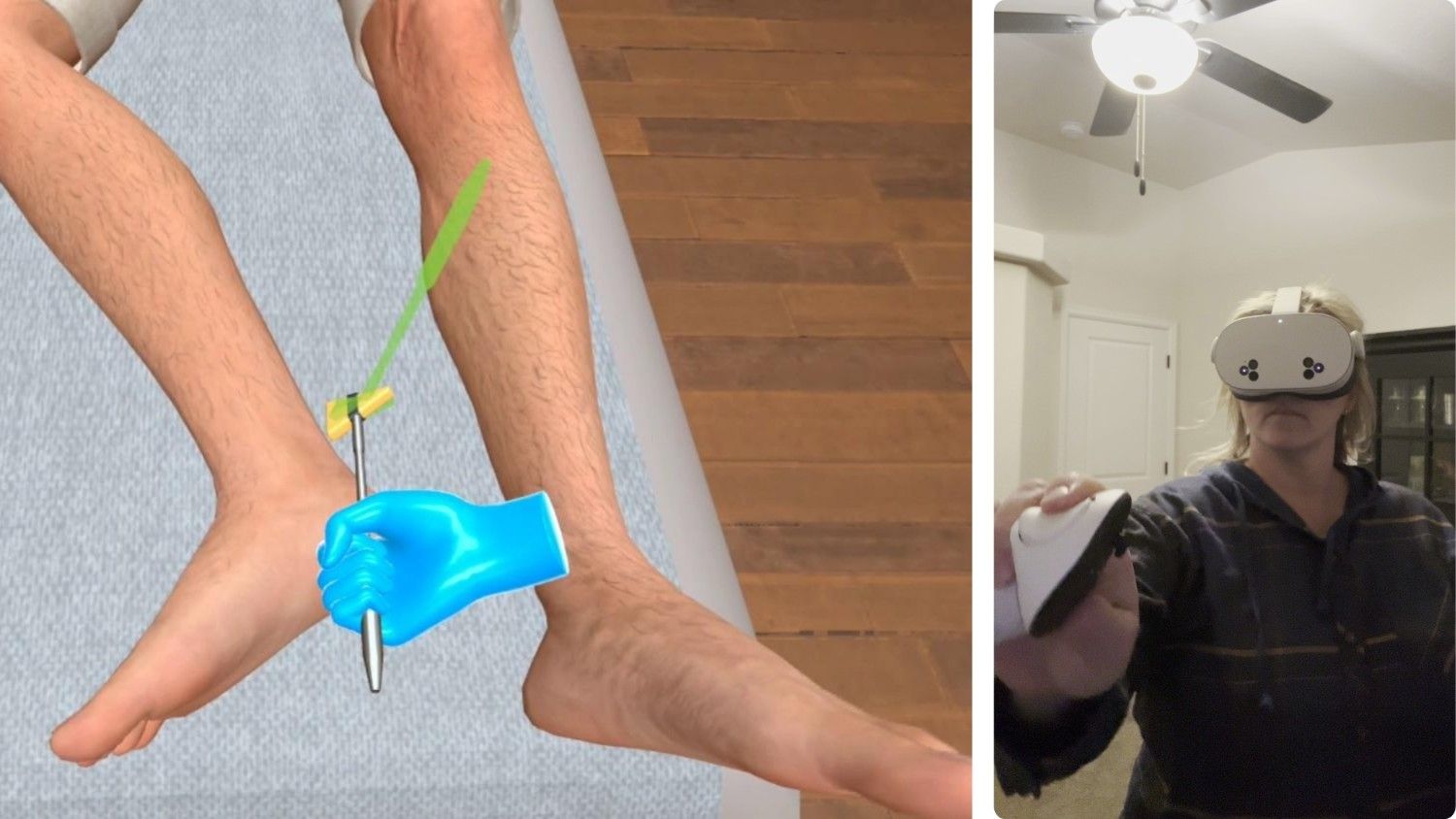
Introduction:
Imagine stepping into your first day as a medical assistant, patients are waiting, equipment is ready, and the healthcare environment moves fast. In that moment, a common question arises: are we prepared to perform hands-on patient care tasks, or only confident about passing an exam?
This is where hands-on medical assistant training becomes essential in today’s training programs. While many courses focus heavily on classroom instruction and certification goals, real workplace settings require practical skills, sound judgment, and confidence under pressure. Employers today seek job-ready medical assistants with real clinical experience who can contribute effectively from day one.
In this guide, we explain why practical training matters, what effective experiential learning includes, and how applied clinical experience strengthens confidence, career readiness, and long-term employer trust within the healthcare industry.
What Hands-On Medical Assistant Training Really Means
Many students assume hands-on training involves limited lab demonstrations or passive observation. In reality, hands-on medical assistant training is far more immersive. Learners actively participate in realistic patient-care scenarios where they apply medical knowledge, make informed decisions, and perform essential procedures, just as they would in real healthcare environments.
Key Components of Effective Hands-On Training:
- Clinical simulations that replicate exam rooms, medical equipment, and daily clinical workflows
- Patient interaction practice focused on communication skills, professionalism, and quality patient care
- Procedure-based learning with repeated practice to build accuracy, confidence, and skill mastery
This structured approach shifts students from memorization to true skill development. Instead of asking, “What is the correct step?” we learn to think, “How do we perform this procedure safely, efficiently, and confidently in a real clinical environment?”
This mindset is essential for patient-facing healthcare roles, where practical readiness, confidence, and hands-on experience directly influence patient outcomes and employer expectations.
Medical Assisting Is a Skill-Based Healthcare Career
Medical assisting is not a desk-based role. We work in a hands-on healthcare environment where daily performance directly affects patient safety, procedural accuracy, and clinic efficiency, making practical medical assistant training essential for real-world success.
In this role, professionals must consistently demonstrate job-ready skills, including:
- Acting quickly without constant supervision
- Following patient-care protocols with precision
- Confidently handling patients and healthcare equipment
- Remaining calm in fast-paced clinical environments
Medical assistants focus on execution, delivering patient care safely, efficiently, and consistently. Because even small errors can impact patient outcomes, accuracy, speed, confidence, and hands-on ability are just as important as theoretical understanding.
According to the U.S. Bureau of Labor Statistics, medical assistant employment is projected to grow 12% from 2024 to 2034, with over 100,000 job openings annually, reflecting strong demand for job-ready professionals with practical, hands-on training.
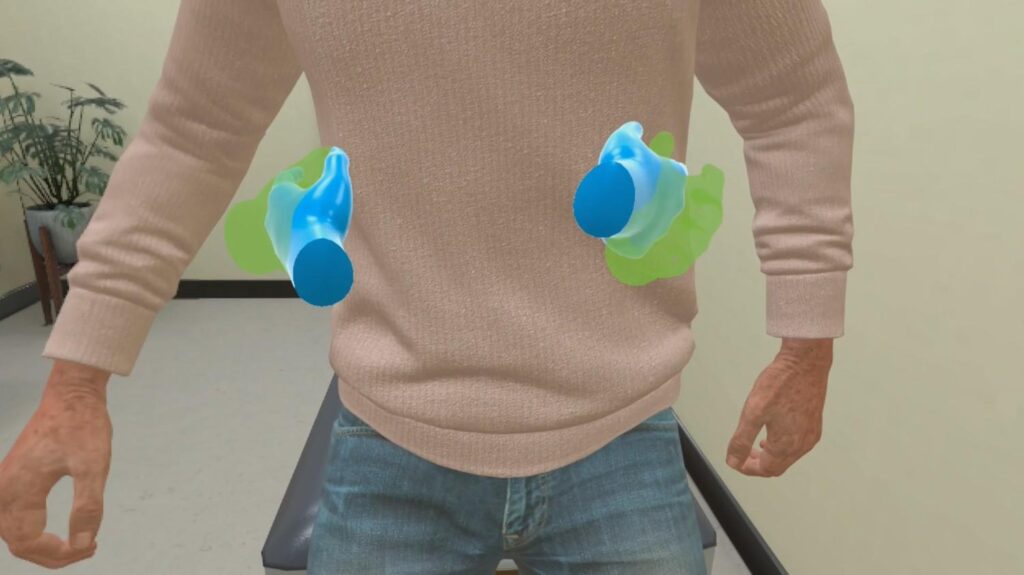
Limitations of Theory-Only Medical Assistant Programs
Many medical assistant programs focus heavily on classroom theory to meet certification requirements. Without hands-on medical assistant training, graduates often struggle to apply knowledge in real healthcare settings, resulting in lower confidence, weaker practical skills, and limited patient care readiness.
i) Underconfident Certified Graduates:
Theory-heavy programs may build conceptual understanding, but without regular hands-on practice, graduates often lack confidence performing clinical procedures independently, especially in fast-paced environments where accuracy and speed matter.
ii) Employer Concerns About Job Readiness:
Employers expect job-ready medical assistants from day one. When practical clinical experience is missing, new hires require more supervision, workflows slow down, and onboarding and training costs increase for healthcare facilities.
iii) On-the-Job Anxiety in Clinical Settings:
Limited experiential exposure during education can lead to hesitation when working with patients, equipment, or routine clinical workflows. This uncertainty may affect performance, collaboration, and the overall quality of patient care delivery.
How Hands-On Medical Assistant Training Builds Clinical Confidence
Hands-on medical assistant training builds real clinical confidence through repeated, guided practice in safe learning environments. Consistent performance of clinical tasks helps develop muscle memory, reduce errors without patient risk, and shift focus from memorizing steps to delivering accurate care and efficient workflow execution.
During externships, tasks such as measuring vital signs are practiced until they become second nature. This practical exposure improves comfort, precision, and professionalism, enabling graduates to perform their duties confidently and without hesitation.
As a result, job-ready medical assistants communicate effectively, work efficiently, and collaborate smoothly within multidisciplinary healthcare teams, preparing them for real-world care settings from day one.
Learn more: Clinical Medical Assistant Training at ImmerseLearn
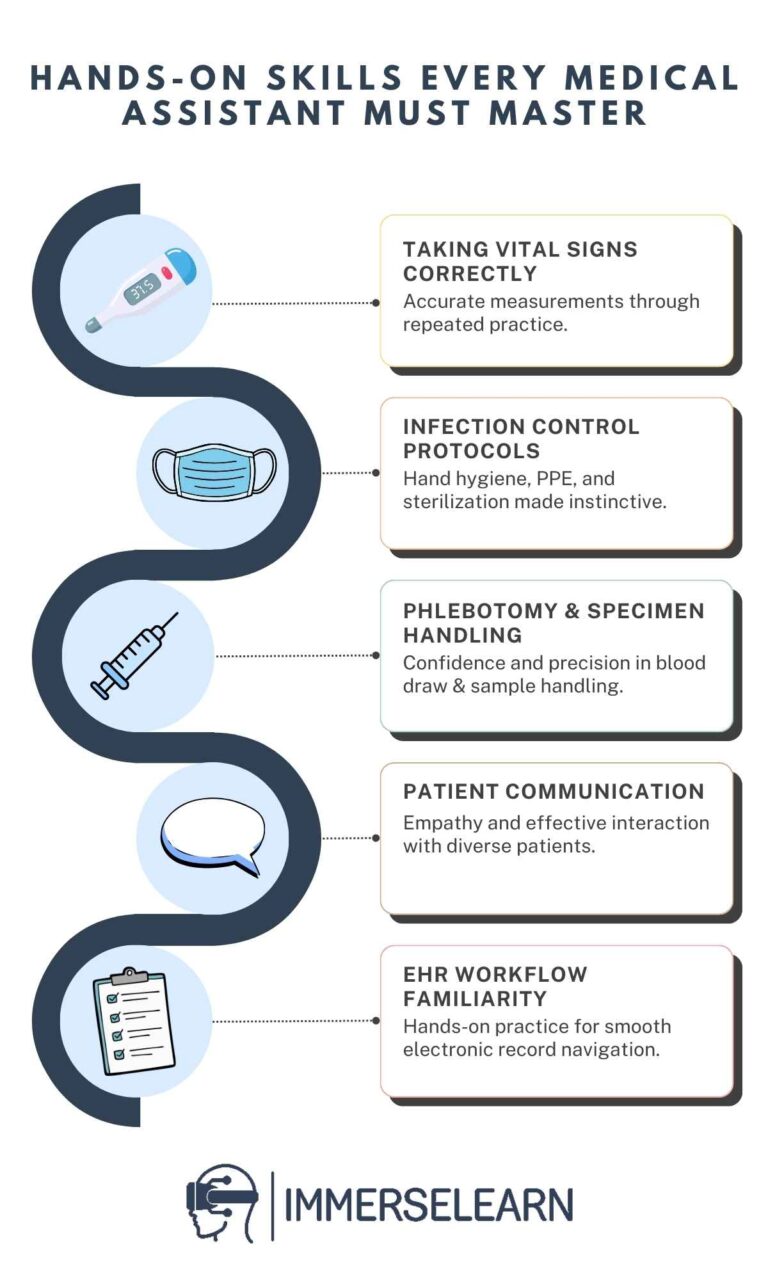
Essential Medical Assistant Skills Through Hands-On Practice
Some medical assistant skills cannot be learned from textbooks alone; hands-on medical assistant training is essential for building real-world clinical skills through direct practice in healthcare settings.
A) Taking Vital Signs: Accurate readings require proper positioning, timing, and patient interaction, which improve through repeated hands-on practice.
B) Infection Control Protocols: Reliable hand hygiene, correct PPE usage, and sterilization techniques require consistent application to meet patient safety standards.
C) Phlebotomy and Specimen Handling: These precision-based tasks demand confidence, proper technique, and steady execution beyond theoretical knowledge.
D) Patient Communication: Working with anxious, elderly, or uncooperative individuals strengthens empathy, clarity, and professionalism through direct care exposure.
E) EHR Workflow Familiarity: Efficient electronic health record navigation develops through real system use and workflow experience, not classroom-based learning.
Reading alone is not sufficient. Through practical, skill-based education, aspiring medical assistants develop competence, confidence, and job-ready abilities required for modern healthcare roles.
The Role of Simulation and Immersive Learning in MA Training
Simulation and immersive learning play a critical role in hands-on medical assistant training by providing safe, realistic practice environments. Using tools such as virtual reality (VR) and simulated care settings, learners develop procedural accuracy, patient interaction skills, and sound decision-making, without risk to real patients.
Through repeated exposure to real-world clinical scenarios, learners build confidence, sharpen practical skills, and gain job readiness beyond classroom-based theory.
Key Benefits of Simulation-Based MA Training
1) Safe Practice: Medical assistants can make mistakes, learn, and improve without compromising patient safety.
2) Realistic Scenarios: Simulated environments closely reflect real clinical workflows and healthcare challenges.
3) Stress-Free Repetition: Clinical tasks can be practiced repeatedly until accuracy, proficiency, and confidence are achieved.
By bridging the gap between theory and real-world readiness, simulation-based learning has become an essential component of modern medical assistant education.
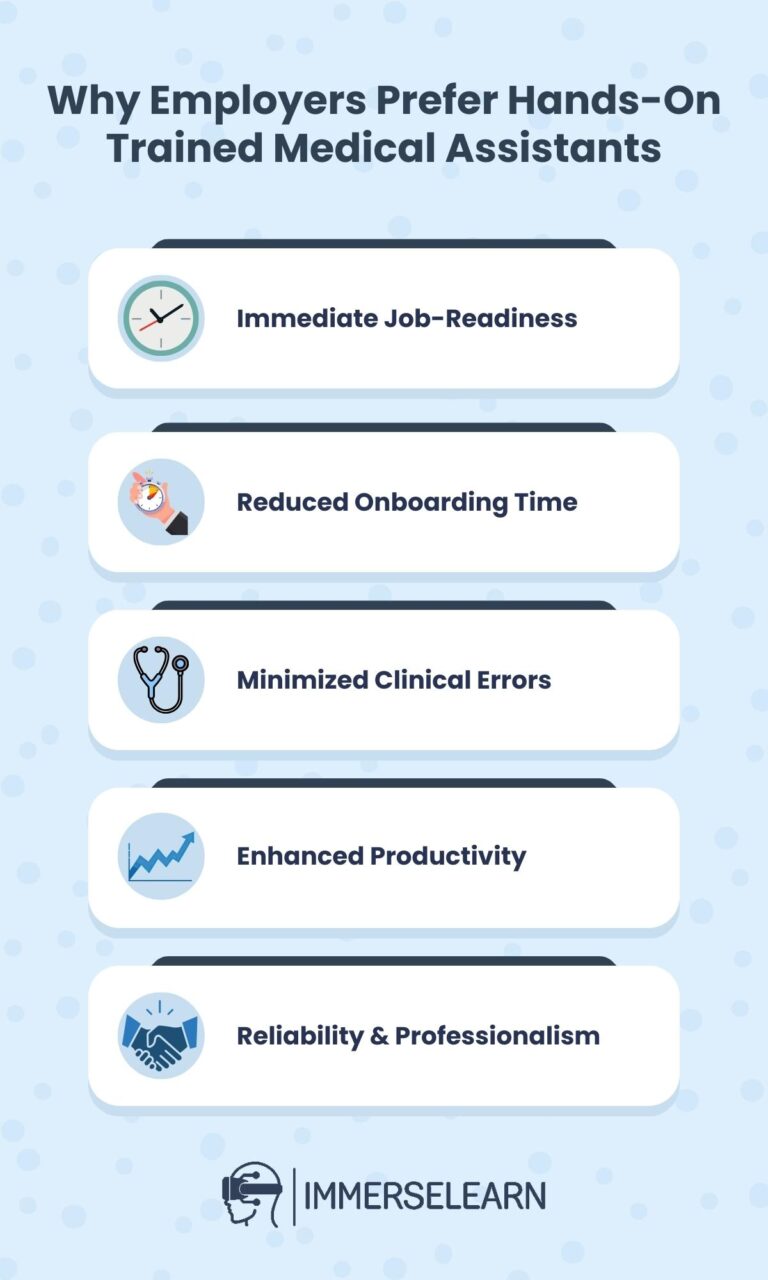
Why Employers Prefer Hands-On Medical Assistants
Employers prefer graduates with hands-on medical assistant training because they can perform confidently and accurately in fast-paced healthcare settings from day one. Practical clinical experience reduces onboarding time, minimizes errors, and improves productivity.
Job-ready medical assistants adapt quickly to clinical workflows, contribute effectively to team-based care delivery, and require minimal supervision. This level of preparedness reflects reliability, professionalism, and strong patient-support capabilities, advantages that theory-focused programs alone often fail to deliver.
How Hands-On Training Improves Certification Readiness
Hands-on medical assistant training provides practical exposure that directly strengthens certification success and long-term career readiness. By actively performing clinical tasks, we build confidence and proficiency that translate into stronger exam performance, smoother clinical externships, and better preparation for our first professional roles.
Unlike theory-only programs, hands-on training enables medical assistants to use their knowledge in real-world settings, reducing anxiety while improving accuracy, speed, and professionalism, qualities employers expect from job-ready graduates.
What to Look for in a Hands-On Medical Assistant Program
Choosing the right hands-on medical assistant training program is essential for becoming confident and job-ready from day one. It’s important to ensure the program prepares students for real-world clinical work, not just certification exams.
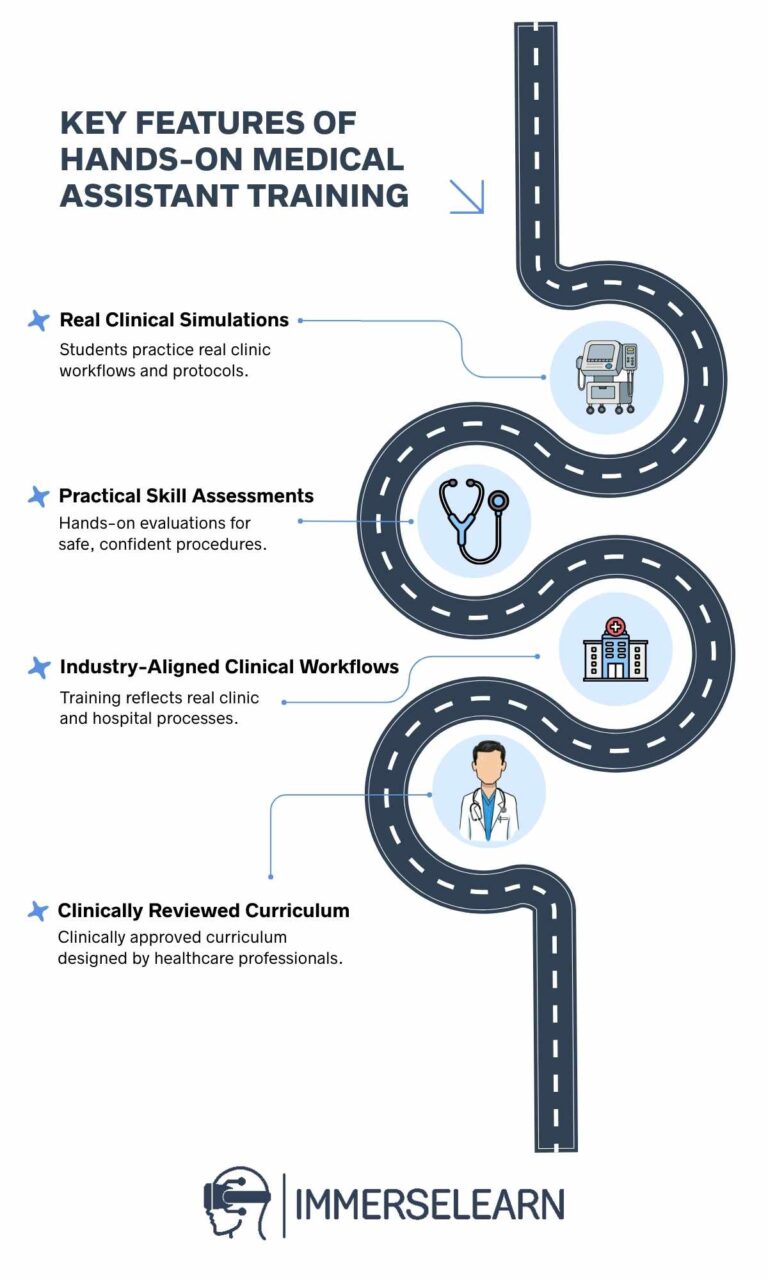
Key Factors to Evaluate in a Medical Assistant Program:-
i) Real Clinical Simulations:
High-quality medical assistant programs offer realistic clinical simulations that mirror actual healthcare settings. Students practice full clinical workflows using medical equipment, following protocols, and responding to real-world scenarios, effectively bridging classroom learning and hands-on patient care.
ii) Skill-Based Practical Assessments:
Effective programs evaluate performance through applied assessments rather than theory-only tests. These assessments typically focus on:
- Demonstrating procedures such as vital sign measurement
- Maintaining accuracy, safety, and proper technique
- Applying knowledge in scenario-based evaluations
- Verifying practical competence beyond written exams
This approach ensures graduates can perform essential duties safely and efficiently in real workplace settings.
iii) Industry-Aligned Clinical Workflows:
Strong programs teach clinical workflows aligned with modern clinics and hospitals, including current care practices, documentation standards, and team-based delivery models. This alignment supports smoother transitions into externships and entry-level roles.
iv) Clinically Reviewed Curriculum
The curriculum is developed and thoroughly reviewed by professionals with real clinical experience. Each course module, skill area, and learning outcome is evaluated and approved to ensure clinical accuracy, relevance, and alignment with real healthcare environments.
Explore our Hands-On Medical Assistant Training built to real clinical standards.
Frequently Asked Questions (FAQs):
Q1) What is hands-on training in a medical assistant program?
Hands-on medical assistant training involves performing essential clinical tasks such as taking vital signs, assisting with examinations, using medical equipment, and interacting with patients through labs, simulations, and supervised clinical settings, preparing students for real healthcare environments.
Q2) Why is practical training important for medical assistants?
Because medical assisting is a skill-based profession, applied experience is essential. It helps students translate knowledge into action, follow established care protocols accurately, and work confidently in fast-paced patient care environments.
Q3) How does practical exposure improve clinical confidence?
Repeated real-world practice strengthens confidence by building muscle memory, reducing performance anxiety, and allowing learners to focus on safe workflows, accuracy, and high-quality patient outcomes.
Q4) Do employers prefer medical assistants with real-world experience?
Yes. Employers favor candidates with applied healthcare experience because they adapt more quickly, require less supervision, and can contribute safely and effectively from their first day on the job.
Conclusion:
We believe medical assisting is best learned by doing, not memorizing. Hands-on medical assistant training builds real clinical confidence, enabling learners to perform accurately, efficiently, and calmly in fast-paced healthcare settings.
Programs that emphasize simulations, supervised patient interactions, and skill-focused instruction prepare learners for everyday clinic and hospital workflows. This approach reduces workplace anxiety, improves job readiness, and supports safe, high-quality care delivery.
For long-term success in this career path, applied learning, not just passing certification exams, helps graduates become capable, confident, and ready to perform from day one.
Ready to turn your medical assistant skills into real clinical confidence?