

Medical Assistant Simulation Training: How VR Clinical Practice Works
In today’s evolving healthcare landscape, Clinical Medical Assistants play an essential role in bridging patient care, clinical procedures, and administrative efficiency. The demand for skilled medical assistants continues to grow, but employers are looking for more than just textbook knowledge, they seek confident, practice-ready professionals who can step into clinical settings with skill and assurance.
At ImmerseLearn, this is exactly the kind of readiness we cultivate. Our Clinical Medical Assistant program, aligned with the National Healthcareer Association (NHA) CCMA exam, takes a forward-thinking approach to healthcare education by integrating Virtual Reality (VR) simulations with hands-on career preparation. This blend of immersive technology and targeted career services equips learners to transition smoothly from the virtual lab to real-world patient care.
This blog explores how ImmerseLearn’s medical assistant program transforms learners into capable, confident, and trained healthcare professionals.
Understanding the Role of the Clinical Medical Assistant
Clinical Medical Assistants are the backbone of ambulatory care. They support physicians, nurses, and patients in a variety of healthcare settings such as clinics, physician offices, and outpatient centers. Their responsibilities span both clinical and administrative functions, including:
- Taking patient histories and vital signs
- Preparing exam rooms and instruments
- Assisting with diagnostic tests and minor procedures
- Administering medications under supervision
- Performing EKGs and specimen collection
- Managing patient records and scheduling
This blend of technical proficiency and compassionate care makes medical assisting one of the most versatile and rewarding entry points into healthcare. However, it also requires rigorous training, precision, and confidence, qualities that ImmerseLearn’s immersive education model is built to develop. For a closer look at the full career path, see how to become a clinical medical assistant.
Why Virtual Reality Is the Future of Medical Assistant Training
Traditional medical assistant training relies heavily on classroom lectures, videos, and limited lab exposure. While these methods build theoretical knowledge, they often leave learners underprepared for the unpredictable nature of real patient interactions.
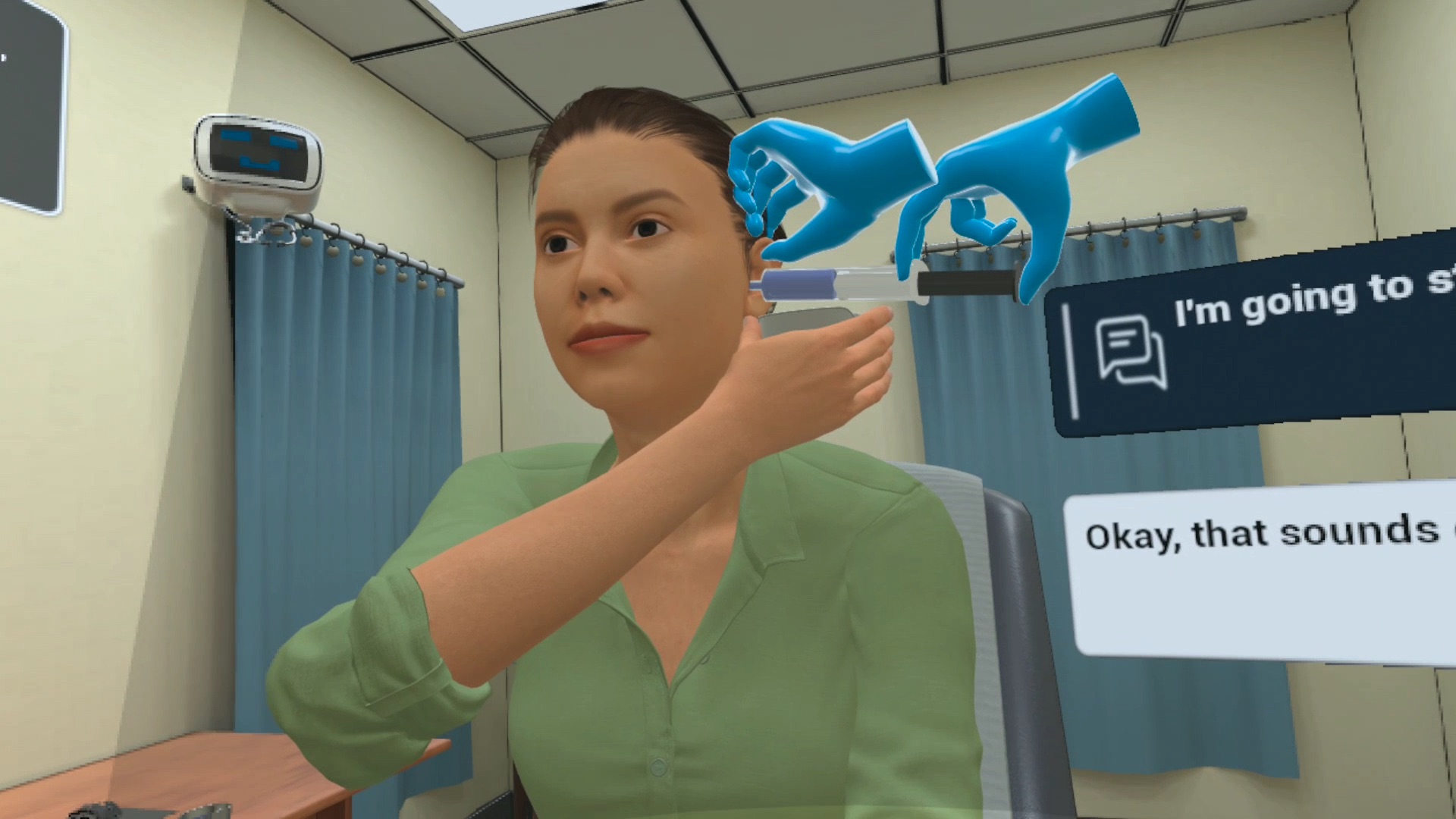
ImmerseLearn transforms this experience through Virtual Reality simulations that replicate actual healthcare environments and patient scenarios. Learners engage directly in realistic, interactive settings that mirror clinical practice. Using VR headsets and guided modules, students gain Clinical Medical Assistant training program in realistic scenarios, performing clinical tasks, making critical decisions, and observing outcomes in a safe, controlled learning space.
1. Immersive Learning Environments:
Each VR module is designed around real-world tasks a medical assistant will encounter. Learners can practice preparing exam rooms, performing injections, conducting EKGs, or interacting with simulated patients who display a range of emotions, symptoms, and needs.
This environment gives learners the opportunity to make mistakes, learn from them, and repeat procedures until proficiency is achieved. Unlike static demonstrations, VR encourages active participation and builds procedural memory, an essential trait for healthcare workers.
2. Immediate Feedback and Skill Reinforcement:
In VR, learners receive real-time feedback. For example, if a learner misidentifies a vein during a phlebotomy simulation or uses improper aseptic technique, the system highlights the error and provides corrective guidance.
This form of immediate skill correction reinforces learning far more effectively than post-activity reviews, helping students internalize proper protocols and safety standards.
3. Confidence Building Through Realistic Repetition:
Repetition in VR allows learners to gain confidence without the stress of working on live patients. By the time they enter real-world healthcare environments, they are not performing a skill for the first time; they have already completed it multiple times in a simulated, lifelike environment. This translates to calmness, precision, and professionalism in real patient care situations.
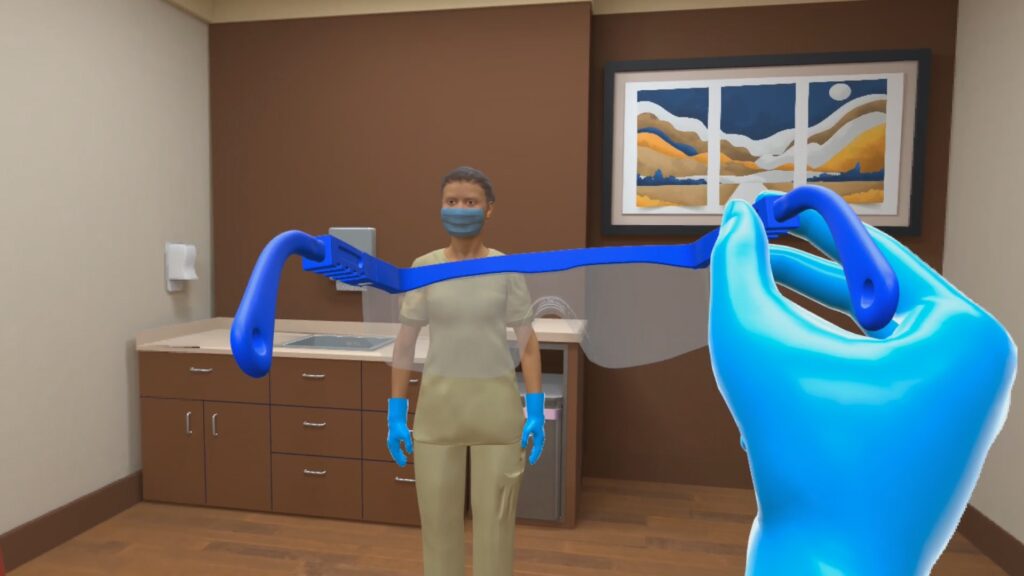
Learning the proper use of PPE is vital for a Medical Assistant.
Medical Assistant Training Curriculum for Real-World Success
ImmerseLearn’s Medical Assistant Education Program is structured to cover every major competency outlined by the NHA and employer expectations. The curriculum balances theoretical knowledge with experiential practice and certification preparation.
Key Learning Areas:
- Medical Terminology and Anatomy: Understanding the language of healthcare and the human body systems that underpin every clinical action.
- Clinical Procedures: Hands-on practice in vital signs, specimen collection, injections, and basic laboratory tests.
- Phlebotomy and EKG Training: Skills that enhance employability and allow graduates to perform specialized clinical tasks.
- Infection Control and Safety: Procedures for maintaining asepsis and preventing contamination in clinical environments.
- Administrative Competencies: Scheduling, billing, and patient documentation using electronic health record systems.
- Patient Care and Communication: Techniques for effective, empathetic patient interaction and care coordination.
- Certification Preparation: Comprehensive review and practice exams aligned with NHA’s Certified Clinical Medical Assistant (CCMA) credential.
This structured, modular design ensures that learners progress systematically from foundational knowledge to advanced competencies, with VR used strategically to enhance each phase of learning.
Aligned with the NHA CCMA Exam: A Mark of Quality and Employability
ImmerseLearn’s medical assistant program, aligned with the NHA CCMA exam, is a significant milestone in its commitment to delivering training that leads to a certificate of completion. The National Healthcareer Association (NHA) is one of the most respected certification bodies for allied health professionals in the United States.
By aligning its curriculum with NHA standards, ImmerseLearn helps graduates build job-ready skills and prepare for the NHA CCMA exam. This dual preparation is a key differentiator: learners graduate with the confidence that their education meets the rigorous expectations of employers and healthcare institutions nationwide.
Benefits of NHA Certification include:
- National recognition and credibility with employers
- Increased job opportunities and earning potential
- Demonstrated commitment to professional standards
- Access to continuing education and recertification pathways
Because the program is aligned with the NHA CCMA exam, ImmerseLearn learners can transition seamlessly from training completion to sitting for the Certified Clinical Medical Assistant (CCMA) exam, a credential that validates both skill and professionalism.
Career Services: Turning Skills into Employment
Training alone is not enough. That’s why ImmerseLearn integrates career development and job placement services into every learner’s journey. From the first day of enrollment to program-completion support, the Career Services team provides a structured pathway toward employment.
1. Career Advising and Goal Setting:
Learners are paired with career advisors who help them clarify professional goals and tailor their learning journey. Advisors guide students in identifying potential employers, understanding local job markets, and preparing application materials that highlight their VR-based competencies.
2. Resume and Portfolio Building:
ImmerseLearn assists learners in translating their training experiences into marketable resumes and portfolios. Students can include their VR skill assessments, module completions, and certification achievements to showcase readiness to employers.
3. Mock Interviews and Soft Skills Coaching:
AI-powered virtual characters conduct mock interviews that reflect real healthcare hiring scenarios. Feedback focuses on communication, empathy, professionalism, and scenario-based responses. Learners gain confidence not only in what they know but in how they present themselves.
4. Employer Connections and Job Placement:
ImmerseLearn collaborates with healthcare organizations, clinics, and staffing partners to match graduates with open positions. This bridge between training and employment shortens the job search process and helps employers connect with skilled, trained talent.
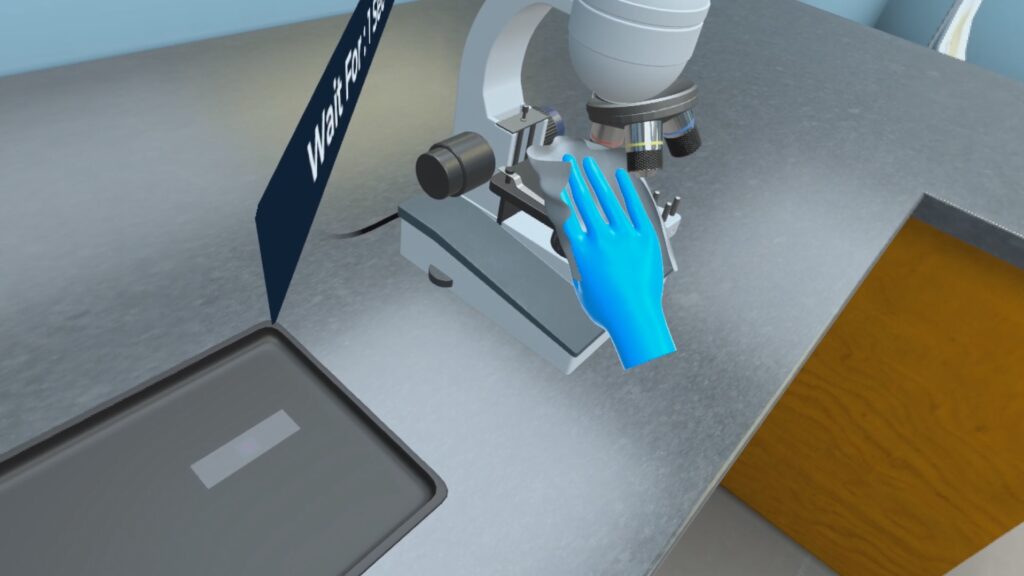
Performing tasks in VR provided hands-on practice and builds confidence for the real job.
Externships: Applying Learning in Real Clinical Settings
After completing their VR-based modules and core coursework, learners transition into externships at approved healthcare sites. This real-world experience allows them to apply skills learned virtually in live patient care settings under supervision.
Externships reinforce professional behavior, teamwork, and adaptability while also providing valuable networking opportunities with potential employers. Some learners connect with employers through their externship sites.
By entering the externship phase with VR experience, students are noticeably more confident and prepared. Prior VR practice can help learners settle into the externship setting.
The Learner Experience: Empowerment Through Immersive Education
ImmerseLearn’s learner experience is centered on empowerment, helping individuals see themselves as capable, employable healthcare professionals from day one.
Each Learner’s Transformative Journey at ImmerseLearn:
- Orientation and Career Mapping: Introduction to program expectations, certifications, and job opportunities.
- Foundational Learning: Building essential knowledge in anatomy, physiology, and terminology through interactive lessons.
- Immersive VR Practice: Performing real-world clinical tasks in VR modules that replicate healthcare scenarios.
- Assessment and Certification Readiness: Completing skill assessments and practice exams aligned with NHA’s CCMA.
- Externship Experience: Gaining supervised clinical exposure in partner facilities.
- Career Launch Support: Resume development, interview coaching, and employer connection.
- Ongoing Mentorship: Access to alumni resources and refresher content for continuous improvement.
This comprehensive structure ensures learners are supported at every stage of their educational and professional journey.
Meeting the Growing Demand for Skilled Medical Assistants
According to the U.S. Bureau of Labor Statistics, employment for medical assistants is projected to grow much faster than average over the next decade. The driving forces behind this growth include expanded healthcare access, aging populations, and the increasing demand for skilled support professionals who can assist physicians and nurses in clinical and administrative functions.
ImmerseLearn’s approach directly addresses this workforce demand by preparing graduates who are not only trained but also confident in clinical performance. Healthcare employers face constant challenges in finding entry-level staff who are both technically competent and emotionally prepared for patient care. ImmerseLearn graduates fill this gap effectively
Why ImmerseLearn’s Clinical Medical Assistant Training Stands Out
The ImmerseLearn difference lies in combining innovation, certification alignment, and career readiness within a single program.
| Program Element | What It Means for Learners |
| NHA-Approved Curriculum | Ensures national recognition and eligibility for CCMA certification. |
| Virtual Reality Simulations | Builds clinical confidence and hands-on competence safely. |
| Career Services Integration | Provides end-to-end support from training to job placement. |
| Externship Experience | Bridges classroom learning with live patient care. |
ImmerseLearn graduates are not just trained professionals, they are practice-ready, adaptable, and motivated to contribute meaningfully to patient-centered care.
Learn more about our Clinical Medical Assistant training program and become practice-ready.
Conclusion
The path from learning to employment is evolving, and ImmerseLearn is leading that transformation. By merging cutting-edge Virtual Reality simulations with training aligned with the NHA CCMA exam and comprehensive career services, ImmerseLearn empowers future Clinical Medical Assistants to enter the healthcare field with confidence and competence.
From mastering clinical procedures in VR to performing them with care and precision in real clinics, learners experience a seamless transition from simulation to patient care. For students seeking a career that blends technology, compassion, and opportunity, ImmerseLearn’s Clinical Medical Assistant program is the bridge between aspiration and achievement.