

HVAC Training Guide: What You Need to Know
Introduction:
We often see that HVAC training is misunderstood. It does not require years of schooling, expensive degrees, or prior experience. In reality, it is one of the most accessible paths into the skilled trades industry.
With the right technical learning program, individuals can start from zero, complete an accredited course within months, earn industry-recognized certifications, and enter a field where demand exceeds supply across residential, commercial, and industrial sectors.
However, not every HVAC training program delivers the same results. The path chosen such as accelerated courses, apprenticeships, online learning options, or trade schools affects how quickly we start earning, the cost involved, and the level of professional certification achieved.
In this guide, we cover what matters most, including program types, costs, certifications, duration, and real HVAC career outcomes, so we can choose the right pathway based on our goals.
What Is HVAC Training and How It Works
HVAC training is a structured technical education that prepares us to install, service, diagnose, and maintain heating, ventilation, and air conditioning systems across residential, commercial, and industrial settings. It helps us enter the HVAC industry with practical, job ready skills.
The scope of this technical learning pathway is broad. To become a skilled HVAC technician, learners build hands-on expertise in:
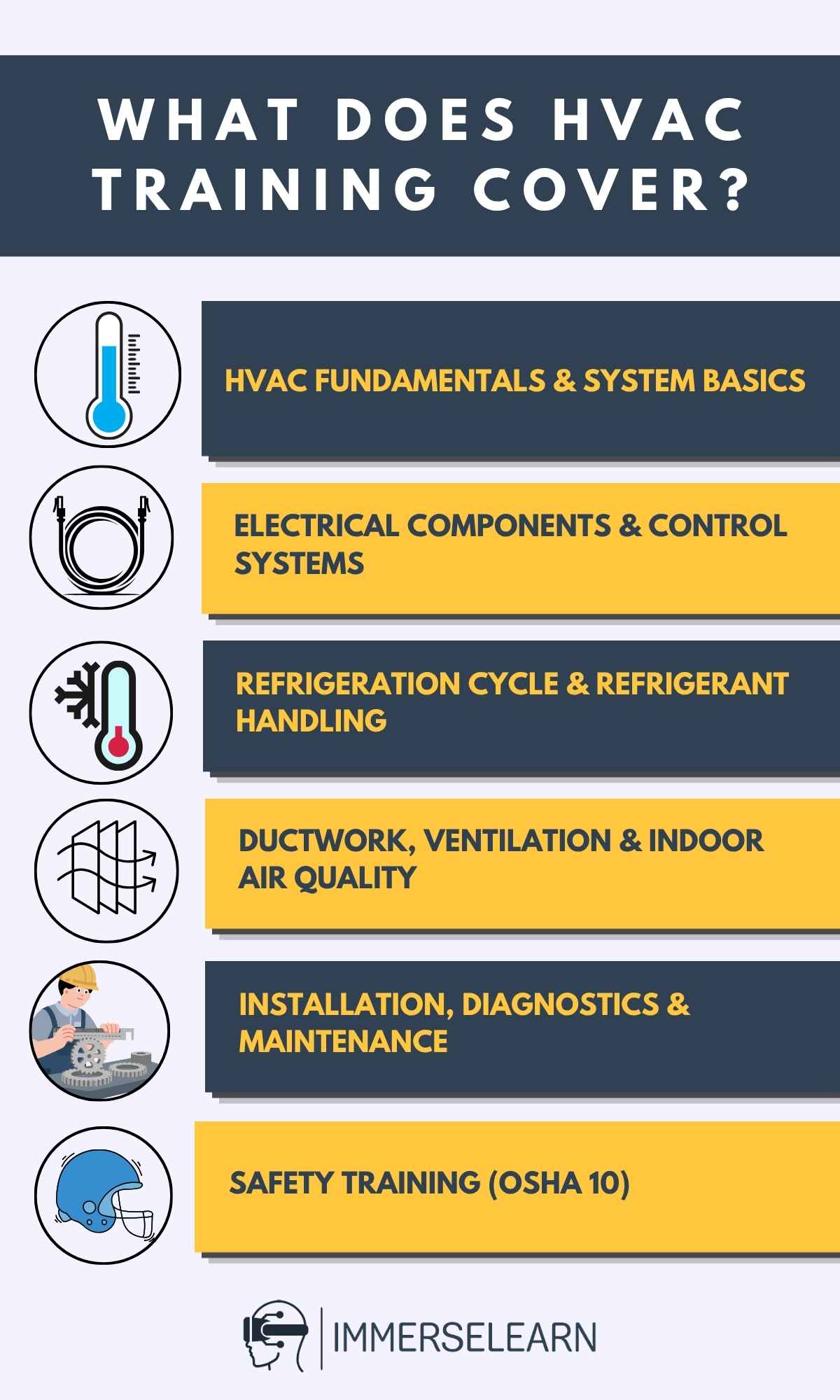
- Heating systems including furnaces, heat pumps, and boilers
- Cooling systems such as air conditioning units, refrigerant circuits, and condensers
- Ventilation and airflow including duct design, static pressure, and indoor air quality
- Electrical systems covering wiring, control boards, capacitors, and thermostats
- Refrigerant handling with EPA compliant procedures and updated regulations
- Diagnostics and maintenance including fault detection, preventive service, and system testing
The best part is that prior experience is not required. Most HVAC Technician training program are designed for beginners, including career changers, graduates, and working professionals who need flexible study options.
Why HVAC Is a High-Demand Career
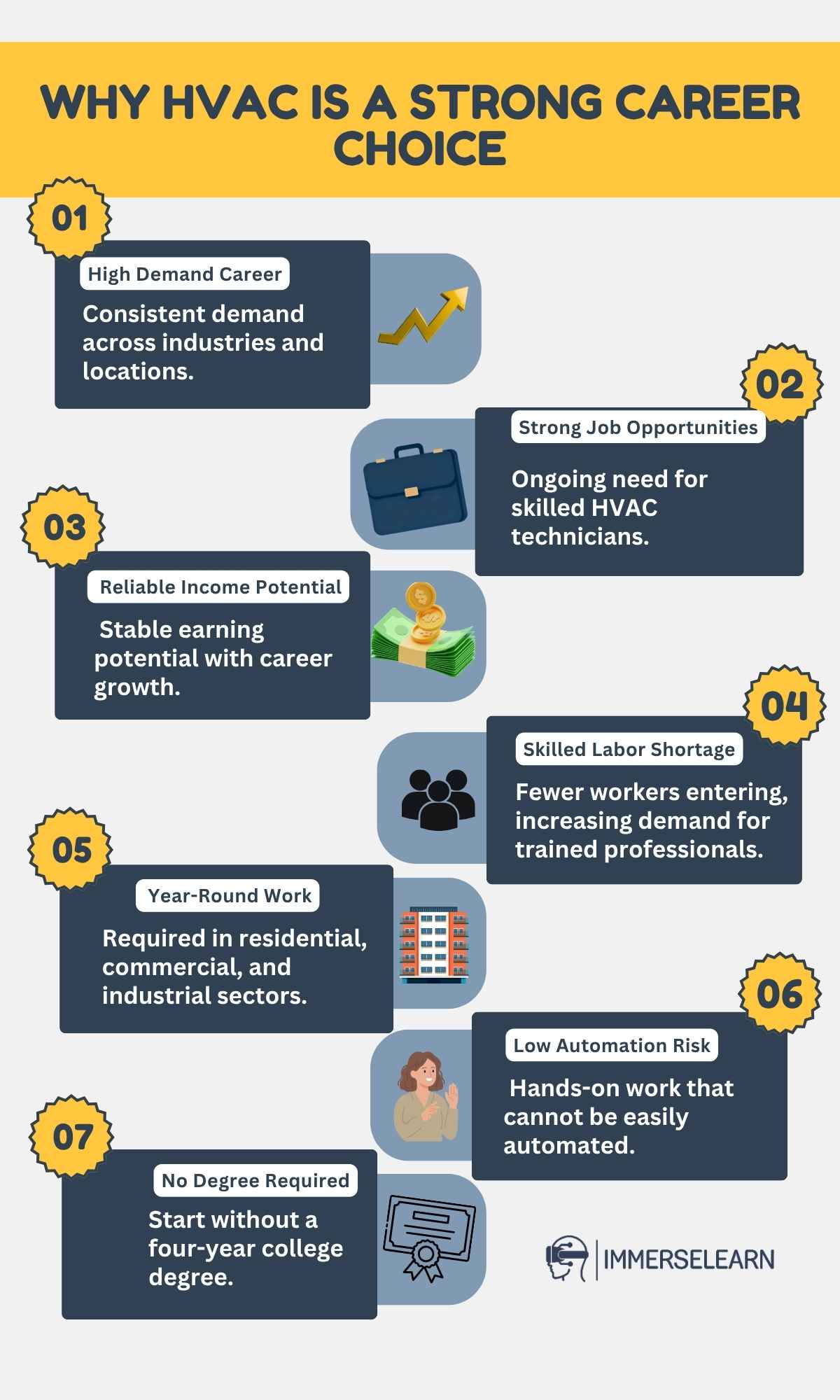
We are seeing strong growth in HVAC training and careers in the heating, ventilation, and air conditioning industry. According to the U.S. Bureau of Labor Statistics, employment for technicians in this field is projected to grow by 8 percent from 2024 to 2034, creating around 40,100 job openings each year. This shows steady demand and long-term stability.
The median annual salary for HVAC technicians is about $57,300, making it a reliable and rewarding path in the skilled trades industry. Beyond salary, several key factors are driving demand:
- Workforce gap: We are seeing fewer new entrants while experienced technicians retire, increasing demand for trained and certified professionals in this field.
- Consistent infrastructure demand: Ongoing construction, aging systems, and advanced climate technologies ensure steady work and continuous opportunities.
- Low automation risk: This work requires hands-on expertise and real-time problem solving, making it a secure career with low automation risk.
- No degree required: With the right technical training program, learners can move from education to earning quickly, making this a high-return option without a four-year degree.
"After finishing the program, I was hired quickly and now earn $2,200 each paycheck. It truly changed my life for the better."
Keith Frazer, HVAC Associate Graduate, ImmerseLearn
HVAC Education Cost and Program Pricing Overview
The cost of HVAC training varies based on the learning pathway, institution, and format we choose. Understanding these options helps us select the right technical program based on our budget and career goals.

Return on Investment (ROI) Insight:
When we evaluate return on investment, this career path offers a practical entry into the skilled trades. Entry-level HVAC technicians earn around $40,000 per year, while experienced professionals can reach $60,000 to $75,000 or more. Compared to traditional degrees, structured learning pathways in this field provide a faster and more cost-effective route to earning.
When comparing costs, we should focus on total time to start earning, not just tuition. A shorter, skill-focused learning program can deliver better long-term value than longer, lower-cost options
What You Learn in HVAC Training Programs
We start with core principles like heat transfer, pressure, refrigerant flow, and airflow across duct systems. This foundation is critical, as understanding why a system fails is more important than simply identifying faults.
i) HVAC Fundamentals and System Basics:
We start with core principles like heat transfer, pressure, refrigerant flow, and airflow across duct systems. This foundation is critical, as understanding why a system fails is more important than just identifying faults.
ii) Electrical Systems, Wiring, and Controls:
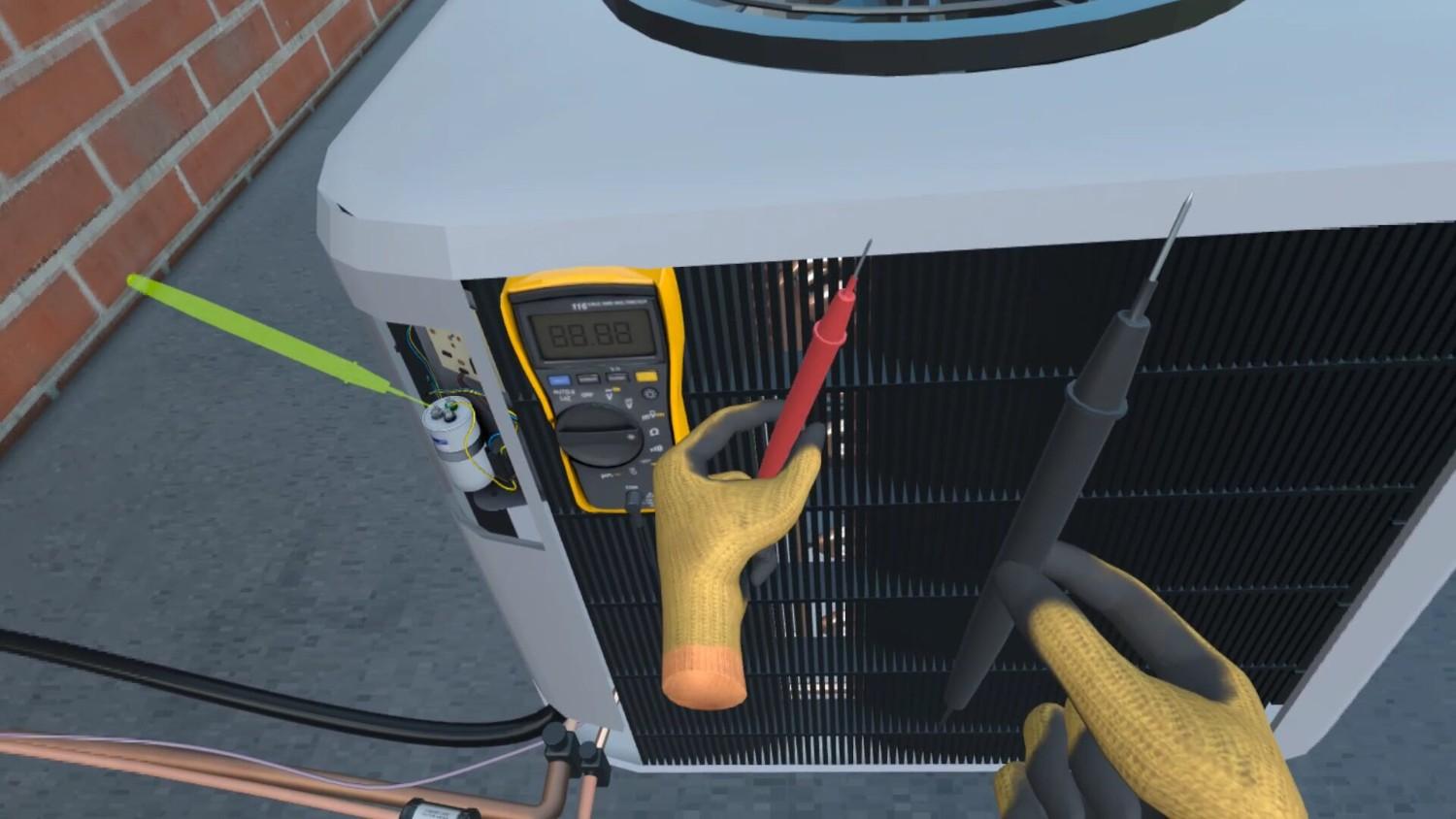
Heating and cooling systems rely on electrical components such as thermostats, control boards, capacitors, transformers, and relays. In technical training, learners study wiring diagrams, use a multimeter, and troubleshoot faults, essential skills for every technician in this field.
Field Reality:
Beginners often find electrical faults to be the biggest challenge. Many can understand diagrams but struggle with real control boards. This is where hands-on practice becomes critical, helping bridge the gap between theory and real-world application.
iii) Refrigeration Cycle and Safe Refrigerant Handling:
The refrigeration cycle, including compressor, condenser, evaporator, and metering device, forms the core of cooling systems. In technical education, learners also study refrigerant handling, which is evolving due to EPA regulations. Refrigerants like R-410A are being phased down, while newer options like R-454B require updated practices.
"Technicians who only know R-410A are already at a disadvantage. Employers are now prioritizing candidates who understand low-GWP refrigerants and updated handling practices.”
Paul-Mark DeSantis, Program Advisor; HVAC, ImmerseLearn
When evaluating courses, learners should ask if the curriculum covers current EPA refrigerant transition requirements.
iv) Ductwork, Ventilation, and Airflow Systems:
System performance depends on proper airflow. Even efficient units fail if duct design is poor. Technical education covers duct sizing, static pressure, airflow balancing, and indoor air quality, helping learners access higher-value roles in the HVAC field.
v) Installation, Diagnostics, and Maintenance:
Learners gain hands-on experience in system installation, fault diagnosis, and preventive maintenance, including coil cleaning, refrigerant checks, electrical inspection, and system testing for real-world readiness.
vi) Safety Training and OSHA 10 Certification:
Safety is essential in this field. OSHA 10 certification is often required for job site access. Completing safety education helps learners become reliable and job-ready professionals in the HVAC industry.
Types of HVAC Training Programs Explained
In HVAC learning pathways, there is no single route for everyone. The right training program depends on our schedule, career goals, and learning style. To choose wisely, we need to understand what each option offers in the climate control industry.
1) Trade Schools and Community College Programs:
These are common structured learning programs with in-person classes, fixed schedules, and hands-on practice using real equipment. Most take 6 months to 2 years and lead to a certificate or associate degree.
Best for: Individuals who prefer classroom learning with direct practical exposure
Honest downside: Limited flexibility for working professionals and inconsistent job placement support
2) Apprenticeship-Based Learning Paths:
Apprenticeships combine paid work with technical education. Learners train under experienced professionals while completing coursework. These programs take 3 to 5 years with extensive practical instruction.
Best for: Individuals who want to earn while gaining real field experience in the HVAC industry
Honest downside: Competitive entry and longer duration can delay professional certification and higher earnings
3) Online HVAC Education Programs:
Online HVAC training offers flexible and self-paced learning, making it ideal for working professionals and career changers. However, program quality varies, so choosing the right option is important.
Best for: Individuals who need flexibility while building technical skills
Honest downside: Limited physical equipment access, so learners should verify hands-on practice, externships, or VR-based modules
4) VR-Based Immersive HVAC Training:
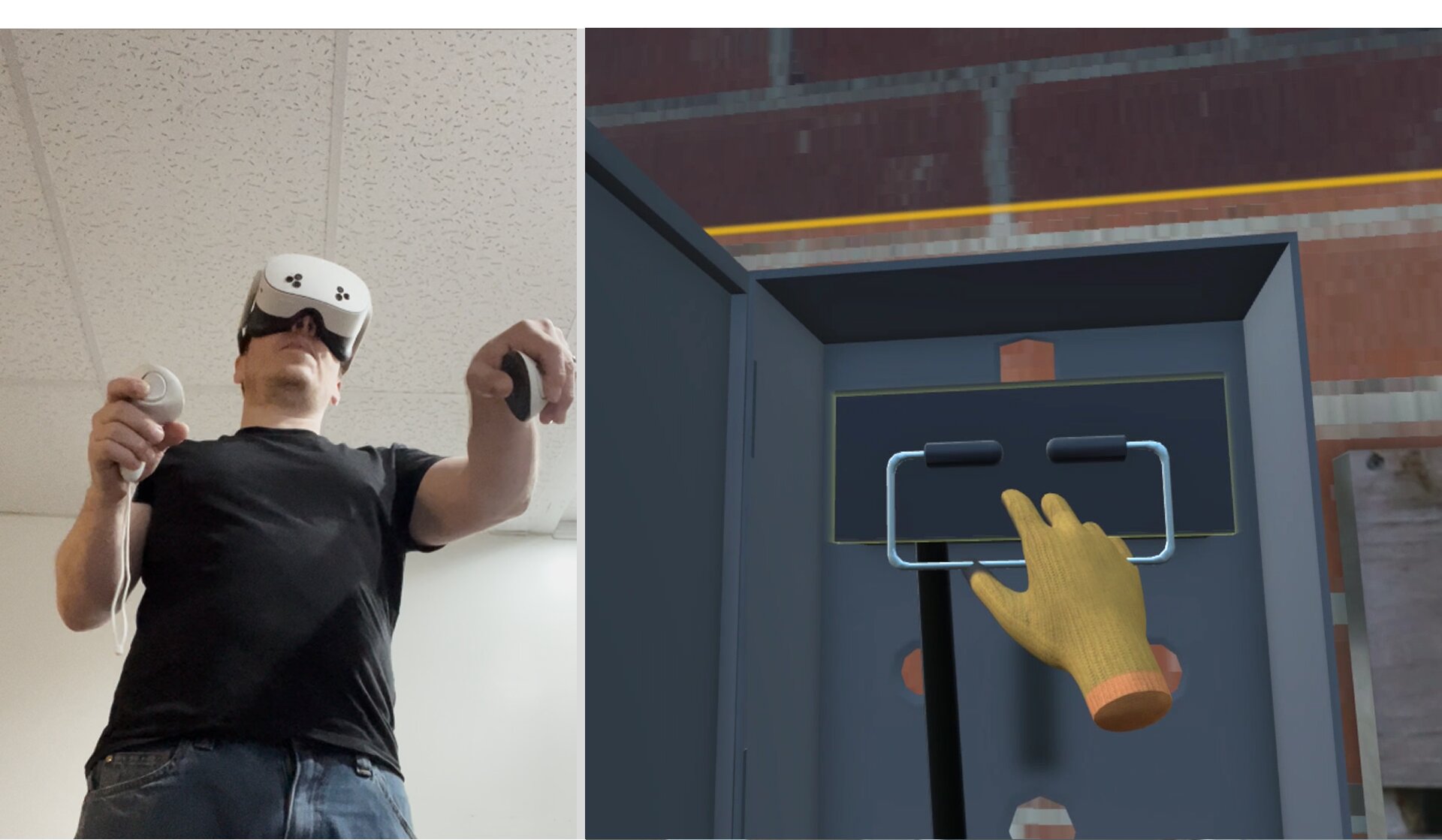
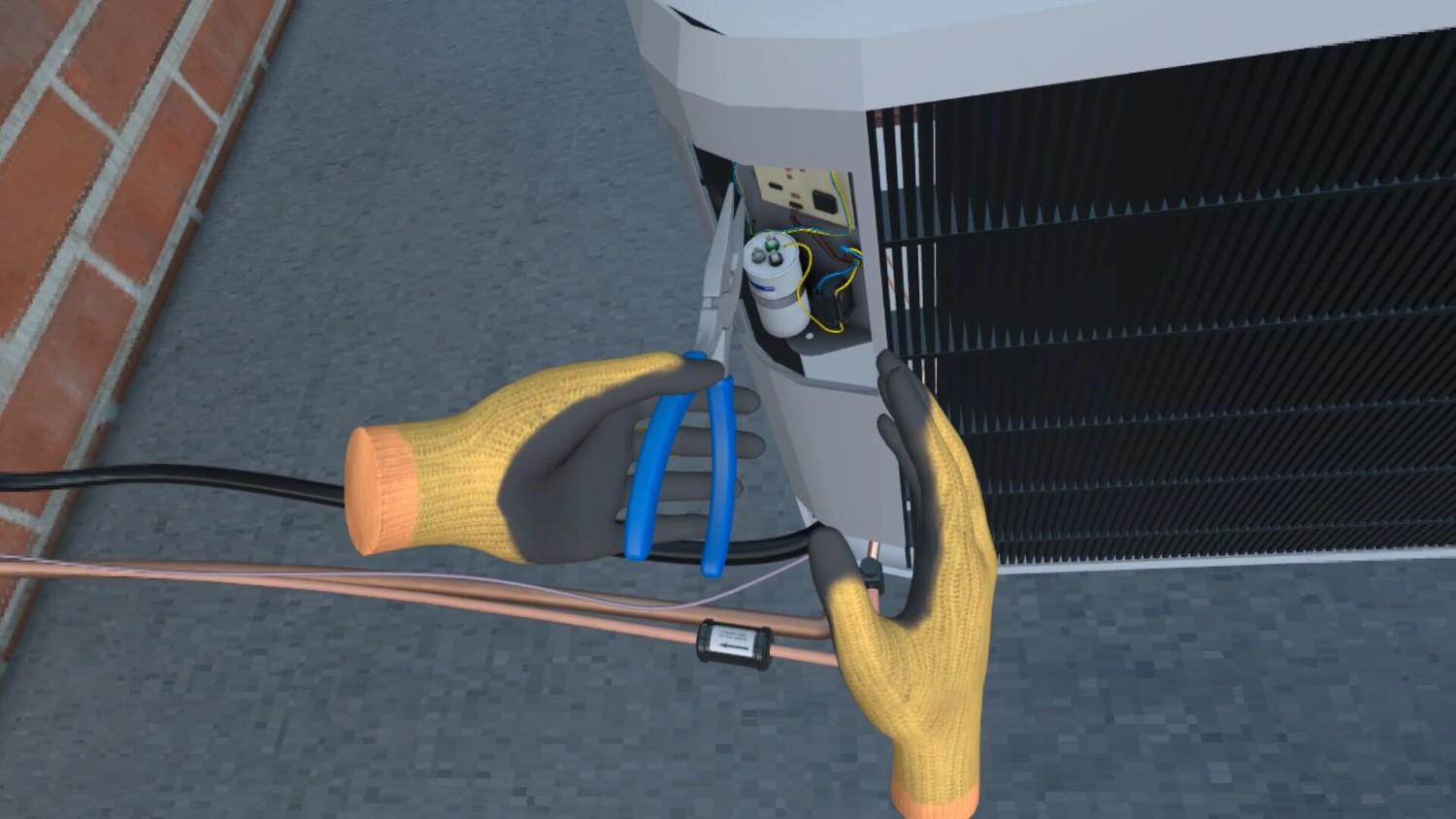
VR-based simulations use interactive environments where learners install systems, diagnose faults, and build real-world technical skills. This helps build confidence before working on actual equipment.
Best for: Individuals who want flexible, accelerated, and hands-on learning without commuting
Key consideration: Ensure the program includes certification exam preparation and proper accreditation to improve employability in the HVAC field
HVAC Certifications and Industry Credentials
HVAC credentials turn HVAC training into real employability by validating skills and improving job opportunities, credibility, and earning potential in the climate control industry. Here is what each credential covers and how it supports career growth.
i) EPA Section 608 Certification:
EPA Section 608 certification is a federally required credential for technicians handling refrigerants. Working without it violates federal law.
The exam includes:
- Type I: Small appliances
- Type II: High-pressure systems
- Type III: Low-pressure systems
- Universal: Covers all types
ii) NATE Certification (Industry Standard Credential):
NATE certification is widely recognized in the HVAC sector and improves employability by providing technical competence.
Entry-level options include:
- NATE Ready to Work exam for fundamentals
- NATE HVAC Support Technician exam for individuals with 6 to 12 months experience
Earning this credential demonstrates job readiness and alignment with industry standards.
iii) OSHA 10 Safety Certification:
The OSHA 10 credential focuses on workplace safety, including hazard recognition, electrical safety, fall protection, and emergency response. It is often required for access to commercial job sites.
iv) HVAC Excellence Certification Levels:
HVAC Excellence offers multiple levels from entry to master specialist. It is valued in commercial and industrial roles and supports growth into specialized and higher-paying positions.
v) Manufacturer-Specific Certifications:
Brands like Trane, Carrier, Lennox, and Mitsubishi Electric offer training credentials that support access to specialized roles, dealer networks, and advanced technical opportunities in the HVAC field.
vi) State Licensing and Legal Requirements:
Licensing varies by state. Some require a license for independent work, while others rely on professional credentials. Always check local requirements before starting an HVAC training program.
Pro tip: Choose a training program that includes certification pathways, hands-on practice, and real-world skill development to improve employability, confidence, and long-term career success.

HVAC Training Duration: How Long It Takes
The duration of HVAC training depends on the path we choose in the HVAC industry, as each option aligns with different career goals.
| Program Type | Typical Duration |
| VR-Based / Accelerated Online | ~20 Weeks |
| Trade School Certificate | 6 Months - 1 Year |
| Community College Associate Degree | 1 - 2 Years |
| Apprenticeship | 3 - 5 Years |
When choosing an accredited HVAC learning program, focus on whether it includes proctored certification exams rather than only a basic completion credential. A professional HVAC certification validates real skills and is recognized by employers in the skilled trades sector, while a simple course completion document only confirms that the training has been finished.
What to Look for in a Quality HVAC Training Program
Most guides list factors, but the key is applying them to choose the right HVAC learning pathway based on our goals in the HVAC industry. Here is how we can evaluate any option before committing to technical education in this field.
i) Accreditation and Program Approval Standards:
Not all accreditation is equal. Look for:
- IACET certification
- NATE recognized provider status
- EPA-approved exam preparation
PAHRA accreditation and HVAC Excellence credentials are also valuable, but these are the core standards for a credible training pathway. If not clearly confirmed, consider alternative options.
ii) Hands-On Practical Training Experience:
Technical education in this field requires real practical exposure in the skilled trades industry. Without proper hands-on practice, learners gain theory but not job readiness. Verify if the course includes labs, VR-based learning, or externships. Video walkthroughs alone are not enough. Ask clearly about the practical component before enrolling.
iii) Certification Exam Preparation Support:
A completion certificate is not equal to a professional credential. Employers value NATE certification for validating technical competency. Confirm that proctored certification exams are included or clearly outlined in the HVAC training program.
iv) Job Placement and Employer Partnerships:
Resume support alone is not real job placement. When evaluating a training pathway, ask:
- Does it have active employer partnerships
- Does it support interviews or only provide listings
- What is the average hiring timeline
Strong placement support often determines how quickly we get employed after completing training in this field.

How to Choose the Right HVAC Learning Path
- If we need to start quickly, choose an accelerated HVAC learning pathway or VR-based technical training with built-in certification preparation for faster entry into the HVAC industry.
- If we want to earn while learning, consider an apprenticeship route, which is longer but provides real-world experience in the skilled trades sector.
- If flexibility matters, prioritize online HVAC education with hands-on practice to build practical skills.
- If job placement is a priority, choose a structured HVAC course with verified employer partnerships, not just resume support.
Most people do not struggle due to limited options. The challenge is choosing the right learning pathway that fits real-life needs, and that is where we should begin.
To learn more, explore our comprehensive HVAC training program with hands-on learning and industry-recognized certification.
HVAC Career Paths, Roles, and Salary Growth
Let us look at long-term opportunities. HVAC training is the starting point, but professional growth in the climate control sector offers multiple pathways based on skills, certifications, and hands-on background.
i) Entry-Level HVAC Technician Jobs:
Most begin as HVAC technicians, helpers, or installation assistants, gaining practical exposure under experienced professionals. Some enter HVAC maintenance roles in the skilled trades sector. These entry-level opportunities offer stable starting salaries around $40,000 per year after completing training. (Source: Genesis Career College)
ii) Mid-Level Career Opportunities:
With field experience and additional certifications, professionals can advance into roles like service specialist, refrigeration technician, or independent installer in the heating, ventilation, and air conditioning industry. Mid-level technicians earn a median salary of $65,700, reflecting steady growth and long-term potential.
iii) Senior HVAC and Specialized Technical Roles:
Advanced roles include senior HVAC technician, HVAC design engineer, commercial refrigeration specialist, or building automation technician, offering higher earning potential.
- Senior technicians with 4 to 7 years of hands-on field exposure earn around $77,200
- Supervisors with 7 or more years of professional exposure earn around $90,800
iv) Self-Employment and Business Ownership:
Many professionals move into self-employment or start their own business after HVAC training and practical field exposure. With 5 to 10 years of industry background, a strong client base, and a solid reputation in the heating, ventilation, and air conditioning sector, earning potential becomes scalable and not limited by a fixed salary.
v) Emerging HVAC Technologies and Specializations:
The heating, ventilation, and cooling industry continues to evolve, and advanced skills can unlock higher-paying opportunities after HVAC training:
- Smart home HVAC systems and IoT-based diagnostics
- Geothermal system installation
- Renewable energy HVAC including heat pumps and solar-assisted systems
- Advanced building automation systems and HVAC controls
A Day in the Life of an HVAC Technician
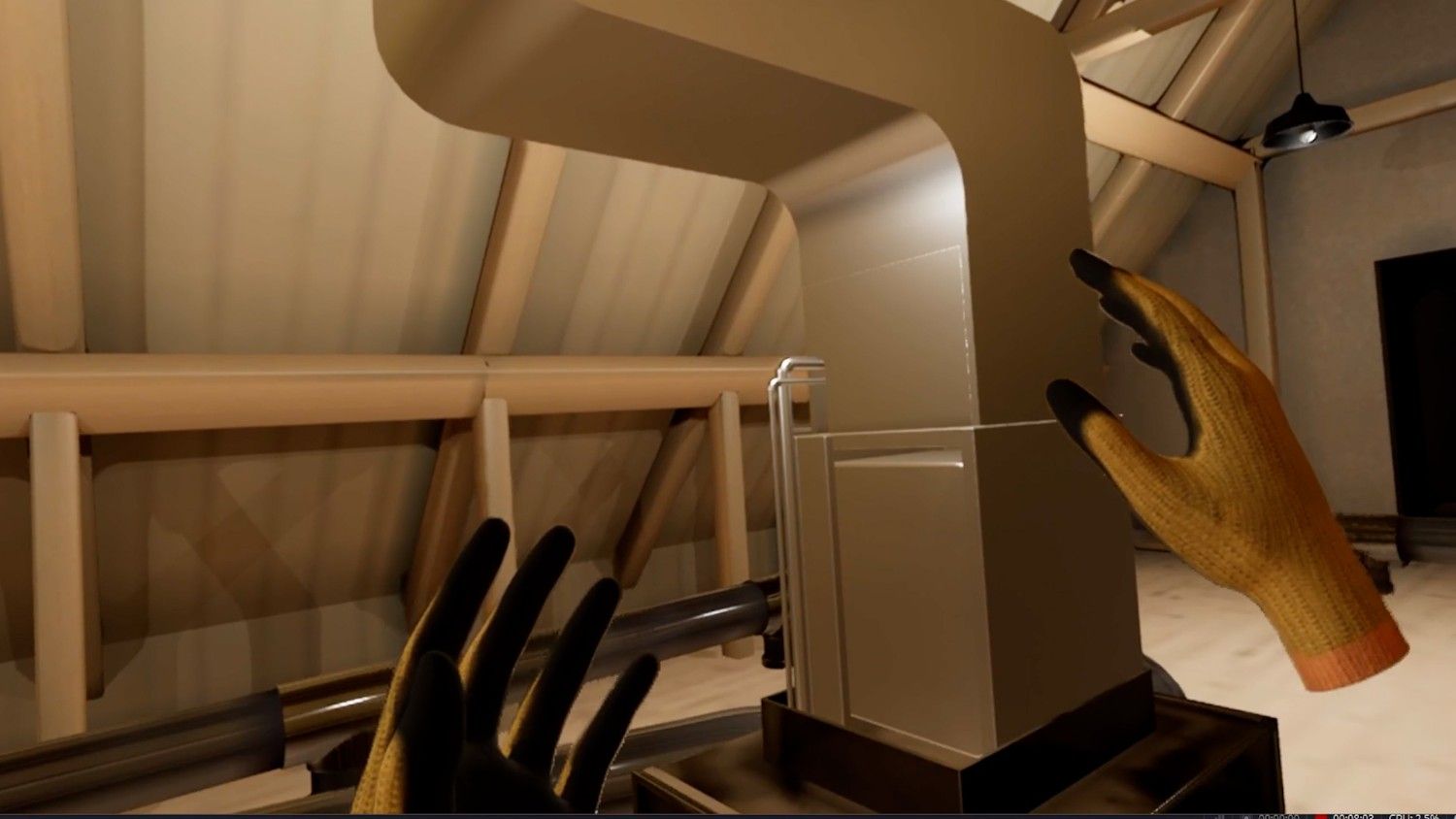
HVAC training highlights strong earning potential, but daily work as a heating and cooling technician is hands-on and dynamic. Most days begin between 7:00 to 8:00 AM with schedule reviews, tool preparation, and service calls in the climate control industry. Residential technicians handle 3 to 5 jobs daily, while commercial technicians focus on larger systems.
Typical HVAC tasks include diagnosing air conditioning issues, replacing components like capacitors or contactors, and performing preventive maintenance such as coil cleaning, refrigerant checks, and electrical testing. Work may also involve system installation and commercial heating, ventilation, and air conditioning troubleshooting, making each day different.
This real-world confidence often begins during HVAC training. As HVAC Associate student Shawan DeBerry Payne shared, “The content and VR simulations boosted my confidence while I learned fundamentals, electrical controls, installation, service, and maintenance.”
The job is physically demanding, involving crawl spaces, attics, rooftops, and ladders, making it ideal for those interested in the skilled trades industry. Strong diagnostic skills and troubleshooting abilities are essential, as most heating and cooling system issues have multiple root causes.
Most workdays end between 4:00 to 6:00 PM, with overtime opportunities during peak seasons in the climate control industry, increasing earning potential. Clear communication helps explain HVAC problems, build customer trust, and support faster career growth after HVAC training.
Is HVAC Training the Right Career Choice for You?
HVAC training is a strong fit for individuals who enjoy hands-on tasks, have good problem-solving skills, and are seeking a stable, well-paying career in the skilled trades without a four-year degree. It suits those comfortable with active, practical responsibilities such as lifting, bending, and working in confined spaces, as well as people looking for faster entry into the HVAC field with varied day-to-day responsibilities as technicians.
However, this career path may not be ideal for individuals who prefer desk-based or remote roles, are uncomfortable with physically demanding conditions, or prefer to avoid intensive manual effort early in their careers. While senior positions may shift toward diagnostics and management, the initial stage as a technician requires practical experience and consistent hands-on responsibilities.
Step-by-Step Guide to Starting HVAC Training
1) Check State Licensing Requirements:
Before selecting a course, understand your state's requirements for working in the HVAC field. Some regions require a license, while others rely on certifications. Use trusted sources to align your education path with state guidelines.
2) Choose the Right Learning Format:
Select a suitable learning pathway based on your schedule and learning style. In-person classes offer structure, while online HVAC learning with hands-on practice provides flexibility. Many courses also include simulation-based modules to build practical skills. Choose a format you can follow consistently. prepare you for industry-recognized certification
3) Verify Accreditation and Certifications:
Ensure the course is accredited and prepares you for industry-recognized credentials (like - NATE certification). Confirm whether these exam pathways are included or clearly outlined. A reliable training program will provide transparent details about certification readiness.
4) Check Job Placement Support:
Check whether the course offers strong job placement assistance, including employer connections and interview opportunities. Effective support can help you enter the workforce faster after completing your training.
5) Enroll and Begin Your Career:
At some point, over-research slows progress. The HVAC field offers stable demand with over 441,200 jobs and salaries between $40,000 and $75,000. Choose the right learning program and begin building your career without delay.

Frequently Asked Questions:
Q1) How long does HVAC training take?
Ans: HVAC training typically takes 20 weeks to 2 years, depending on the program. Fast-track courses can be completed in about 5 months, while apprenticeships may take 3 to 5 years.
Q2) How much does HVAC training cost?
Ans: The cost of HVAC training ranges from $500 to $15,000. Online learning options are generally more affordable, while trade schools and colleges tend to cost more. Apprenticeship programs are often low-cost or even paid.
Q3) Can you learn HVAC online?
Ans: Yes, HVAC skills can be learned online through accredited programs that include practical components such as simulations, VR-based learning, or externships.
Q4) What certification is required for HVAC?
Ans: The EPA Section 608 certification is required to handle refrigerants. Additional credentials such as NATE and OSHA 10 can enhance career opportunities in the field.
Q5) Is HVAC a good career?
Ans: Yes, it is a high-demand and stable career path with strong job growth, competitive salaries, and consistent demand across multiple industries.
Q6) Do you need a degree for HVAC training?
Ans: No degree is required. Most technicians enter the field through certificate programs, online learning paths, or apprenticeship routes.
Conclusion:
Many people spend weeks researching HVAC training programs but still delay taking action, even though over-analysis often slows progress instead of simplifying decisions. The path is clear: enroll in an accredited HVAC training program, develop hands-on technical skills, and earn key certifications like NATE certification to unlock real opportunities in the heating and cooling field. This proven approach has helped thousands of HVAC technicians with no prior experience build successful careers in the skilled trades sector.
HVAC training is a reliable career path with strong starting salaries, clear growth opportunities, and rising long-term demand. The only decision left is when to start, as every delay means lost time in gaining skills, certifications, and advancing in the heating, ventilation, and air conditioning field.