

Low Temperature Sterilization Skills for Sterile Processing Technicians
Introduction:
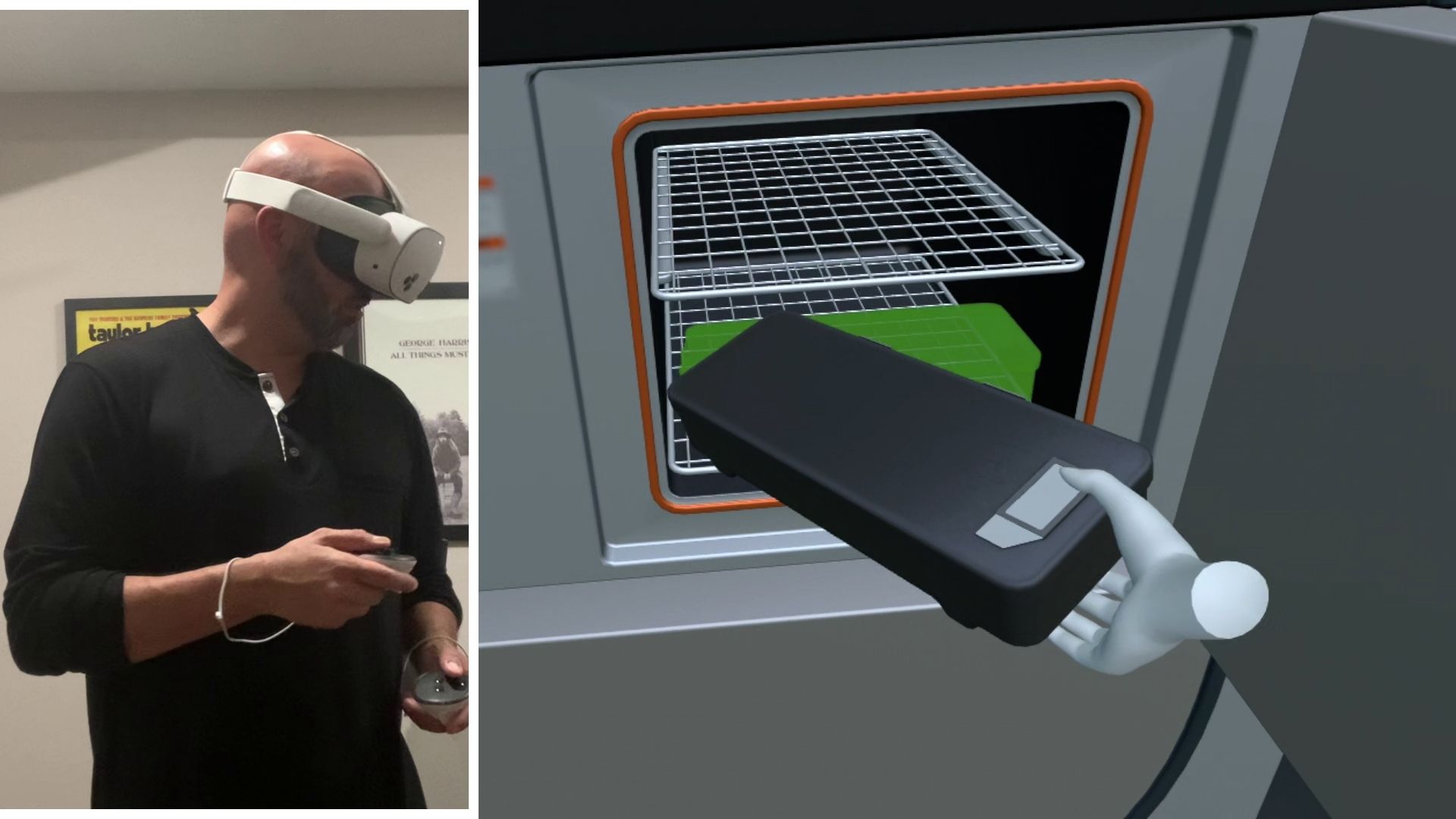
We use Virtual Reality in our Sterile Processing Technician program to replicate a real sterile processing department and deliver hands-on training in a safe, controlled environment. This immersive approach allows learners to practice operating a low temperature sterilizer with confidence, without the risk of damaging equipment or compromising patient safety.
Through guided VR simulations, we walk learners step by step through the complete low temperature sterilization workflow, reinforcing correct technique, compliance, and professional standards essential in modern healthcare settings.
Step-by-Step Low Temperature Sterilization Process in VR Training
1) Preparing Instrument Trays for Sterilization:
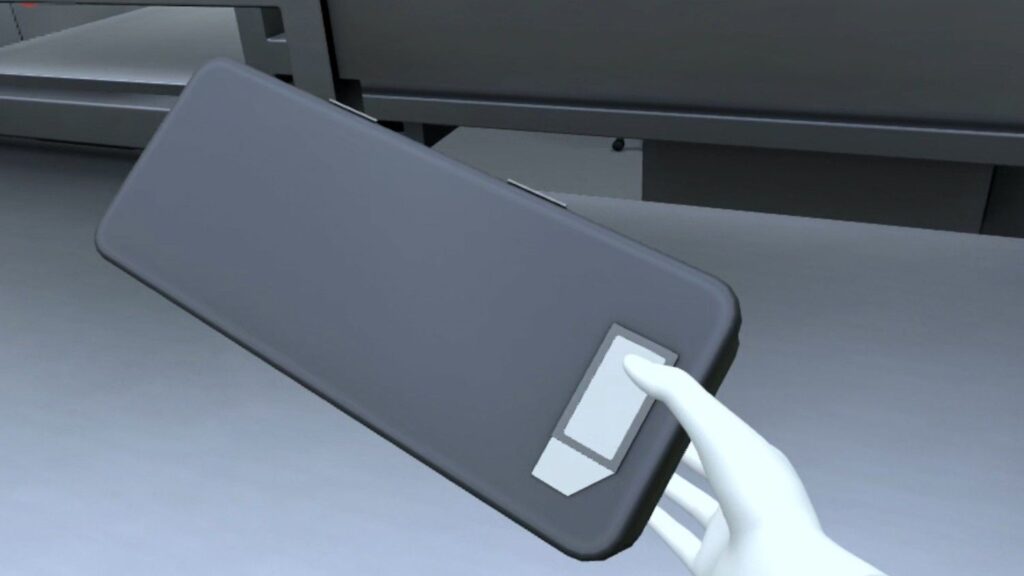
We begin the training at the workstation, where we guide learners to carefully pick up the wrapped instrument tray. From the very first step, we emphasize proper handling to protect the integrity of the sterile wrap. Learners are trained to avoid unnecessary pressure, drops, or contact that could compromise sterility. This step reinforces mindfulness, precision, and control when handling sterile items in a low temperature sterilization environment.
2) Opening the Low Temperature Sterilizer Safely:
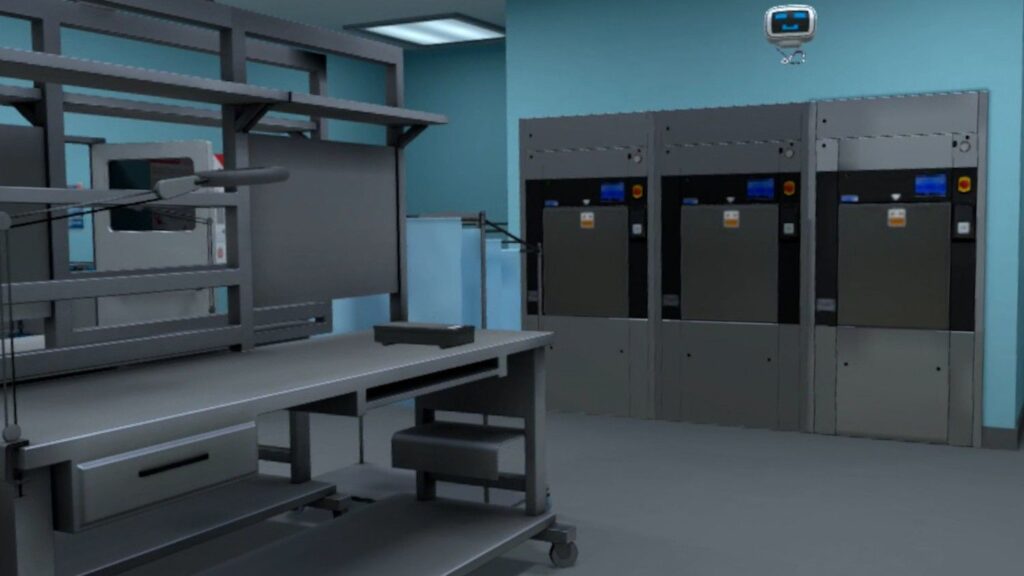
Next, we guide learners through opening the low temperature sterilizer while following all required safety protocols. The VR environment reinforces correct posture, positioning, and situational awareness to promote safe and efficient equipment operation.
This step helps learners become familiar with the physical layout, controls, and safety features of the sterilizer used in real sterile processing departments.
3) Correctly Loading Instrument Trays:
We then train learners to gently place the wrapped instrument tray into the sterilization chamber. Correct positioning is emphasized to support effective low temperature sterilization and ensure proper exposure to the sterilizing agent.
Through VR training, learners can visually confirm correct placement and clearly understand how improper loading may negatively impact sterilization outcomes.
4) Securing the Sterilizer Door:
After loading the tray, we instruct learners to close the sterilizer door securely to create an airtight seal. This step is critical for maintaining the correct chamber conditions throughout the low temperature sterilization cycle.
The simulation reinforces the importance of verifying that the door is fully closed before moving forward with the process.
5) Selecting the Sterilization Cycle:
Using the touchscreen user interface, we teach learners how to select the appropriate sterilization cycle based on instrument type and manufacturer guidelines.
This step reinforces attention to detail and critical thinking. VR training helps learners understand that cycle selection is never automatic and must always align with specific instrument requirements to ensure safe and effective sterilization.
6) Starting the Sterilization Process:
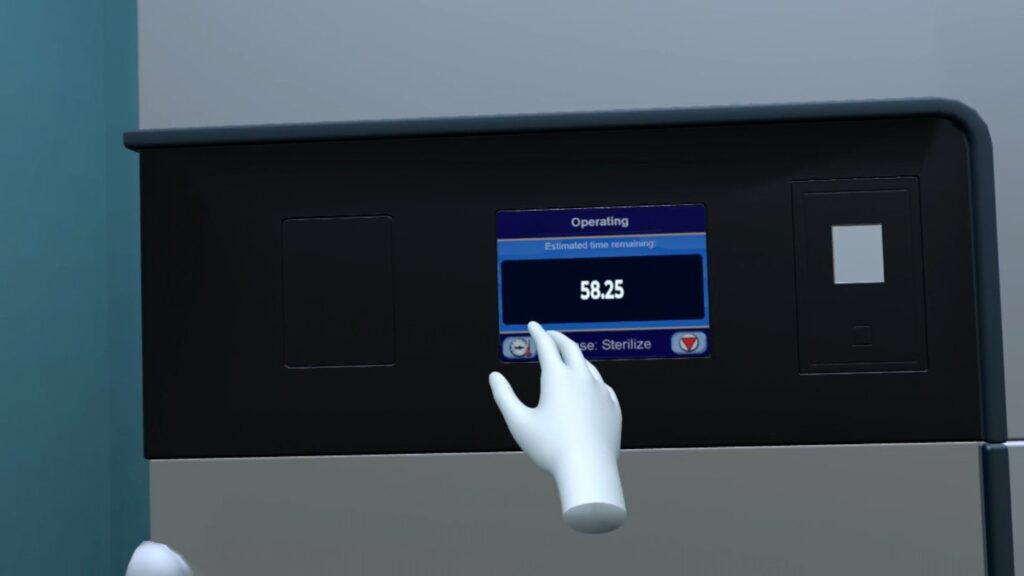
Once the correct cycle is selected, learners press the start button on the touchscreen interface to begin the low temperature sterilization process. This step builds confidence in operating modern sterilization equipment and navigating digital interfaces commonly used in today’s healthcare facilities.
7) Understanding Sterilization Stages:
During the cycle, we allow learners to observe and understand the key stages of low temperature sterilization. First, the chamber is conditioned to remove air and create the appropriate environment. Next, the sterilizing agent is introduced and maintained for the required exposure time to achieve effective microbial kill.
Finally, residual sterilant is removed, and the load is aerated to ensure safe handling. Understanding these stages helps learners recognize why timing, exposure, and process control are critical to patient safety.
8) Safely Unloading Instruments:
When the cycle is complete and indicators confirm successful sterilization, we guide learners to carefully open the sterilizer door. VR training emphasizes patience and caution at this stage. Learners then remove the instrument tray or container with care, avoiding unnecessary contact with packaging materials.
This step reinforces best practices for maintaining sterility after processing in real-world sterile processing environments.
Importance of Proper Technique in Low Temperature Sterilization
We know that low temperature sterilization leaves very little room for error. Improper loading, incorrect sterilization cycle selection, or careless handling can compromise the entire sterilization process and impact patient safety. That is why we place strong emphasis on correct technique and procedural accuracy throughout our training.
Through immersive VR-based low temperature sterilization training, we help learners develop essential skills, including:
- Strong attention to detail during sterile processing tasks
- Confidence in operating low temperature sterilization equipment
- A clear understanding of cause-and-effect relationships in sterilization outcomes
- Professional habits that translate directly to real-world sterile processing environments
These critical skills are difficult to build through textbooks alone. By using experiential learning through Virtual Reality, we ensure learners gain the hands-on practice and decision-making confidence required in modern healthcare and sterile processing facilities.
From VR Training to Real-World Sterile Processing
After building strong foundational skills in Virtual Reality, we support learners as they apply their knowledge of low temperature sterilization in real-world externship settings. This transition allows learners to adapt smoothly to live sterile processing workflows, effective team communication, and facility-specific protocols used in healthcare environments.
Because learners have already practiced the complete low temperature sterilization process through immersive VR training, they enter externships with greater confidence, readiness, and practical awareness. This hands-on preparation helps bridge the gap between virtual training and real-world sterile processing responsibilities.
Career-Focused Sterile Processing Technician Training
We are an IACET-accredited institution dedicated to preparing learners for high-demand roles in healthcare and sterile processing. Our Sterile Processing Technician training program emphasizes practical skills, safety standards, and real-world readiness, ensuring learners are prepared to meet industry expectations from day one.
Low temperature sterilization is one of the many critical procedures we teach, and it reflects our broader commitment to immersive, skills-focused education. Through hands-on Virtual Reality training and structured learning experiences, we help learners build the confidence and technical competence required for successful careers in sterile processing and medical instrumentation.
Job Placement and Career Support in Sterile Processing
We support learners beyond training by providing dedicated career and job placement assistance as part of our low temperature sterilization and sterile processing education. We guide students through resume preparation, interview readiness, and employer connections, helping them transition smoothly into the healthcare workforce.
Through this continued support, we ensure learners are prepared not only to perform technical sterile processing tasks with confidence, but also to build long-term, sustainable careers in sterile processing and medical instrumentation.
Why Choose ImmerseLearn for Sterile Processing Technician Training
We provide career-focused training designed to help learners master critical procedures such as low temperature sterilization through practical, industry-aligned learning. Our approach combines immersive technology, real-world experience, and workforce support to prepare learners for success in sterile processing roles.
i) Hands-On VR Low Temperature Sterilization:
We use Virtual Reality to deliver hands-on training in low temperature sterilization, allowing learners to practice safely in realistic sterile processing environments without risk to equipment or patient safety.
ii) Realistic Sterile Processing Simulations:
Our simulations mirror real-world sterile processing workflows, helping learners understand proper technique, equipment operation, and process control used in healthcare facilities.
iii) Short-Term Skills-Focused Programs:
We offer focused training programs that emphasize essential skills, enabling learners to become job-ready in a shorter time frame while maintaining high professional standards.
iv) Real-World Externship Experience:
We support learners with externship opportunities that help transition virtual training into real-world sterile processing environments and live workflows.
v) Career & Job Placement Support:
We provide ongoing career support, including resume guidance, interview preparation, and employer connections, helping learners build long-term careers in sterile processing and medical instrumentation.
Explore our Sterile Processing Technician training to launch your healthcare career today.
Conclusion: Confidence in Low Temperature Sterilization
We recognize that low temperature sterilization is a critical responsibility for Sterile Processing Technicians and a vital component of patient safety in healthcare environments. Mastering this process requires careful handling, precise equipment operation, and strict adherence to established sterilization protocols.
Through immersive Virtual Reality-based training combined with real-world externship experience, we prepare learners to perform low temperature sterilization with confidence, accuracy, and professionalism. This comprehensive approach ensures learners are job-ready and equipped to meet the demands of modern sterile processing departments.
Are you ready to master low temperature sterilization and become career-ready in sterile processing?