
NHA CCMA Exam Domains & Eligibility Guide
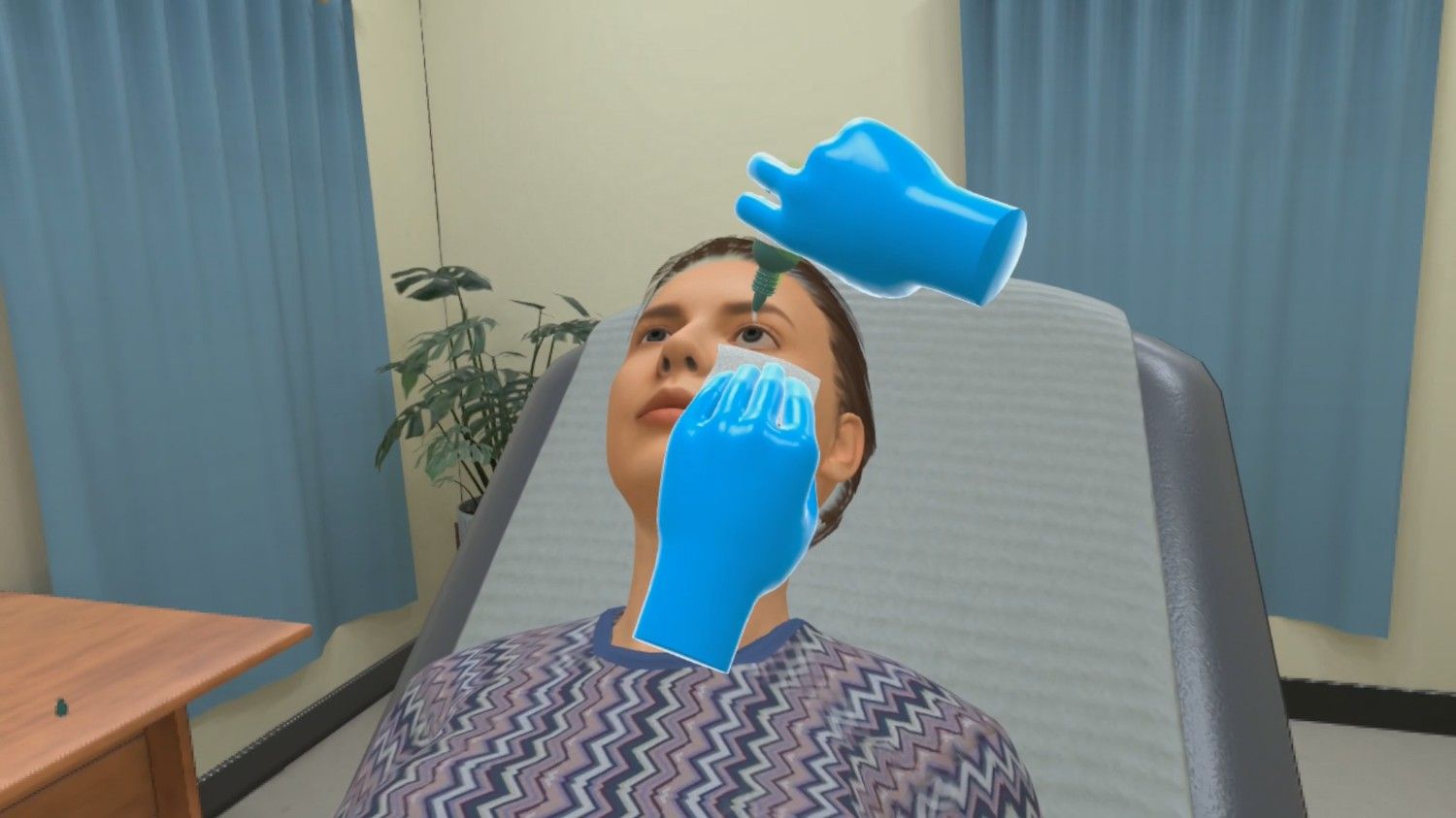
If you are comparing options for clinical medical assistant certification online, you eventually hit the same two questions: what does the NHA CCMA exam actually test, and how do you become eligible to sit for it? This guide answers both - then shows how ImmerseLearn VR labs and LMS coursework map to those domains so practice supports exam readiness, not just video watching.
Quick distinction (important): Finishing a training program’s certificate of completion or proctored program final is not the same as earning the national Certified Clinical Medical Assistant (CCMA) credential. The CCMA title comes from passing NHA’s CCMA exam. Always confirm current rules on NHA’s official CCMA page and in the NHA Candidate Handbook.
Note: Other medical assisting credentials exist (for example pathways outside NHA). This article focuses on the NHA CCMA path ImmerseLearn prepares students to pursue - not AAMA CMA or AMCA CMAC.
For live enrollment details, cost, and what’s included, use the Clinical Medical Assistant program page.
What is the NHA CCMA exam?
The NHA CCMA exam is the certification exam administered by the National Healthcareer Association for the Certified Clinical Medical Assistant credential. Passing shows employers you have demonstrated entry-level knowledge across clinical patient care and related administrative, communication, and ethics topics.
Clinical medical assistants commonly support work such as:
- Taking and recording vital signs
- Preparing patients for exams and assisting providers
- Supporting EKG, phlebotomy, and basic lab procedures when permitted by employer policy and state rules
- Updating electronic health records (EHR)
- Scheduling, intake, and patient communication in clinics and physician offices
(Role examples summarized from NHA’s CCMA public overview and ImmerseLearn program materials - employer scope varies.)
In short: if your goal is NHA clinical medical assistant certification, CCMA is the exam name and the credential you earn when you pass.
Who the NHA CCMA exam is for
This exam is typically a fit if you:
- Want entry-level clinical medical assisting work in physician offices, clinics, urgent care, or outpatient settings
- Prefer a national certification pathway administered by NHA
- Are completing (or have recently completed) a medical assistant training program - or already have qualifying supervised medical assisting work experience
- Need a clear map of CCMA exam domains before you schedule
It is not a substitute for checking employer requirements or any state registration / practice rules that apply where you work. Certification and local rules can both matter; when in doubt, check NHA and your state resources.
For broader requirements and benefits context (not this domains deep-dive), see CCMA certification online. For skills-led study habits, see how to prepare for the NHA CCMA exam.
NHA CCMA eligibility overview
NHA publishes CCMA-specific eligibility. In overview form (always verify before you apply):
Education baseline
You must possess a high school diploma or GED / high school equivalency - or meet NHA’s published pathway for candidates scheduled to earn that credential (NHA describes high school health-science details on its CCMA page and Candidate Handbook).
Plus one pathway
Training pathway (common for career changers): Successfully complete a medical assistant training or education program within the last 5 years (NHA also describes military, apprenticeship, and certain other options in the Candidate Handbook / knowledge base).
OR work-experience pathway: At least 1 year of supervised work experience in a medical assisting field within the last 3 years, or 2 years of supervised work experience within the last 5 years.
California note (work-experience path): NHA’s Candidate Handbook states that California residents applying for CCMA under the work-experience pathway must have a minimum of 2 years of medical assistant work experience within the last 5 years immediately preceding the examination date.
Official references:
- NHA CCMA page - eligibility
- NHA Knowledge Base - eligibility requirements
- NHA Candidate Handbook (PDF)
If you are unsure which pathway applies, use NHA’s eligibility tools / account application rather than guessing from blogs.
Important: Completing ImmerseLearn training supports the training pathway toward sitting for NHA CCMA when you successfully finish the program (per the live program page). ImmerseLearn does not issue a state medical assistant license. A program certificate of completion is not a state license and is not the NHA CCMA credential until you pass NHA’s exam.
Exam format and content domains
Format (official test plan)
NHA’s CCMA Test Plan (based on the 2022 job analysis) describes:
| Element | Detail |
| Scored items | 150 |
| Pretest items | 30 (unscored; mixed in) |
| Time | 3 hours |
| Item type | Multiple choice |
| Delivery | Confirm current options in your NHA account / Candidate Handbook (testing center and live remote proctoring are commonly offered) |
(Source: NHA CCMA Test Plan PDF)
Treat every question as if it counts - pretest items are not labeled.
Content domains (scored-item weights)
From NHA’s CCMA summary examination outline:
| Domain | Scored items | ~% of scored |
| 1. Foundational Knowledge and Basic Science | 15 | 10% |
| 2. Anatomy and Physiology | 8 | ~5% |
| 3. Clinical Patient Care | 84 | 56% |
| 4. Patient Care Coordination and Education | 12 | 8% |
| 5. Administrative Assisting | 12 | 8% |
| 6. Communication and Customer Service | 12 | 8% |
| 7. Medical Law and Ethics | 7 | ~5% |
| Total scored | 150 | 100% |
(Source: NHA CCMA Test Plan PDF)
Clinical Patient Care subdomains (84 items total):
| Subdomain | Scored items |
| A. Patient Intake and Vitals | 14 |
| B. General Patient Care | 28 |
| C. Infection Control and Safety | 15 |
| D. Point of Care Testing and Laboratory Procedures | 9 |
| E. Phlebotomy | 12 |
| F. EKG and Cardiovascular Testing | 6 |
Prep implication: Clinical Patient Care is more than half the scored exam. Extra time on vitals, general patient care, infection control, phlebotomy, and related procedures pays off more than memorizing fringe facts.
Scoring and fees (confirm live)
NHA uses scaled scoring for certification exams. Confirm the current passing standard, score-report timing, and any retake rules in the Candidate Handbook and your NHA account before you test.
Exam application fees change. Confirm the live CCMA exam fee on NHA’s store when you apply. On ImmerseLearn’s Clinical Medical Assistant page, the NHA CCMA exam is included with enrollment (verify current package language on the live page before you enroll).
After you pass: renewal basics
NHA states CCMA certifications are generally renewed every two years, with continuing education and a recertification fee before expiration. Confirm current CE hour requirements and fees on NHA’s renewal / stay-certified pages (do not rely on third-party blogs if NHA’s numbers differ).
How ImmerseLearn VR + LMS maps to CCMA domains
Classroom or LMS knowledge alone often may not match the pace of a real clinic. Training that connects domain knowledge to repeated practice can make Clinical Patient Care items feel familiar instead of abstract.
ImmerseLearn’s online Clinical Medical Assistant program is built around that idea: immersive VR simulations (headset included on the VR track), roughly 20 weeks of training, LMS access, career services and job placement support, and readiness to sit for the NHA CCMA exam after successful program completion (per the live program page). Eligible military spouses may qualify for MyCAA tuition assistance; ImmerseLearn is listed as an approved MyCAA partner school on the program page.

Domain-to-practice map (high level)
| NHA domain focus | How VR + LMS practice helps |
| Clinical Patient Care (vitals, intake, infection control, labs, phlebotomy, EKG) | Repeat clinical workflows in VR; reinforce with LMS modules on procedures and safety |
| Foundational Knowledge / A&P | LMS lessons on terminology, body systems, and basic science tied to clinical scenarios |
| Patient Care Coordination & Education | Practice patient instructions and follow-up concepts alongside communication modules |
| Administrative Assisting | Records, scheduling, and office workflow lessons in the LMS |
| Communication & Customer Service | Scenario practice for professional patient interaction |
| Medical Law & Ethics | HIPAA, consent, and scope-of-practice concepts in coursework (always follow current NHA/employer rules) |
Program final vs NHA CCMA - do not conflate them
| ImmerseLearn program final | NHA CCMA exam | |
| Purpose | Program completion / readiness checkpoint | National certification credential (CCMA) |
| Format (as listed) | 120 questions, 90 minutes, live remote proctoring via MonitorEDU (per program page) | 150 scored + 30 pretest items, 3 hours (per NHA test plan) |
| Outcome | Successful completion supports finishing the program and readiness to sit for NHA’s exam | Passing awards CCMA via NHA |
Passing your training program’s proctored final is an important milestone. Earning CCMA still requires passing NHA’s CCMA exam after program completion.
Enrollment package (live program facts)
When you enroll in ImmerseLearn’s Clinical Medical Assistant Training (VR track package as listed on the program page), highlights include:
- VR headset shipped for immersive clinical and administrative simulations
- LMS access for flexible, self-paced lessons and assessments
- About 20 weeks of structured training
- NHA CCMA exam included with enrollment (confirm live package language)
- Weekly student support touchpoints and 24/7 technical help for headset / learning access
- Career services and job placement support after you complete the program and pass your certification path
The list above matches the VR Program package (headset + simulations). The program page also offers a Non-VR / web-based track without a headset - see Program cost below for the different published prices.
Career services and job placement after you graduate
Career services and job placement support are a core ImmerseLearn feature - not an add-on and not the same as an exam voucher. After you successfully finish training and pass your certification exam, the Career Services team works with graduates on the path into employment.
Support described on the Clinical Medical Assistant and Career Services pages typically includes:
- Resume development and interview preparation (including mock interviews)
- Job search assistance and coaching
- Connections through employer partnership / train-to-hire style pathways where available
- Ongoing placement assistance until you get hired (as stated on the program page)
That is how outcomes are framed: VR labs and exam prep get you ready; Career Services stays with you as you move into entry-level clinical medical assistant roles. Ask about career services and job placement when you enroll so the plan is clear from day one.
Program cost (VR and Non-VR)
The Clinical Medical Assistant page lists two enrollment tracks with different pricing: a VR Program (headset included) and a Non-VR / web-based program (LMS study without a headset). Use the VR / Non-VR toggle on the payment plans section of the program page to compare them.
VR Program - VR headset shipped at enrollment:
- Option 1 total: $3,800 (6 months; also the headline package cost on the page)
- Option 2 total: $4,200 (12 months)
- Option 3 total: $4,400 (15 months)
- Down payment: $650 on published VR payment plans
- Bi-weekly payments available under each published VR option
Non-VR / web-based program - no headset (LMS only):
- 6-month plan total: $2,000
- 9-month plan total: $2,200
- Down payment: $200 on Non-VR plans
- Program page note: VR headset not included
MyCAA: ImmerseLearn is described as an approved MyCAA partner school; eligible military spouses may qualify for up to $4,000 in tuition assistance through MyCAA.
If you need the latest plan breakdown or any promotional detail not listed here, check the Clinical Medical Assistant page or speak with enrollment.
Certificate of completion vs license vs NHA CCMA
Keep these three ideas separate:
- ImmerseLearn certificate of completion - earned when you successfully finish the training program (including the program’s proctored final). It is not a state license.
- NHA CCMA credential - earned when you pass NHA’s CCMA exam after meeting eligibility.
- State license / registration - medical assisting rules vary by state and employer. ImmerseLearn does not issue a state medical assistant license. Always verify local requirements for the role and workplace you want.
Who this path fits
This NHA CCMA-focused path is a practical fit if you:
- Are starting or changing into clinical medical assisting without a four-year degree
- Want clinical medical assistant certification online with hands-on VR practice (or a Non-VR LMS track if that fits your budget and learning style)
- Prefer a clear domains map before you schedule the national exam
- Value career services and job placement support after graduation
It may not be the right fit if you specifically need an AAMA CMA or AMCA CMAC pathway - those are different credentials with different exam bodies.
FAQs
Certified Clinical Medical Assistant - the credential awarded by NHA after you pass the CCMA exam.
NHA’s test plan lists 150 scored items plus 30 pretest items, with 3 hours of exam time.
Clinical Patient Care - 84 scored items (about 56% of the scored exam), including intake/vitals, general patient care, infection control, lab procedures, phlebotomy, and EKG/cardiovascular testing.
In overview: a high school diploma or GED/equivalency (or NHA’s published pathway toward that), plus either a qualifying medical assistant training program within the last 5 years or qualifying supervised work experience (1 year in 3 years, or 2 years in 5 years). California has a stricter work-experience rule - confirm in the Candidate Handbook.
No. Successful program completion supports eligibility to sit for the NHA CCMA exam (per the program page). Certification requires passing NHA’s CCMA exam.
No. A certificate of completion is not a state medical assistant license. NHA CCMA is a national certification credential. State and employer rules still apply where you work.
About 20 weeks, including online coursework and immersive VR simulations (per the live program page).
Published VR plans total $3,800, $4,200, or $4,400 with a $650 down payment. Non-VR / web-based plans total $2,000 (6 months) or $2,200 (9 months) with a $200 down payment. Confirm live totals on the Clinical Medical Assistant page.
Yes - the live program page states the NHA CCMA exam is included with enrollment. Confirm current package details before you enroll.
Yes. Career services and job placement support are part of the graduate path. See Career Services and the Career Services section on the program page.
Next step
Review live cost, headset options, exam package details, and MyCAA information on the Clinical Medical Assistant program page, then talk with enrollment before you commit.