

PV System Maintenance and Microinverter Replacement: A Complete Guide
Introduction:
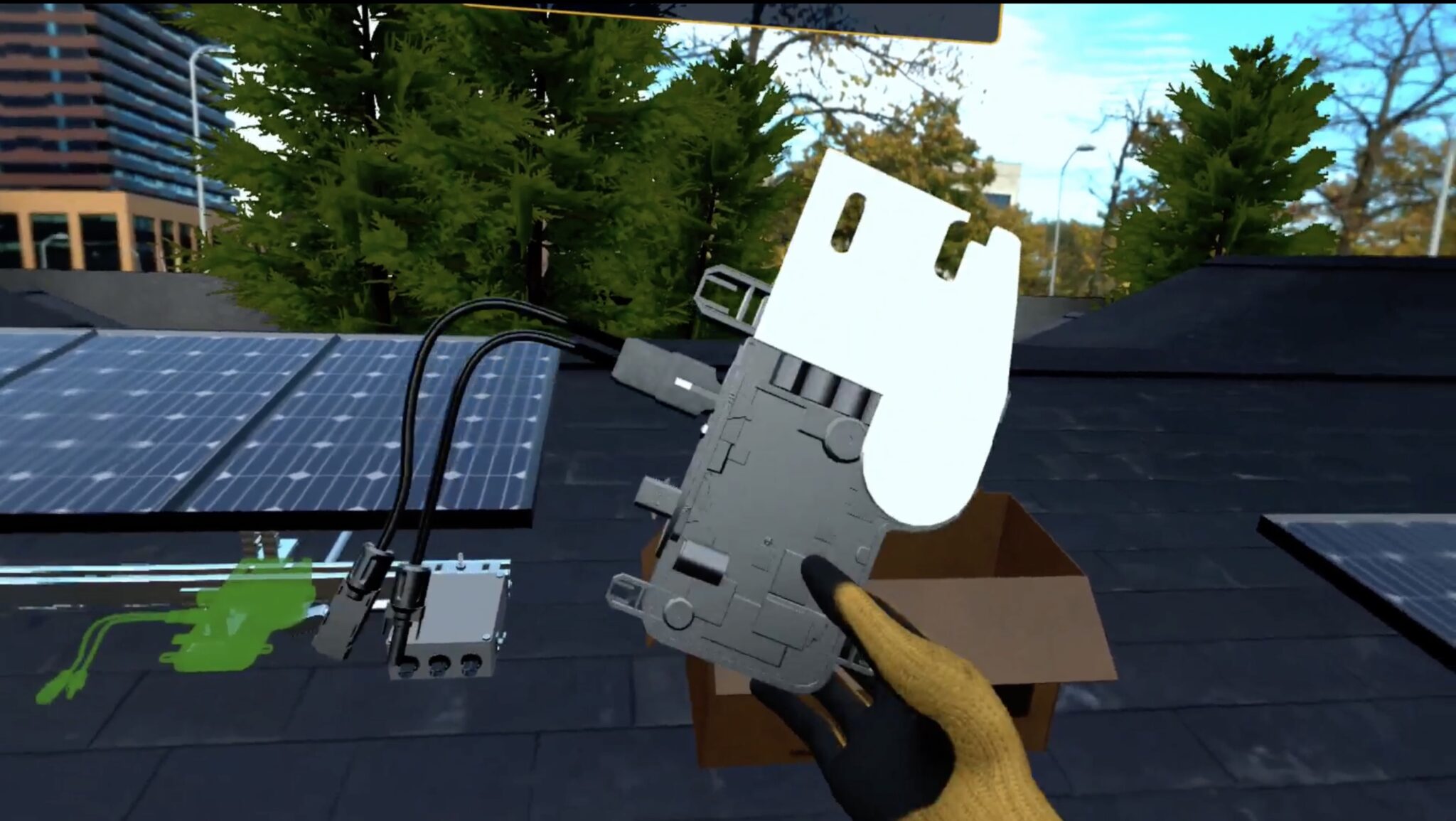
As renewable technologies gain traction, PV system maintenance is crucial for maximizing performance, ensuring safety, and safeguarding long-term ROI. Technicians trained to inspect and service solar installations, including microinverter replacements, are in high demand across the clean energy workforce. Whether you’re entering the solar field or refining your skills, hands-on experience with photovoltaic systems, particularly Enphase IQ components, provides a competitive edge.
At ImmerseLearn, our immersive VR technician training offers lifelike simulations of residential and commercial setups, equipping learners with job-ready expertise in PV system maintenance to succeed in the evolving sustainable energy sector.
Understanding PV System Maintenance: The Basics
i) Boosting Solar Performance and Lifespan
Regular PV system maintenance is key to sustaining long-term efficiency, ensuring safety, and optimizing solar power output. While photovoltaic systems are built to last 20 to 25 years, actual performance depends on environmental conditions, hardware durability, and installation quality. A robust maintenance strategy ensures reliable operation and maximum energy yield.
- Peak power generation
- Reduced operational disruptions
- Consistent inverter reliability
- Electrically sound and code-compliant operation
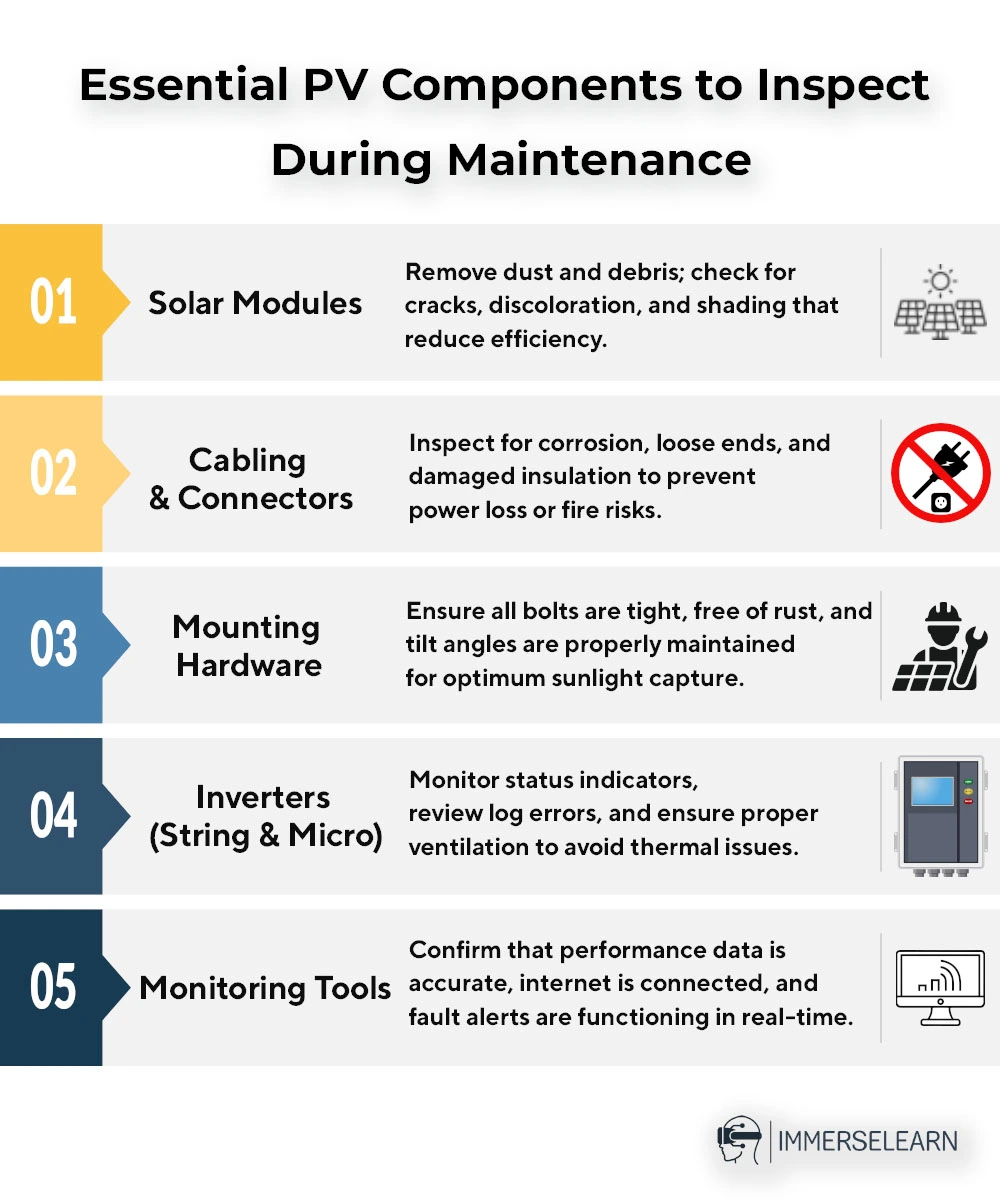
ii) Essential Components to Inspect in PV Maintenance
- Solar Modules: Check for debris, cracks, discoloration, or shading that reduce solar panel efficiency.
- Cabling and Connectors: Look for corrosion, insulation damage, and faulty weatherproofing that may cause energy loss.
- Mounting Hardware: Verify fasteners are tight, rust-free, and angled correctly for maximum solar exposure.
- Inverters (String and Micro): Examine diagnostic logs, indicator lights, and thermal regulation.
- Monitoring Tools: Ensure data accuracy, internet connection, and fast fault detection.
Following a structured PV maintenance checklist boosts panel efficiency, extends system life, and improves ROI. Whether you’re a solar technician or entering clean energy, mastering PV servicing enhances your value in the renewable sector. Hands-on AC voltage testing for solar PV systems is one of those core servicing skills.
Proven Best Practices for Maintaining PV Systems
Maintain PV System Logs and Documentation
Efficient PV system maintenance begins with thorough documentation. Keeping detailed records, installation manuals, datasheets, schematics, and performance logs, streamlines diagnostics and improves system reliability. Tracking service history, part replacements, and recurring issues ensures timely maintenance and maximizes solar system performance.
Preventive Maintenance for Solar PV Systems
A proactive maintenance plan reduces downtime and repair costs. It includes:
- Visual checks for dust, corrosion, bird droppings, and visible wear
- Thermal imaging to spot hot spots from faulty modules or loose connections
- Performance tracking to detect early-stage degradation
- Seasonal reviews based on local climate to ensure year-round efficiency
This structured approach extends system lifespan and boosts ROI through effective solar PV system maintenance.
Custom PV Maintenance by Site Conditions
PV system servicing should align with site-specific conditions. We adjust inspection frequency and methods based on roof slope, nearby vegetation, humidity, and whether the area is urban or rural. Tailored maintenance improves diagnostic accuracy and maximizes solar energy output across varied environments.
Replacing Microinverters: Why Accuracy Is Key
i) The Role of Enphase Microinverters in Solar PV Systems
Enphase IQ microinverters are crucial in solar PV setups, enabling module-level performance monitoring, real-time diagnostics, and grid compliance. Replacing them demands precision: any error can reduce individual module output and indicate broader system issues.
ii) When to Replace a Solar Microinverter
Watch for signs like reduced module generation, delays in monitoring tools, unusual heat or noise, and recurring faults in specific circuits. Ignoring these can lower energy output and affect long-term system performance.
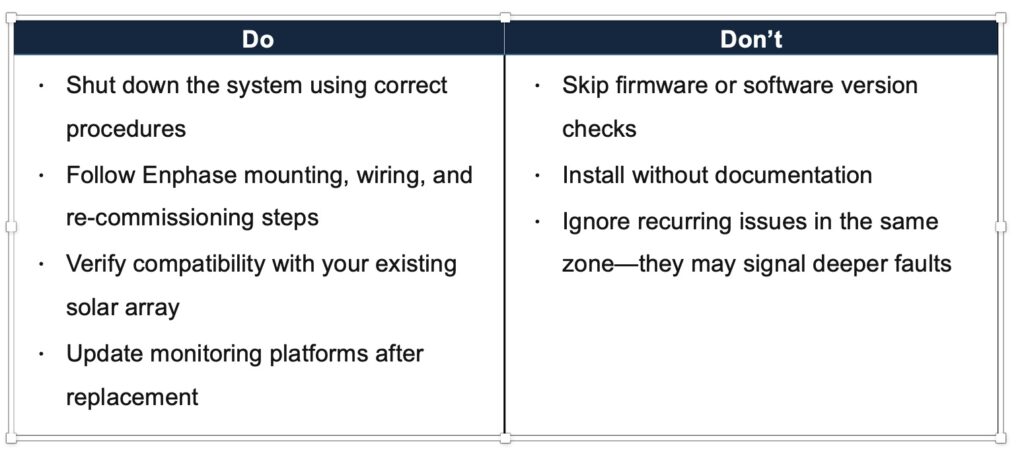
iii) Microinverter Replacement: Do’s and Don’ts
Replacing microinverters requires precision to ensure solar panel performance and PV system reliability. Follow these best practices:
The VR Advantage in Solar Technician Training
How VR Is Revolutionizing Clean Energy Skill Development
With the growing adoption of clean energy solutions, VR is redefining how technicians gain real-world readiness by offering:
- Safe, controlled environments to practice advanced electrical procedures
- Self-paced, repeatable simulations that reinforce core technical knowledge
- Instant performance feedback to sharpen precision and confidence
- Better knowledge retention and workplace preparedness through immersive instruction
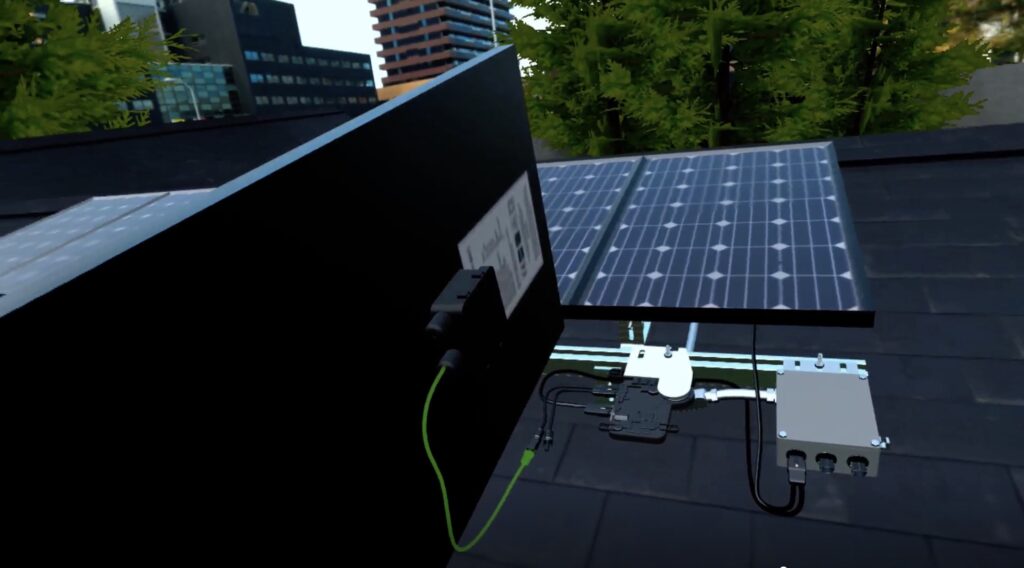
Training in immersive VR for realistic hands-on practice.
ImmerseLearn: VR Training for Solar and Renewable Energy
ImmerseLearn’s VR-based PV system maintenance course mirrors actual job-site scenarios. Participants earn microcredentials as they demonstrate competencies like:
- Efficient handling of Enphase IQ microinverter replacements
- Organized documentation and operational tracking
- Routine inspection and servicing protocols
By combining innovation with practical application, ImmerseLearn is cultivating a workforce equipped to meet the challenges of tomorrow’s energy landscape.
Become the PV Technician Every Solar Project Needs
The future of renewable energy depends on technicians trained in precise PV system maintenance, and that’s where ImmerseLearn makes the difference. Our immersive VR training delivers hands-on virtual experience, real-time feedback, and realistic simulations to build job-ready skills.
These repeatable modules prepare learners for real-world challenges in the fast-growing clean energy industry. Whether you’re starting fresh, switching trades, or reskilling your team, our program ensures smarter, safer, and more effective technical training.
Start your journey today and become the expert every sustainable energy project relies on.
Explore the Certified PV Associate training program.