

Solar Deck Installation: Essential Skill for PV Installers
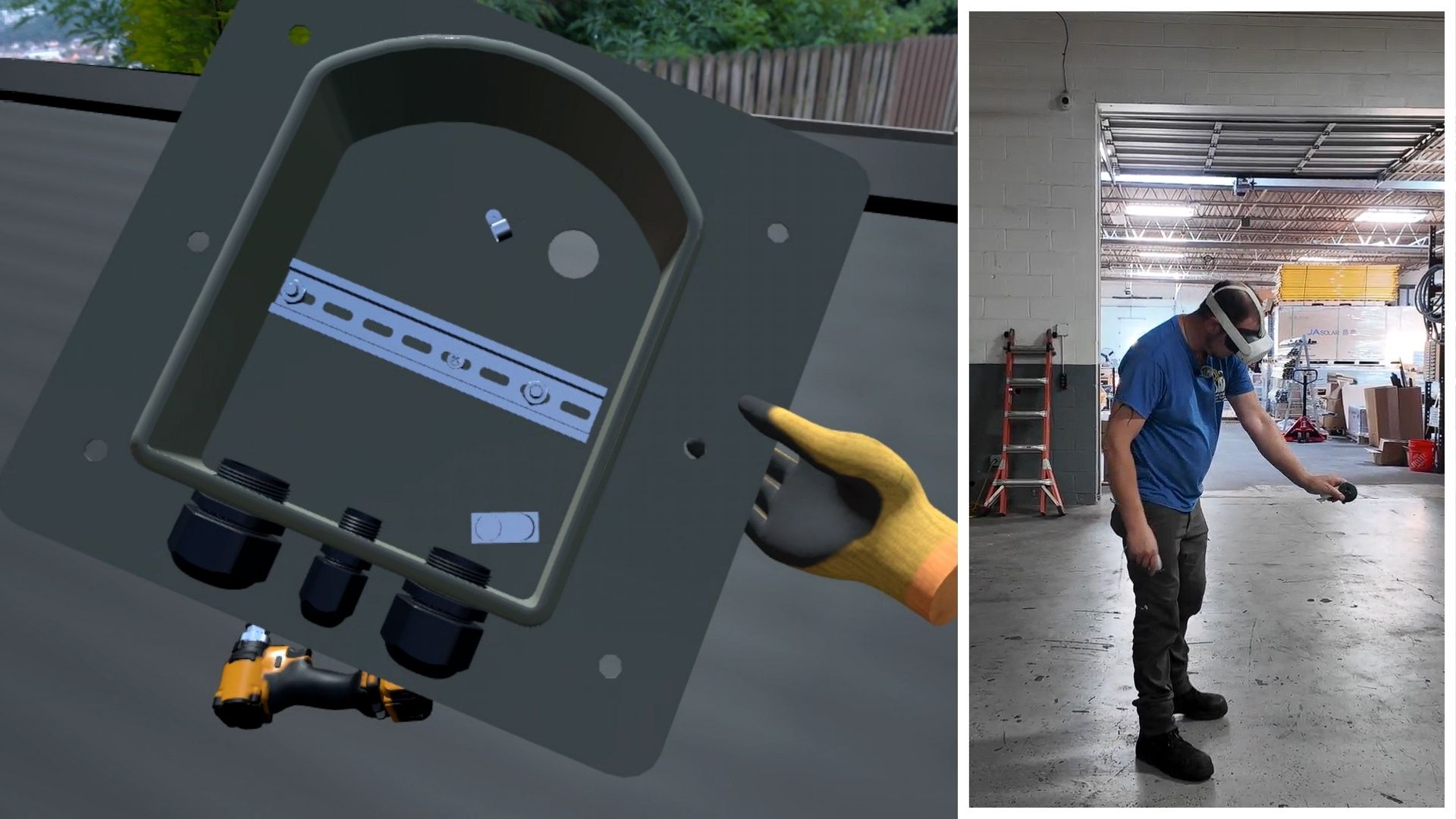
Introduction:
Solar deck installation is a foundational step in photovoltaic system construction and is essential for electrical safety and long-term system reliability. This component enables electrical wiring to pass securely through the roof while safeguarding the structure against water penetration, weather exposure, and environmental wear. When executed correctly, it supports stable electrical connections, proper grounding and bonding, and reliable weather sealing, key factors for efficient and durable PV setups.
For PV installers, this process demands accuracy, careful workmanship, and a strong understanding of electrical pathways, grounding standards, and roof penetration best practices, skills that are developed through professional PV Installer training. Even small mistakes during the setup phase can result in moisture intrusion, electrical malfunctions, or premature photovoltaic system issues.
In this guide, we break down the role of a solar deck, walk through the complete installation procedure, and explain why following correct methods is essential for creating safe, dependable, and code-compliant solar energy systems.
Purpose and Function of a Solar Deck
A solar deck is a critical rooftop component in solar deck installation, allowing electrical conductors to pass safely from the photovoltaic (PV) array into the building. It functions as a secure transition point that houses terminals, grounding hardware, and pass-through connections while maintaining a watertight barrier. This protective design helps shield both the energy system and the building from moisture exposure, weather impact, and long-term environmental wear.
Why Solar Decks Are Essential for PV Systems:
Solar decks play a vital role in solar deck installation by supporting electrical safety, system reliability, and long-term photovoltaic performance. We rely on solar decks to:
- Shield wiring connections from moisture, heat buildup, and ultraviolet exposure
- Prevent leaks at roof penetration points, helping preserve overall roof integrity
- Support correct grounding and bonding practices for system safety and protection
- Enable clean, organized, and code-compliant routing of conductors for dependable rooftop installations
By acting as a stable interface between the roof surface and internal wiring pathways, solar decks contribute to safety, durability, and regulatory compliance in modern photovoltaic projects.
Role of PV Installers in Solar Deck Installation
In solar deck installation, we as PV Installers ensure every rooftop penetration is safe, secure, and built for long-term durability. This work combines mechanical skills, electrical knowledge, safety awareness, and rooftop solar best practices, as each step directly affects electrical safety, roof integrity, and overall system performance.
We accurately drill roof penetrations, securely fasten the solar deck, install and inspect electrical terminals, and ensure proper grounding and bonding while protecting internal components from moisture and temperature exposure. At ImmerseLearn, immersive, hands-on training helps learners understand how each action supports safe, reliable, and long-term photovoltaic system performance.
Step-by-Step Solar Deck Installation Process
In our solar deck installation VR training, we guide learners through a realistic, step-by-step process that mirrors real-world rooftop photovoltaic installations. Training in a controlled virtual environment helps learners build accuracy, confidence, and a strong foundation in professional PV Installer best practices.
1) Drilling the Roof Penetration Safely:
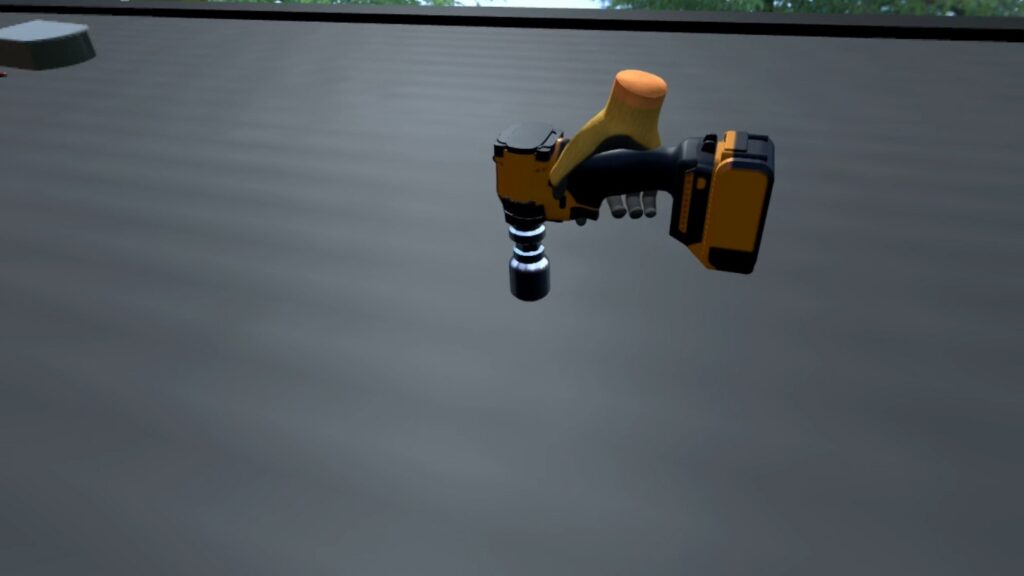
The solar deck installation process begins with drilling the roof penetration using a drill equipped with a hole saw bit. We emphasize precise positioning to ensure clean, accurate penetrations that protect roof integrity and prevent waterproofing issues.
In real rooftop installations, even small drilling misalignment can cause water intrusion, making this step critical during PV Installer training.
2) Proper Placement of the Solar Deck:
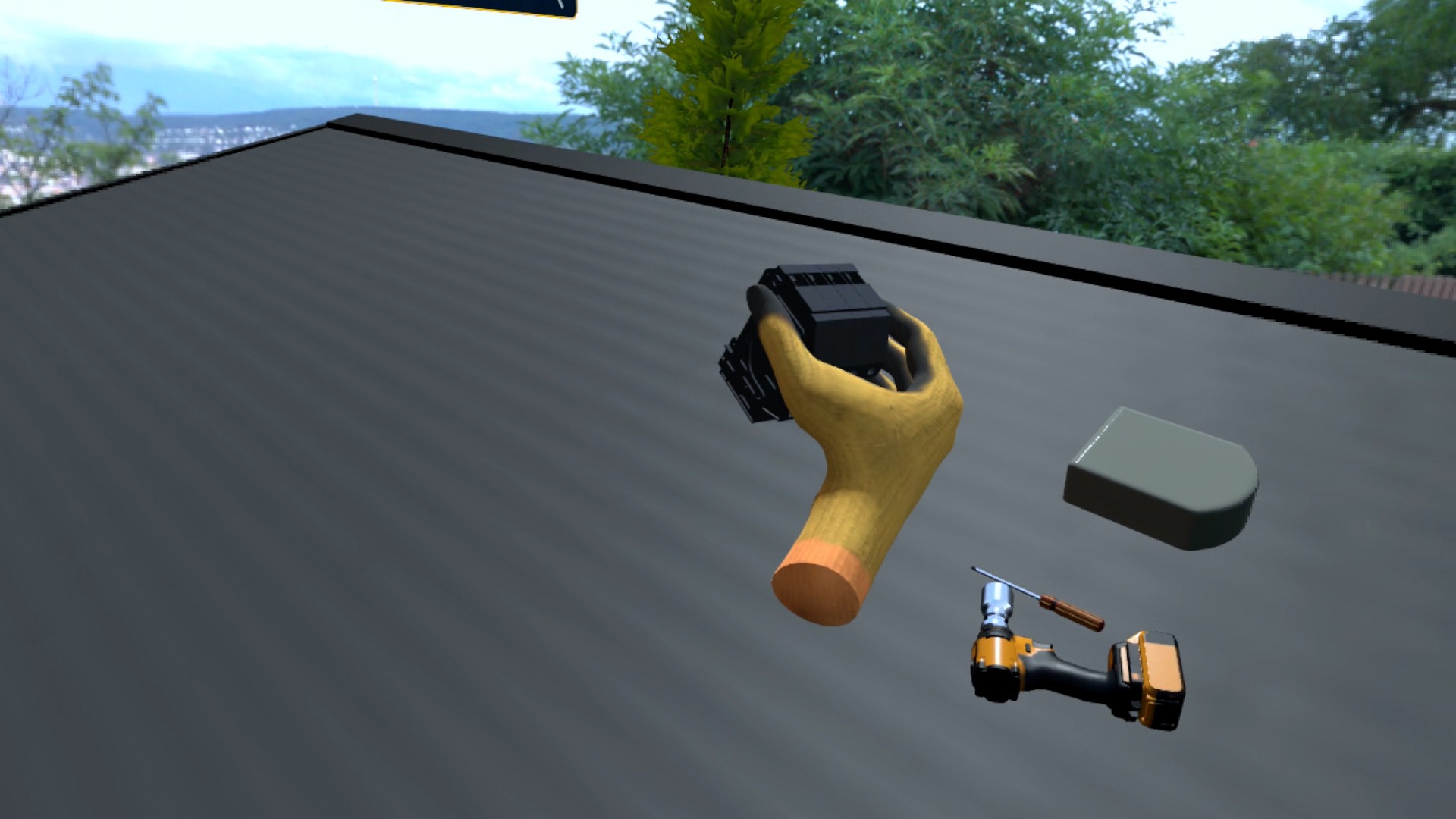
Next, we place the PV solar deck over the drilled hole, focusing on correct alignment so electrical conductors pass smoothly and the deck sits flush against the roof surface. Proper placement at this stage is essential for a secure and reliable solar deck installation.
3) Securing the Solar Deck with Compression Connectors:
We then secure the solar deck using compression connector nuts, tightening them with a wrench to apply even pressure and long-term stability. VR training reinforces proper torque application, fastening consistency, and code-compliant techniques required for durable solar deck installation.
4) Final Alignment for Secure Installation:
After fastening, we realign the solar deck to confirm accurate positioning before installing electrical components. This final check ensures the solar deck installation is secure, precise, and ready to support safe electrical connections in rooftop photovoltaic systems.
During real installations, this step prevents alignment issues that affect conductor routing and system reliability.
Installing and Inspecting Electrical Terminals
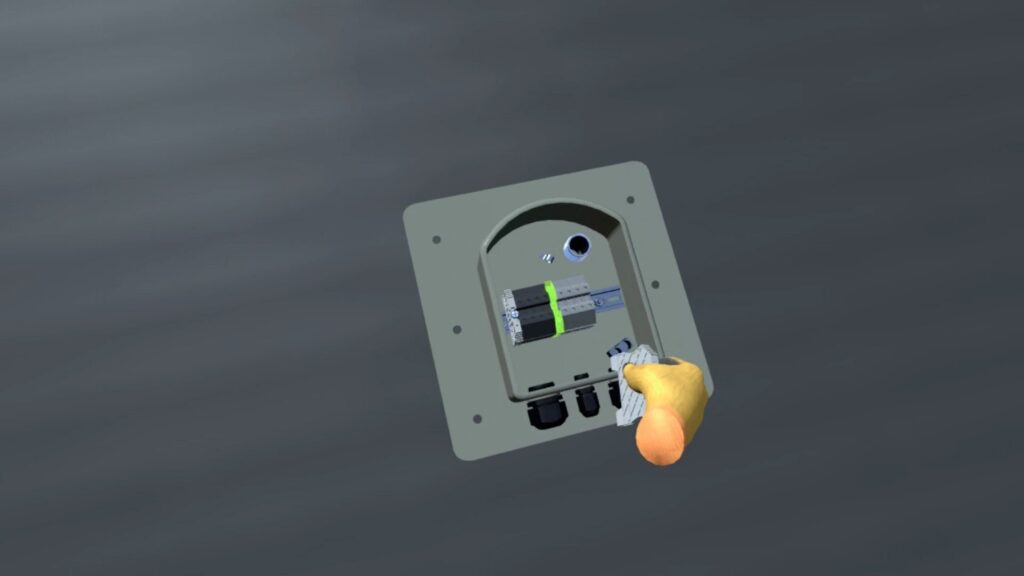
Installing and inspecting electrical terminals is a critical phase of solar deck installation that directly affects electrical safety, system performance, and long-term reliability. This step focuses on accurate terminal placement, careful inspection, and secure installation to ensure safe current flow and code-compliant rooftop photovoltaic systems.
1) Installing the Negative Electrical Terminal:
Before beginning installation, proper preparation and inspection of the negative terminal are essential to ensure safe and reliable solar deck installation.
- Inspect the negative terminal carefully before installation to ensure it is clean, undamaged, and rated for outdoor use.
- Place the negative terminal on the highlighted area of the solar deck with accurate positioning.
- Confirm proper alignment, as the negative terminal carries return electrical current from the photovoltaic array.
- Ensure secure placement to maintain electrical safety, component quality, and long-term reliability in solar deck installation.
2) Installing the Positive Electrical Terminal:
Next, the positive terminal is inspected and positioned on the designated area of the solar deck. Since it carries live electrical current from the PV modules, accuracy and attention to detail are critical. Learners check for cracks, corrosion, or damage to ensure safe and efficient current flow while following professional solar deck installation best practices.
3) Installing Roof Pass-Through Terminals:
After installing the positive and negative terminals, pass-through terminals are inspected and placed on the highlighted areas of the solar deck. These terminals allow electrical conductors to pass through the roof while maintaining a watertight seal. An additional pass-through terminal is installed between the positive and negative terminals to support proper spacing and conductor management.
4) Securing Pass-Through Terminals for Weather Protection:
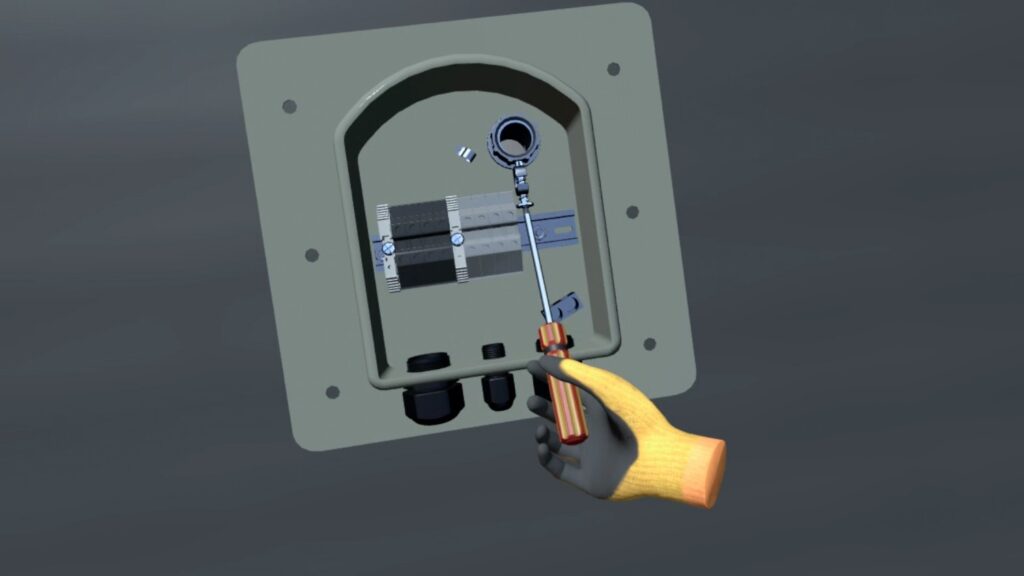
To complete the process, a screwdriver is used to tighten the screws on each pass-through terminal until fully secured. This step emphasizes consistency, precision, and attention to detail, ensuring a stable, durable, and code-compliant solar deck installation through VR training.
Grounding and Bonding for Solar Deck Safety:
Grounding and bonding are critical steps in solar deck installation that ensure electrical safety, system protection, and code-compliant photovoltaic performance.
1) Installing the Grounding Bushing Correctly:
Proper installation of the grounding bushing is essential for ensuring safe electrical bonding and code-compliant solar deck installation.
- Inspect the grounding bushing to confirm proper conductivity, intact threads, and no corrosion.
- Place the grounding bushing on the highlighted area of the solar deck.
- Ensure proper electrical bonding between the solar deck and grounding conductors.
- Verify correct installation to maintain grounding safety and electrical code compliance in solar deck installation.
2) Tightening the Grounding Bushing:
Once the bushing is properly positioned, it must be securely tightened to complete the bonding connection. Adequate torque helps maintain electrical continuity, prevents loosening over time, and contributes to overall system reliability in PV installations.
3) Installing the Grounding Clip Lug:
The grounding clip lug is then attached to the secured bushing and tightened using a screwdriver until firmly in place. Repeating this procedure ensures mechanical stability and consistent grounding performance. VR-based training emphasizes correct bonding methods, precision during installation, and adherence to code-compliant practices for modern photovoltaic projects.
Completing Installation with the Solar Deck Cover
To finalize the setup, the protective cover is carefully positioned over the assembled rooftop components. This covering plays an important role in shielding internal electrical parts from direct exposure to weather elements, supporting system safety, durability, and long-term operational performance.
This closing stage highlights the need to protect wiring and connection points from environmental factors such as rain, dust, debris, and temperature variations. When fitted correctly, the cover helps ensure dependable operation, extends equipment service life, and aligns with established best practices for photovoltaic system deployment.
Why Proper Solar Deck Installation Matters
Proper solar deck installation is essential for maintaining electrical safety, structural integrity, and long-term photovoltaic system reliability. Incorrect installation can lead to water leaks, electrical faults, grounding issues, and costly repairs that reduce overall system performance.
By understanding the complete solar deck installation process, we can see how each step supports:
- System safety, by minimizing electrical and grounding risks
- Electrical performance, through secure and properly routed conductors
- Weather resistance, by preventing moisture and environmental damage
- Long-term durability, ensuring reliable performance throughout the system’s lifespan
This knowledge is critical for professional PV Installers working in real-world rooftop environments, where precision, safety awareness, and code-compliant solar deck installation practices directly impact system performance and longevity.
From Virtual Training to Real-World Readiness
After mastering solar deck installation in Virtual Reality, we transition these skills into real-world applications through hands-on training and externship experience. This progression moves learners from simulated practice to job-site execution while maintaining accuracy, safety awareness, and proper installation techniques.
By completing the full solar deck installation process in VR, learners enter real job sites with greater confidence and a strong foundation in best practices. This preparation reinforces correct workflows, reduces on-site errors, and supports safe, efficient, and code-compliant photovoltaic system installations.
Career-Focused Training for PV Installers
At ImmerseLearn, we are an IACET-accredited institution committed to preparing learners for high-demand renewable energy careers within the skilled trades and workforce development sectors. Our PV Installer program focuses on building practical, job-ready skills by emphasizing hands-on experience, electrical safety awareness, and real-world workforce readiness.
As part of this training, solar deck installation is taught as a critical technical skill, ensuring learners understand proper installation techniques that support system safety, durability, and long-term performance. This approach reflects our commitment to immersive, job-ready education designed to meet the expectations of today’s renewable energy industry.
Job Placement and Career Support
Beyond technical training, ImmerseLearn provides career and job placement support to Beyond hands-on technical training in solar deck installation, we provide comprehensive career and job placement support to help learners confidently transition into the solar workforce. Our support includes resume guidance, interview preparation, and direct connections with employers across the renewable energy and skilled trades industries.
We focus not only on teaching essential PV installation skills, but also on helping learners build long-term careers in renewable energy, ensuring they are workforce-ready, confident, and prepared for real-world job opportunities.
How ImmerseLearn Uses Virtual Reality for Solar Deck Training
At ImmerseLearn, we combine advanced Virtual Reality (VR) training with real-world renewable energy industry standards to deliver safe, effective, and workforce-ready instruction for solar deck work.
- We use VR-based training to recreate realistic rooftop environments within our PV Installer program.
- This immersive method allows participants to practice deck-related procedures safely, without exposure to job-site risks or material waste.
- Through guided simulations, participants gain hands-on experience with installation tools, component inspection, and correct task sequencing.
- We help trainees develop accuracy, efficiency, and confidence before entering active work environments.
- This simulated practice prepares future PV Installers for real-world conditions where precision, safety, and performance are essential.
By connecting simulated learning with on-site readiness, we ensure participants are fully prepared to perform rooftop solar tasks confidently and professionally on live job sites.
Learn more about the PV Installer training program at ImmerseLearn
Conclusion:
Solar deck installation is essential for building safe, reliable, and long-lasting photovoltaic systems, requiring precision, safety awareness, and strong technical knowledge. For PV Installers, developing expertise in this area helps ensure electrical protection, resistance to weather exposure, and consistent long-term system performance.
By combining immersive Virtual Reality training with hands-on field experience, we prepare participants to carry out this work with confidence, accuracy, and professionalism. This approach equips future PV Installers with workforce-ready skills and industry-aligned methods required for real-world photovoltaic projects.
Are you ready to master solar deck installation and become a skilled PV Installer?