
Air Distribution Systems Training


Credits : 0.3
About the Course:
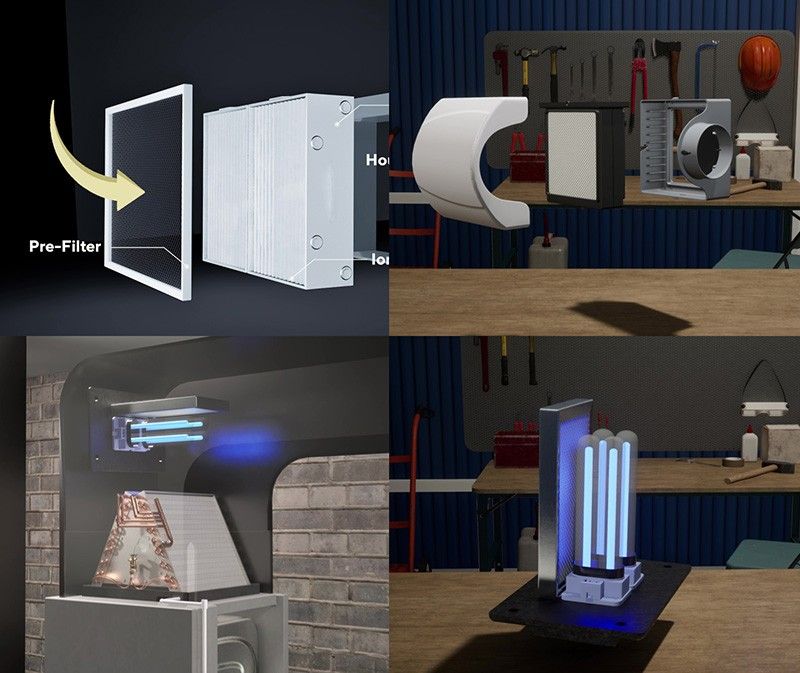
The Air Distribution Systems microcredential provides a comprehensive introduction to the principles, components, and practices of air distribution in HVAC systems. This microcredential supports technicians with ductwork training courses focused on job-ready, hands-on skills. Learners will gain a clear understanding of ductwork design, installation methods, and airflow dynamics, as well as hands-on knowledge of air handlers, zoning systems, and economizers. Using immersive VR simulations, participants will explore and interact with various air distribution systems in real-world scenarios, enhancing both comprehension and practical application.
Learning Objectives:
-
Understand the basic principles of ductwork design, including sizing, components, and airflow characteristics.
- Identify and differentiate between common duct system types (e.g., radial, trunk and branch, reducing trunk, perimeter loop).
- Explore materials and installation methods for metal, flex, and ductboard ductwork.
- Learn how to install key duct components such as plenums, fire dampers, and specialty fittings.
- Gain knowledge of residential and commercial air handlers: their functions, locations, and control methods.
- Explore the role and function of economizers, including fresh air intake, energy recovery, and enthalpy controls.
- Apply knowledge in a VR simulation that allows learners to practice key concepts and procedures in a real-world setting.
This Air Distribution Systems training is delivered through our LMS and is available as both web-based and immersive VR training.
Air Distribution Systems Training for HVAC Technicians

This microcredential prepares learners for real-world HVAC roles with a strong foundation in air distribution systems. It supports air balancing course pathways for individuals preparing for industry roles, helping students develop job-ready skills that are highly valued across the HVAC workforce.
How this course strengthens workforce skills:
By completing this microcredential, learners will gain confidence in understanding and managing air distribution systems, making them more accurate, efficient, and prepared for effective system installation and balancing, including air balancing course practice for installation and balancing.