
Communication & Patient Interaction


Credits : 0.5
About the Course:
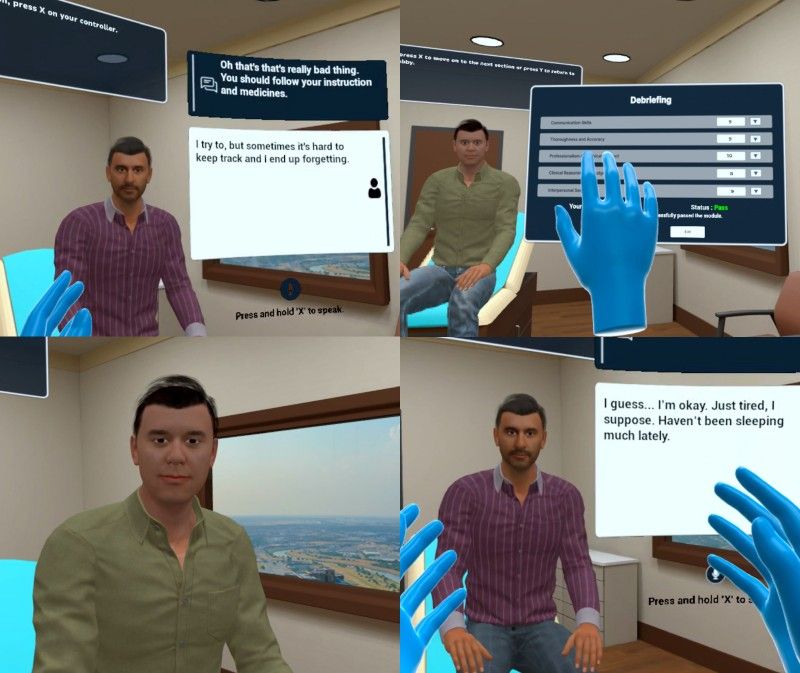
This microcredential introduces learners to the essential principles of effective communication and patient interaction for success in medical assistant training programs. Through immersive VR modules and Conversational AI simulations, students will engage in end-to-end patient conversations, practicing both verbal and nonverbal communication techniques, patient data collection, and empathetic engagement. The training emphasizes active listening, professional tone, and accurate documentation within electronic health records (EHR). By interacting with realistic virtual patients powered by AI, learners gain the confidence, critical thinking, and professionalism needed to communicate effectively in real-world clinical settings.
Learning Objectives:
- Demonstrate effective verbal and nonverbal communication with patients and colleagues.
- Obtain and accurately document patient information using EHR systems.
- Apply therapeutic communication techniques to support patient comfort and understanding.
- Recognize the role of empathy and cultural sensitivity in patient care.
- Maintain professional boundaries and confidentiality during all interactions.
Course delivered through our LMS and accessible in both VR and web. Learn on the web anytime, or enjoy immersive VR training with your own Oculus VR headset.
Workforce Development

At ImmerseLearn, we prepare medical assistants with clear, compassionate, and professional communication skills as part of our clinical medical assistant training program. This microcredential integrates real-world communication challenges within simulated environments to strengthen patient interaction and accurate clinical documentation for workplace readiness.
By completing this microcredential, medical assistant students will demonstrate proficiency in therapeutic communication, patient documentation, and empathetic interaction, forming a strong foundation for patient-centered care.