
Potential Relay Diagnosis and Replacement Training


Credits : 0.3
About the Course:
This Diagnosing and Replacing Potential Relay microcredential trains HVAC technicians to safely diagnose, remove, and replace a faulty potential relay in air conditioning and refrigeration systems. Learners practice real-world electrical troubleshooting steps including disconnect isolation, resistance testing using a multimeter (ohms setting), wire removal, and secure component installation.
The course emphasizes safe lockout procedures, accurate relay testing, proper wiring reconnection, and final system verification to ensure reliable compressor start-up and overall system performance. Technicians looking to strengthen their electrical troubleshooting expertise can further develop their skills through our Online HVAC Technician Certification Program, focused on advanced HVAC system diagnostics and field repair.
Learning Objectives:
-
Identify symptoms of potential relay failure, including compressor start issues
-
Reconnect wiring correctly and restore power safely
-
Install and secure a compatible replacement relay
-
Remove faulty relays using proper tools and electrical safety practices
-
Interpret OL (open loop) readings to confirm relay failure
-
Use a multimeter set to ohms to test relay continuity
-
Safely isolate power using the disconnect box before servicing
This Potential Relay Diagnosis and Replacement training is delivered through our LMS and is available as both web-based and immersive VR training.
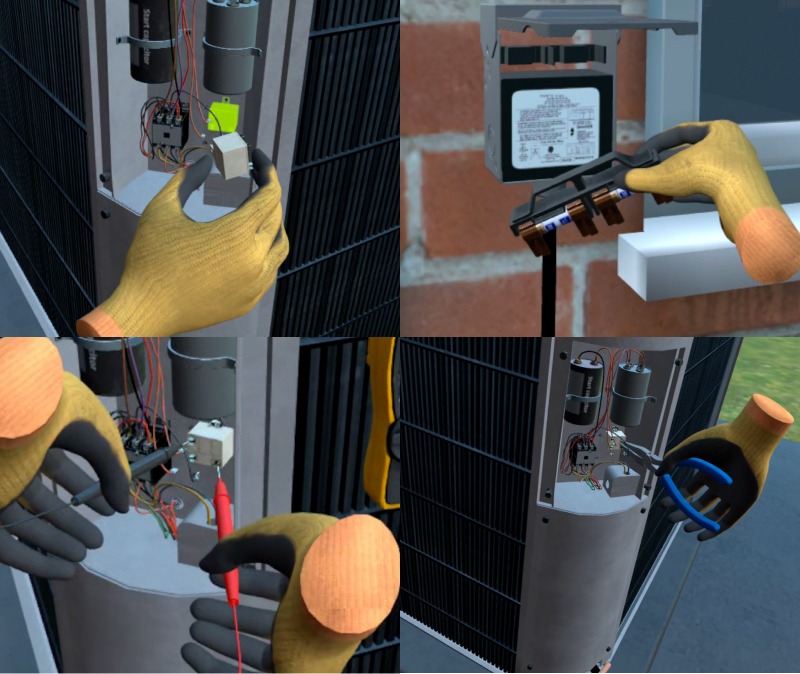
Potential Relay Diagnosis and Replacement Training for HVAC Technicians

At ImmerseLearn, we equip HVAC technicians with hands-on, job-ready skills for servicing cooling and refrigeration systems. This microcredential strengthens electrical troubleshooting accuracy, safety compliance, and component replacement precision through immersive VR practice. If you are just starting out in HVAC, our Online HVAC Training is a structured way to build essential skills and begin your career in the HVAC industry.
How this course strengthens workforce skills:
By completing this microcredential, HVAC technicians build the confidence and technical expertise needed to diagnose potential relay failures, replace components safely, and restore dependable system performance in residential and commercial HVAC environments.