
Electrocardiography: Holter Monitoring


Credits : 0.3

About the Course:
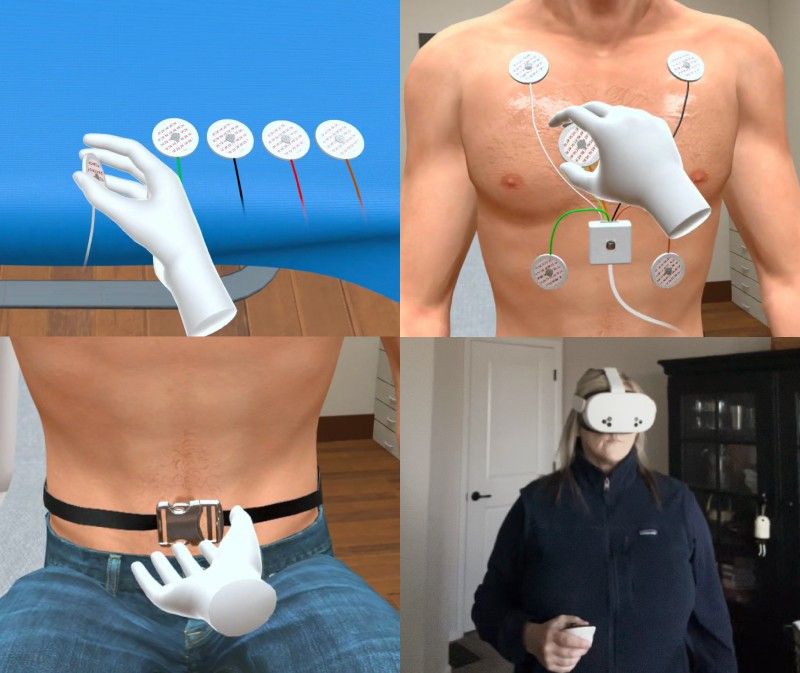
Electrocardiography focuses on the heart’s electrical activity and its role in maintaining normal rhythm. In this microcredential, learners are introduced to cardiac anatomy, the conduction system, and how ECG readings help identify abnormalities such as arrhythmias. Through immersive VR simulations, learners practice patient preparation, electrode placement, and basic rhythm interpretation key skills for supporting cardiac assessments.
Holter monitoring extends ECG by providing continuous recording of heart activity over time. Learners explore its role in detecting intermittent cardiac issues and gain hands-on experience in applying Holter devices, guiding patients, and ensuring accurate data collection. The course emphasizes patient safety, proper device handling, and clear documentation in clinical settings. This microcredential is part of a broader clinical medical assistant training pathway designed to build essential patient care and diagnostic support skills.
Learning Objectives:
- Identify basic heart anatomy and the electrical conduction system.
- Understand ECG fundamentals and common rhythm abnormalities.
- Demonstrate proper patient preparation and electrode placement.
- Understand the purpose and use of Holter monitoring.
- Demonstrate correct application and operation of Holter devices.
Course delivered through our LMS and accessible in both VR and web. Learn on the web anytime, or enjoy immersive VR training with your own Oculus VR headset.
Workforce Development

At ImmerseLearn, we prepare healthcare learners with essential skills to support cardiac diagnostic procedures. This microcredential develops competency in patient preparation, device handling, and monitoring techniques required in electrocardiography and ambulatory cardiac care settings.
By completing this microcredential, learners will gain practical knowledge of cardiac monitoring, Holter device application, and essential skills to assist healthcare professionals in delivering accurate and effective electrocardiography diagnostics.