
Battery Pack Design and Safety: Assembly, Components, and High-Voltage Safety


Credits : -

About the Course:
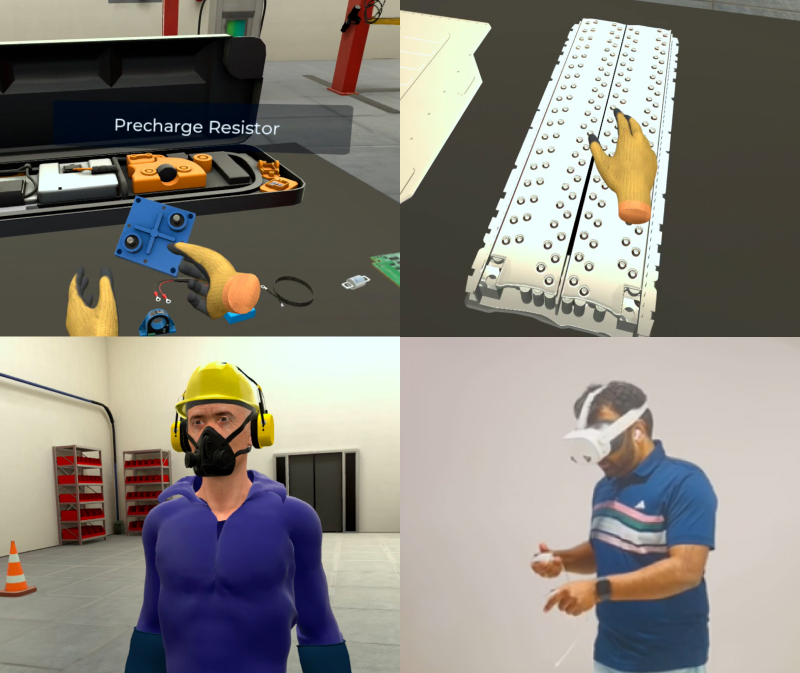
This Battery Pack Design and Safety microcredential provides a comprehensive overview of electric vehicle (EV) battery pack design, from historical foundations to modern assembly practices and safety protocols, making it an ideal skill-building course for aspiring electric vehicle technicians. Learners explore every critical component of battery systems including cells, modules, sensors, busbars, fuses, and control units while developing hands-on skills in thermal management, sealing, and wiring. Virtual Reality (VR) modules enhance learning by simulating real-world tasks like PPE usage, component identification, and safety inspections in high-voltage environments.
Learning Objectives:
- Understand the historical development of battery technology, from static electricity to modern EV packs.
- Identify the structure and assembly process of battery cells, modules, and packs.
- Apply proper thermal management strategies using adhesives and thermal transfer materials.
- Follow PPE requirements and hazard mitigation strategies in battery assembly environments.
- Recognize and describe key components of a battery pack, including busbars, contactors, fuses, and sensors.
- Understand high-voltage safety systems such as precharge circuits and battery management systems (BMS).
- Define and interpret HV battery health monitoring terms like SOC, SOH, SOP, and RUL.
- Participate in immersive VR simulations for component identification and PPE best practices.
Course delivered through our LMS and accessible in both VR and web. Learn on the web anytime, or enjoy immersive VR training with your own Oculus VR headset.
Workforce Development

At ImmerseLearn, we prepare EV technicians through our Electric Vehicle Technician Program for the demands of advanced battery technology and electric propulsion systems. This course emphasizes both technical knowledge and workplace safety, enabling learners to confidently contribute to EV assembly, service, and diagnostics.
By completing this microcredential, students will be prepared to work safely and effectively with modern EV battery systems contributing to the development and maintenance of high-performance, reliable electric vehicles.