
MAF Sensor Diagnostics


Credits : 0.5


About the Course:
This MAF Sensor diagnostics microcredential trains technicians to identify, diagnose, and troubleshoot faults related to the Mass Air Flow (MAF) sensor within hybrid electric vehicle powertrain systems. This microcredential is part of our hands-on HEV diagnostic training, designed to build real-world skills in airflow analysis and sensor troubleshooting.
Learners will practice real-world diagnostic procedures including scanning for MAF sensor-related fault codes, analyzing airflow and fuel trim data, inspecting sensor wiring and connectors, and testing sensor outputs using professional diagnostic tools. The course emphasizes safe diagnostic practices, proper use of scan tools and multimeters, and systematic troubleshooting techniques to accurately detect MAF sensor failures that impact air-fuel mixture, engine efficiency, and overall vehicle performance in hybrid electric vehicles.
Learning Objectives:
- Identify common symptoms of a failing MAF sensor such as poor fuel economy, rough idling, engine hesitation, stalling, or illuminated warning lights
- Safely prepare the hybrid vehicle for diagnostic procedures by following proper electrical safety and vehicle shutdown protocols
- Use diagnostic scan tools to identify MAF sensor fault codes and abnormal airflow or fuel trim readings
- Test MAF sensor signals using a multimeter or scan tool live data
- Inspect sensor wiring harnesses, connectors, and air intake components for damage, contamination, or leaks
- Identify malfunctioning MAF sensors affecting air-fuel ratio and engine performance
- Interpret diagnostic data to determine the root cause of airflow-related engine issues
- Verify proper engine operation and sensor performance after repairs or sensor replacement
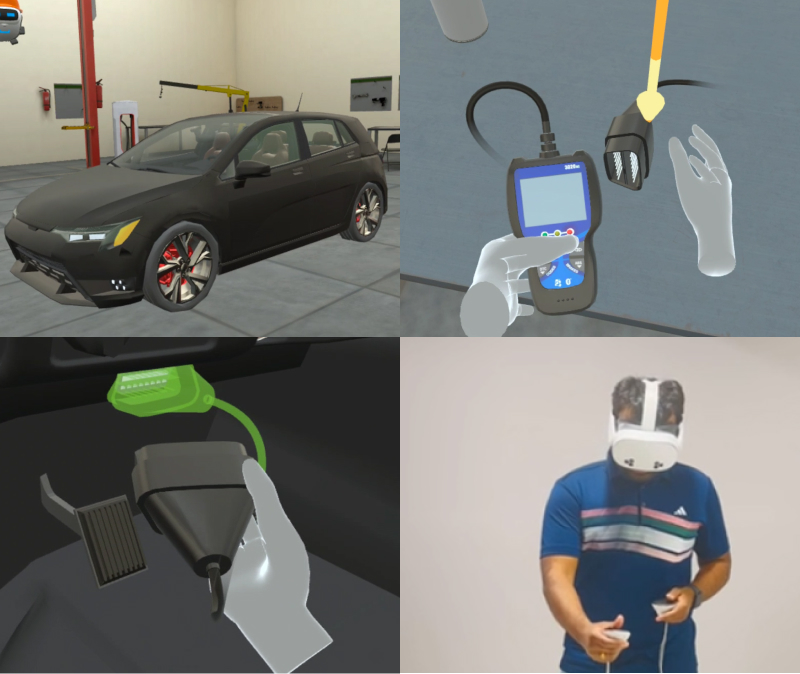
Course delivered through our LMS and accessible in both VR and web. Learn on the web anytime, or enjoy immersive VR training with your own Oculus VR headset.
Workforce Development

At ImmerseLearn, we equip hybrid and electric vehicle technicians with the diagnostic skills required to service modern engine management and electronic control systems. These capabilities are reinforced through our advanced hybrid vehicle diagnostics training, helping technicians accurately diagnose and resolve real-world engine performance issues.
This microcredential strengthens airflow diagnostics, fuel system analysis, and electrical troubleshooting skills through immersive VR-based learning.
How this course strengthens workforce skills:
By completing this microcredential, technicians will gain the confidence and technical expertise needed to diagnose MAF sensor failures, correct air-fuel mixture issues, and restore optimal engine performance and efficiency in hybrid electric vehicles.