
Patient Ambulation Techniques Training


Credits : 0.4

About the Course:
Patient Ambulation Techniques is a fundamental patient care skill for Nursing Assistants working in hospitals, long-term care facilities, rehabilitation centers, and other healthcare environments. In this microcredential, learners are introduced to the purpose and clinical importance of assisting patients with ambulation, including its role in promoting patient mobility, improving circulation, preventing complications associated with prolonged bed rest, and supporting patient independence during recovery.
Through immersive VR simulations, learners gain hands-on experience performing safe patient ambulation while following proper patient interaction procedures, patient identification protocols, hand hygiene practices, privacy maintenance, patient communication, transfer belt application, safe transfer techniques, and proper body mechanics required for assisting patients during movement. The course emphasizes patient safety, fall prevention, caregiver positioning, and maintaining professionalism throughout the ambulation procedure.
Learners will also practice assisting patients from lying to sitting positions, applying transfer belts securely, helping patients safely stand, supporting patients while walking short distances, assisting patients during directional turns, monitoring patient stability during movement, returning patients safely to bed, and completing the procedure according to established healthcare safety protocols. The course highlights patient communication, infection prevention, mobility assistance, and patient safety standards essential in Nursing Assistant and allied health settings.
Learning Objectives:
- Identify the purpose and importance of patient ambulation in mobility assistance and patient recovery.
- Understand patient identification procedures, hand hygiene practices, privacy protocols, and patient preparation requirements before ambulation.
- Demonstrate proper body positioning and transfer belt application techniques for safe patient movement.
- Perform safe patient ambulation assistance using proper support techniques and mobility assistance procedures.
- Apply patient safety, fall prevention, and infection control procedures throughout the ambulation process.
- Assist patients safely during standing, walking, turning, and returning to bed while maintaining patient comfort and safety.
See how mobility skills fit into broader patient care by exploring our Nursing Assistant Training guide.
This Patient Ambulation Techniques training is delivered through our LMS and is available as both web-based and immersive VR training.
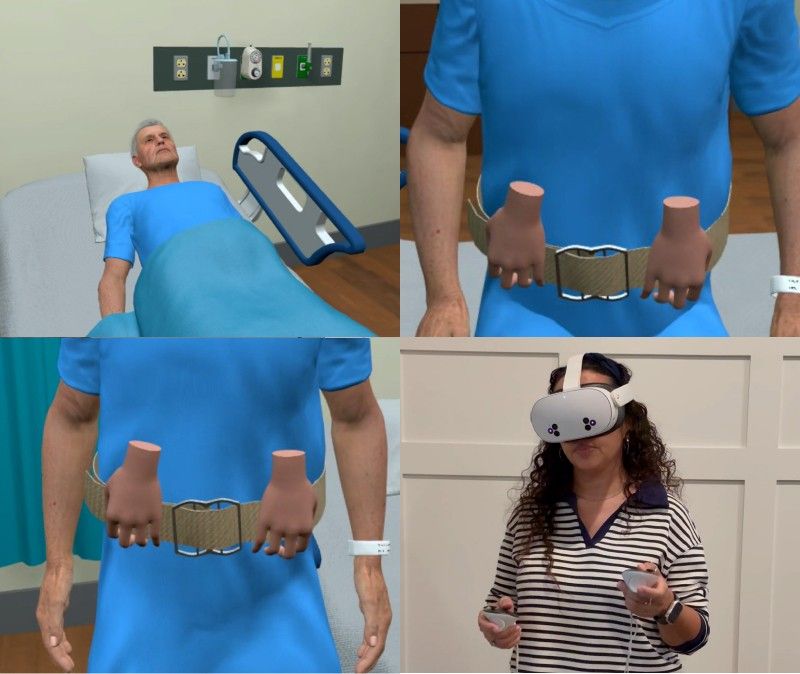
Patient Ambulation Techniques Training for Nursing Assistants

At ImmerseLearn, we prepare healthcare learners with essential patient care and mobility assistance skills required in modern healthcare environments. This microcredential develops competency in patient identification, mobility assistance procedures, transfer belt handling, patient transfer techniques, safe ambulation support, infection prevention, patient communication, and patient safety skills necessary for delivering safe and effective healthcare support.
By completing this microcredential, learners will gain practical knowledge and hands-on experience in safely assisting patients with ambulation. Learners will develop essential competencies in patient identification, mobility assistance procedures, transfer belt application, safe standing and walking assistance, patient transfer techniques, fall prevention, infection prevention, patient communication, and patient safety skills necessary to assist patients safely and effectively in Nursing Assistant and allied health settings.