
PV Open Circuit Voltage Testing


Credits : - 0.2

About the Course:
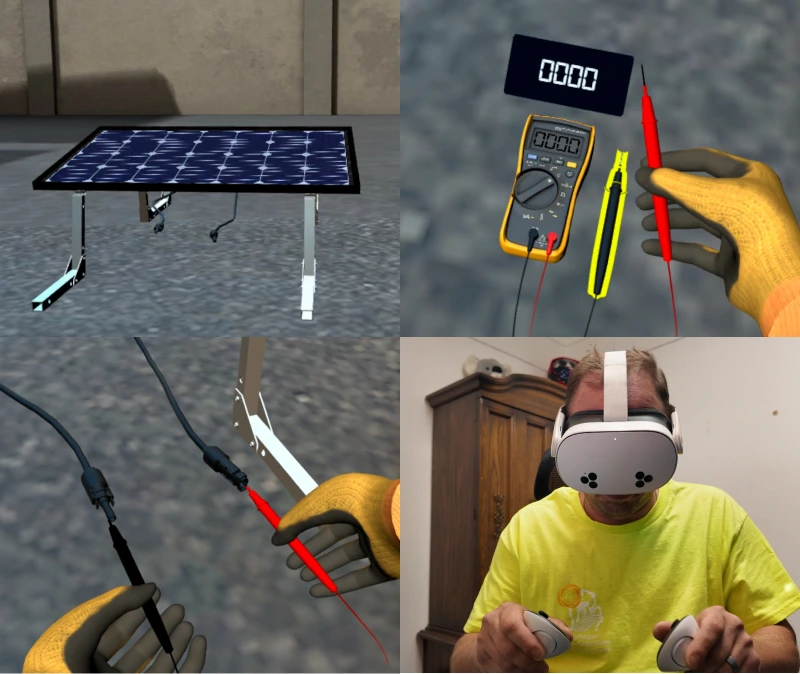
This PV Open Circuit Voltage Testing microcredential, part of the PV course series, trains technicians to safely perform Open Circuit Voltage (VOC) testing on photovoltaic (PV) systems to verify module performance, identify electrical faults, and ensure proper system operation during installation and maintenance.
Learners will practice real-world testing procedures including module isolation, multimeter setup, voltage measurement techniques, circuit inspection, connector verification, environmental condition assessment, reading voltage values, comparing manufacturer specifications, troubleshooting irregular readings, and documenting test results. The course emphasizes electrical safety, testing accuracy, equipment handling, and proper diagnostic procedures to maintain reliable PV system performance.
Technicians will gain hands-on experience in performing accurate VOC testing, identifying potential system issues early, preventing electrical failures, and ensuring optimal solar system efficiency.
Learning Objectives:
- Understand the fundamentals of VOC testing in PV systems
- Identify components involved in PV electrical testing
- Prepare solar systems safely for voltage testing procedures
- Use multimeters and testing equipment correctly
- Measure open circuit voltage accurately on PV modules
- Compare voltage readings against manufacturer specifications
- Identify wiring faults and abnormal voltage conditions
- Follow proper electrical safety procedures during testing
Course delivered through our LMS and accessible in both VR and web. Learn on the web anytime, or enjoy immersive VR training with your own Oculus VR headset.
Workforce Development

At ImmerseLearn, we equip solar technicians with practical electrical diagnostic skills required for modern PV systems. This microcredential strengthens technical troubleshooting abilities, testing accuracy, safety awareness, and diagnostic confidence through immersive VR-based learning.
Learners pursuing PV installer professional training can use this microcredential to strengthen their diagnostic testing skills and improve confidence when troubleshooting photovoltaic system performance issues in the field.
By completing this microcredential, technicians will gain the confidence and technical expertise needed to safely perform VOC testing on photovoltaic systems while ensuring electrical accuracy, early fault detection, regulatory compliance, and long-term solar system performance.