
Low Temperature Sterilization Training


Credits : 0.3

About the Course:
The Low Temperature Sterilization microcredential equips learners with essential knowledge and hands-on skills required to safely operate low temperature sterilization systems used for heat and moisture sensitive medical instruments, supporting sterile processing workflows in healthcare environments. Through immersive VR simulations, learners practice proper loading, cycle selection, monitoring, and unloading of low temperature sterilizers while adhering to manufacturer guidelines and infection prevention standards.
The course emphasizes patient safety, equipment compatibility, correct workflow sequencing, and compliance with regulatory and facility protocols to ensure effective sterilization outcomes in sterile processing environments.
Learning Objectives:
- Explain the principles and purpose of low temperature sterilization in healthcare settings.
- Identify instruments and materials appropriate for low temperature sterilization processes.
- Differentiate between stages of low temperature sterilization cycles, including conditioning, exposure, and aeration.
- Demonstrate proper loading, cycle selection, and operation of a low temperature sterilizer through VR-based scenarios.
- Apply safety standards, PPE requirements, and infection control practices during sterilization workflows.
- Recognize common errors, alarms, and indicators associated with low temperature sterilization systems.
- Understand factors that impact sterilization effectiveness, including packaging integrity, load configuration, and cycle selection.
This Low Temperature Sterilization training is delivered through our LMS and is available as both web-based and immersive VR training.
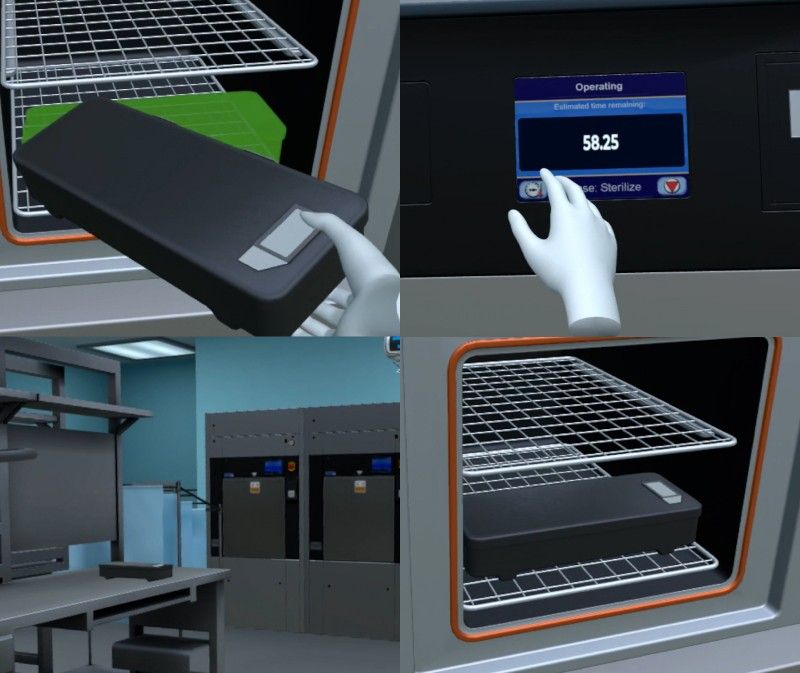
Low Temperature Sterilization Training for Sterile Processing Technicians
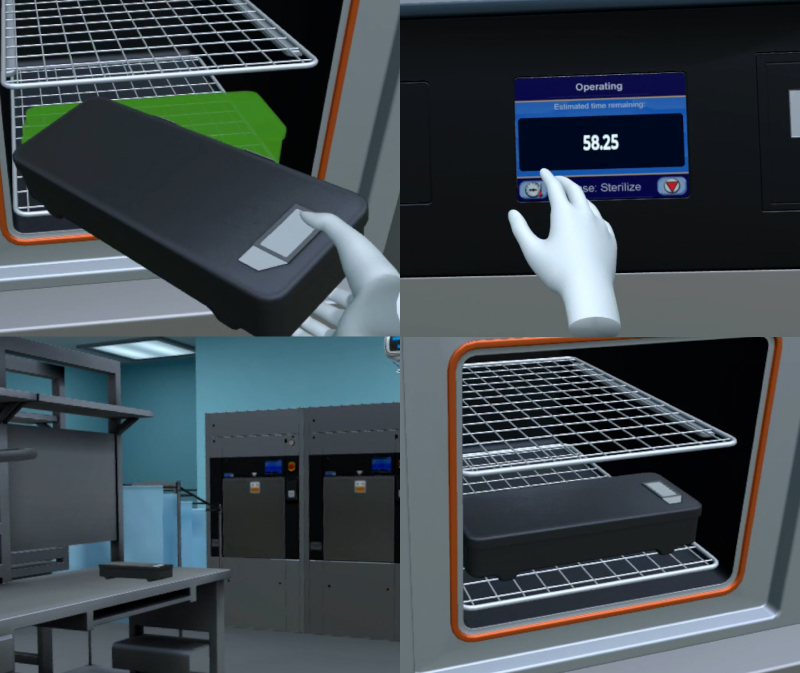
At ImmerseLearn, we equip Sterile Processing Technicians to support safe surgical care through accurate and compliant low temperature sterilization practices. This microcredential strengthens learners’ ability to operate low-temperature sterilizers with confidence, follow standardized workflows, and ensure sterile instrument availability while maintaining compliance with healthcare regulations and patient safety standards.
By completing this microcredential, learners will gain the skills and confidence to safely operate low temperature sterilization systems, support sterile processing workflows, and contribute to high standards of infection prevention and patient safety in clinical and surgical environments.