
Surgical Instrument Inspection & Quality Assurance


Credits : 0.3

About the Course:
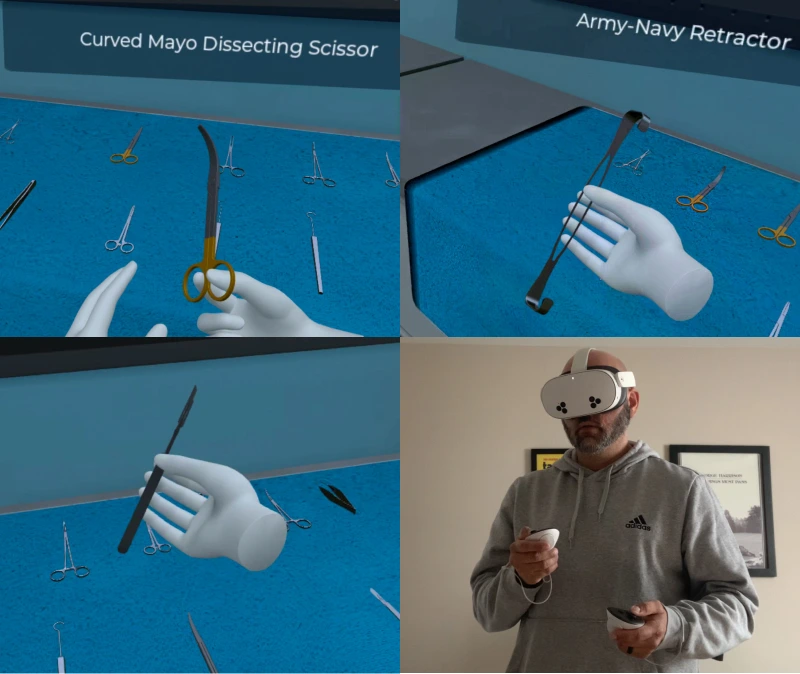
The Surgical Instrument Inspection & Quality Assurance microcredential equips learners with the essential knowledge and practical skills required to properly identify, select, inspect, and evaluate surgical instruments used in sterile processing and healthcare environments. Through immersive VR simulations, learners will practice recognizing different instrument types, assessing instrument condition, detecting defects, and ensuring instruments meet quality and functionality standards before sterilization and use. This skill also supports learners in an online sterile processing technician course focused on instrument inspection, quality assurance, and patient safety.
The course emphasizes instrument identification, inspection procedures, functionality testing, defect detection, proper handling techniques, quality assurance protocols, and adherence to sterile processing standards to ensure patient safety and surgical readiness.
Learning Objectives:
- Explain the importance of proper instrument selection, inspection procedures, and quality assurance in sterile processing workflows.
- Identify various surgical instruments, understand their functions, and recognize procedure-specific instrument requirements.
- Differentiate between acceptable and defective instruments by evaluating wear, damage, alignment, cleanliness, and functionality.
- Perform step-by-step inspection procedures using VR-based scenarios to assess instrument condition and readiness for sterilization.
- Apply proper handling techniques to prevent instrument damage and maintain functionality during inspection processes.
- Follow infection control guidelines and regulatory standards related to instrument handling, inspection, and sterile processing practices.
- Recognize errors such as damaged instruments, corrosion, misalignment, contamination, and improper instrument selection.
Course delivered through our LMS and accessible in both VR and web. Learn on the web anytime, or enjoy immersive VR training with your own Oculus VR headset.
Workforce Development

At ImmerseLearn, we prepare Sterile Processing Technicians to accurately select, inspect, and evaluate surgical instruments while maintaining quality assurance and compliance with strict healthcare safety standards. This microcredential strengthens learners’ ability to reduce instrument-related errors, improve workflow efficiency, and support safe patient care operations.
By completing this microcredential, learners will gain the skills and confidence to accurately identify surgical instruments, perform detailed inspections, detect defects, maintain compliance with industry standards, and ensure safe and efficient sterile processing operations.