
Temporal Artery Temperature Measurement


Credits : 0.3

About the Course:
Body temperature assessment is an essential clinical skill used to evaluate patient health and detect signs of infection, illness, or abnormal physiological conditions. In this microcredential, learners are introduced to the principles of temperature measurement and the proper use of a temporal artery thermometer in clinical settings. Learners will understand normal and abnormal temperature ranges, factors that influence readings, and the importance of accurate documentation.
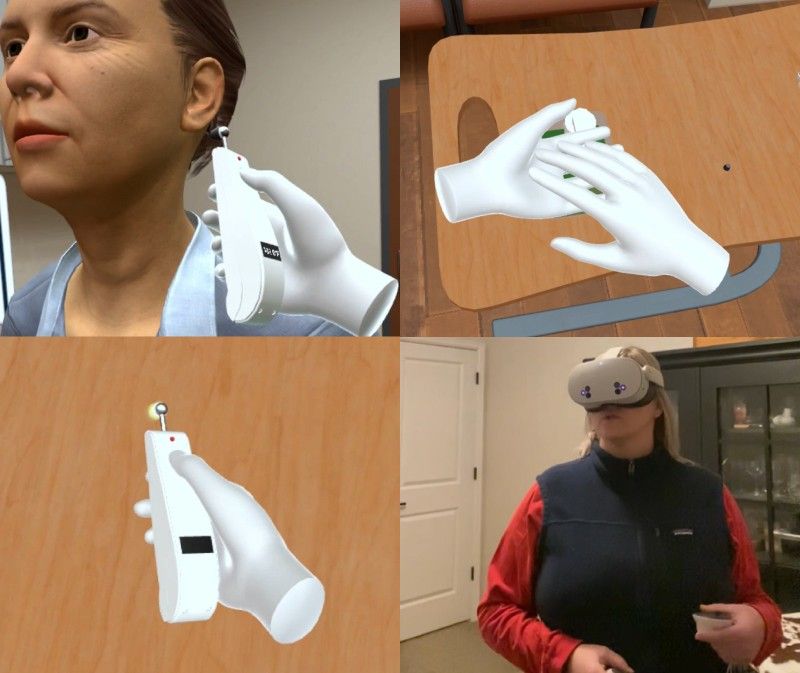
Through immersive VR simulations, learners practice obtaining temperature readings using a temporal artery thermometer while following proper clinical procedures. The course emphasizes patient interaction, correct scanning technique, infection control, and maintaining patient comfort during assessment.
Learners will also gain hands-on experience in preparing equipment, verifying readings, and documenting results accurately in patient records. The course highlights safety standards, communication skills, and best practices required for effective patient care in healthcare environments.
Learners interested in expanding patient assessment and healthcare support skills can further strengthen their knowledge through clinical medical assistant career training focused on real-world clinical workflows and patient care practices.
Learning Objectives:
- Identify the purpose and importance of body temperature assessment.
- Understand normal and abnormal body temperature ranges.
- Demonstrate proper use of a temporal artery thermometer.
- Apply correct patient preparation and communication techniques.
- Follow infection control and equipment sanitation procedures.
- Accurately record and report temperature readings in patient documentation.
Course delivered through our LMS and accessible in both VR and web. Learn on the web anytime, or enjoy immersive VR training with your own Oculus VR headset.
Workforce Development

At ImmerseLearn, we prepare healthcare learners with essential patient assessment skills used in clinical and outpatient care settings. This microcredential develops competency in temperature measurement, patient interaction, equipment handling, and accurate documentation required for Clinical Medical Assistants.
By completing this microcredential, learners will gain practical knowledge and hands-on experience in obtaining body temperature using a temporal artery thermometer, while applying proper patient care, infection control, and clinical documentation practices essential for Clinical Medical Assistants.
Want to learn more about healthcare career pathways and patient care responsibilities? Explore our clinical medical assistant career guide for insights into clinical skills, certification preparation, and healthcare career development.