
Entry Level Solar Training With VR: What You Practice
Solar installation is a hands-on job. You need to wire systems correctly, follow safety procedures every time, and find the problem when a system is not producing what it should. Those skills come from practice, and practicing on real equipment is costly and risky for someone just starting out.
VR changes that. In ImmerseLearn's online, hands-on, self-paced, IACET-accredited VR certification programs, you can rehearse solar installation and service tasks as many times as you need before you work on a real system. This article walks through what VR solar practice actually covers and how the path to the NABCEP PV Associate exam works.
Note: this article covers the PV Associate program for people starting a solar career. Experienced installers preparing for the NABCEP PV Installer Professional certification should look at the separate PV Installer Professional program. For salary and career path information, see the certified solar technician career guide.
What VR solar practice covers
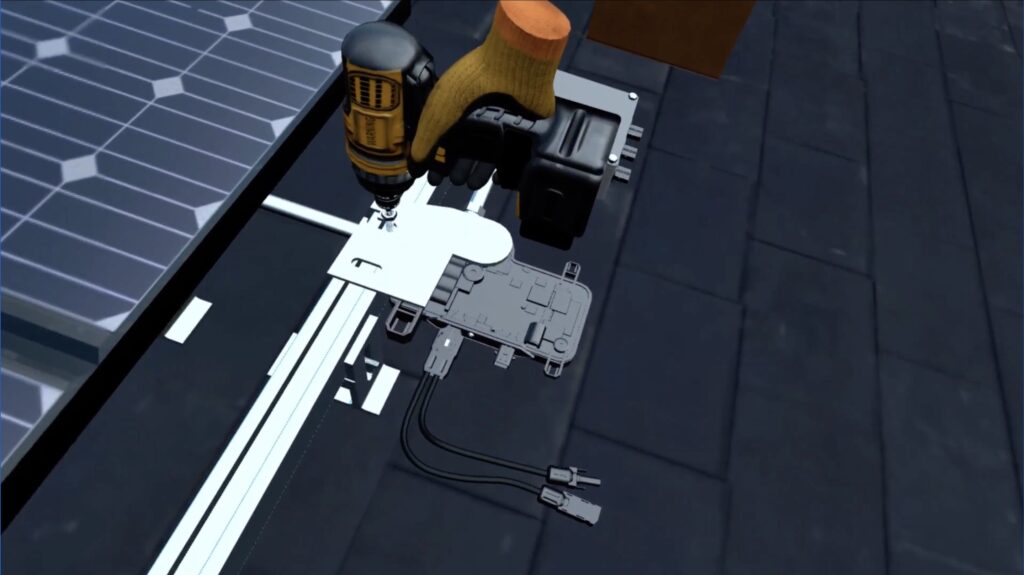
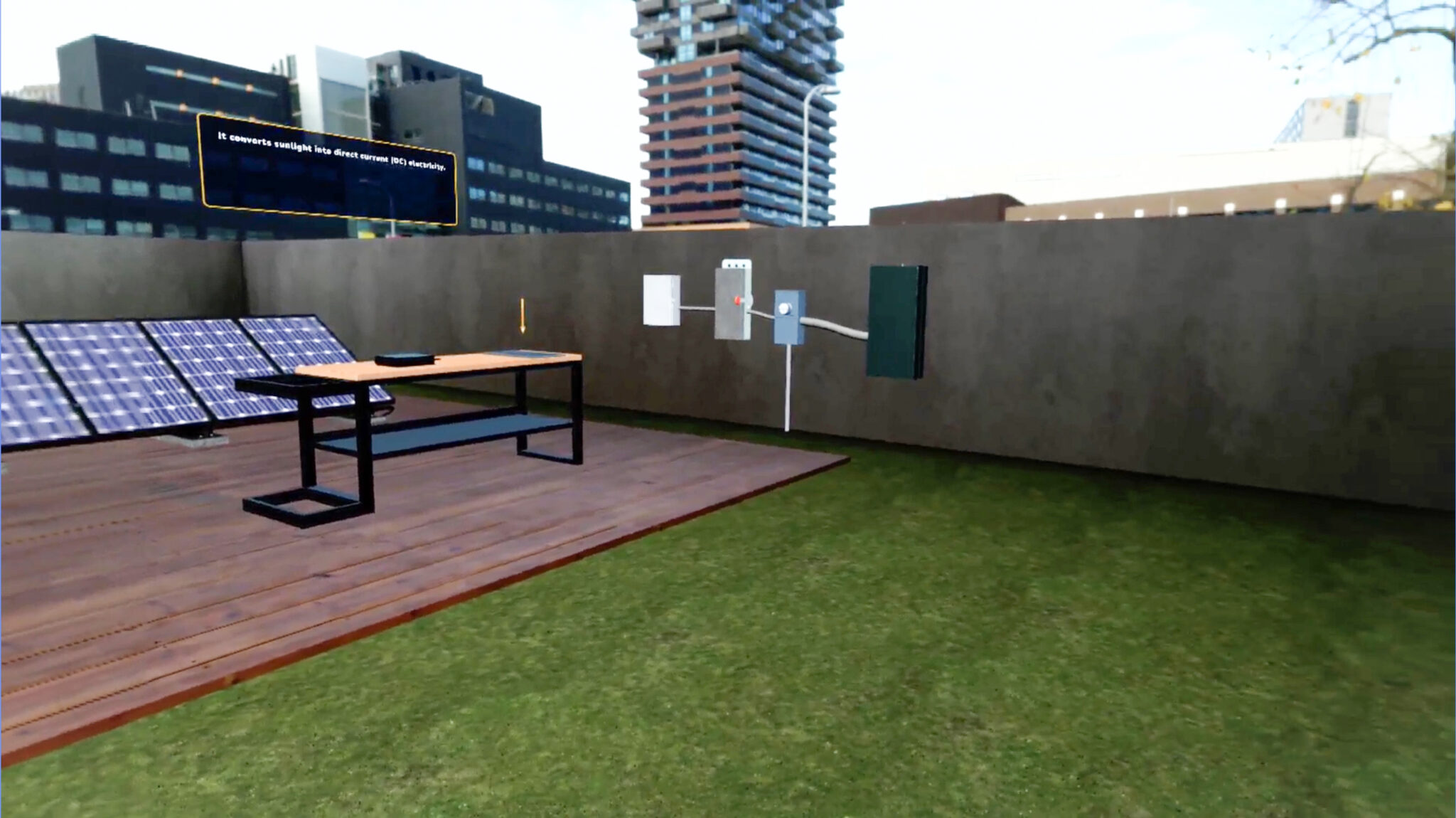
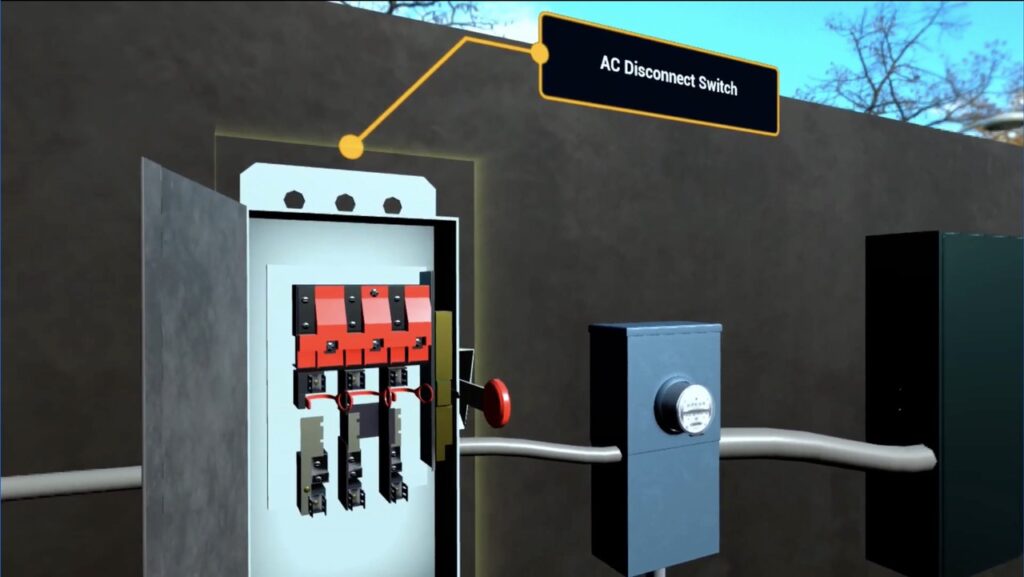
The PV Associate program includes VR simulations built around tasks solar technicians perform on the job. They include:
- 1. Installing an Enphase IQ microinverter
- 2. Setting up a standalone PV system
- 3. Using a multimeter
- 4. Solar panel wiring basics
- 5. PV safety procedures
- 6. System commissioning
Students practice system design, installation, troubleshooting, and performance optimization in realistic job site environments. The program includes about 80 hours of hands-on solar training you can complete from your living room, and it was developed in partnership with Michigan Solar Solutions.
What you learn alongside the VR labs
The VR labs sit inside a structured course that blends instructor led videos, 3D demos, interactive modules, weekly assessments, and a final evaluation. Key modules cover:
- 1. Solar system design, installation, and maintenance
- 2. Key PV system components and their roles
- 3. Safety standards and regulatory requirements
- 4. Solar resource assessment
- 5. System sizing and performance optimization
- 6. Structural and electrical requirements for installations
- 7. Energy storage integration and hybrid systems
- 8. System commissioning and troubleshooting
- 9. Long term maintenance
- 10. Economic factors, financial incentives, and utility bill analysis
The path to the NABCEP PV Associate exam
Passing the NABCEP PV Associate exam is part of completing the program. Here is how the path works:
- 1. Complete the coursework and VR simulations at your own pace.
- 2. Work through weekly assessments that track your progress.
- 3. Take the ImmerseLearn final exam: 120 multiple choice questions in 90 minutes, with live remote proctoring through MonitorEDU. You choose your exam time and need a quiet space, photo ID, webcam, and reliable internet.
- 4. Pass the NABCEP PV Associate exam to complete the program.
Important: a certificate of completion and NABCEP certification are not a state electrical or contractor license. Licensing rules vary by state, so check yours before you install systems on your own.
What is included when you enroll
- 1. A VR headset for hands-on solar practice in the VR program, shipped at enrollment
- 2. Full access to the learning management system so you can study on your own schedule
- 3. An OSHA 10 Hour certification from the U.S. Department of Labor as part of the program
- 4. Weekly one on one meetings with a student support executive
- 5. 24/7 technical support for your VR headset and access to a student community
Career services and job placement after you graduate
ImmerseLearn provides career services and job placement support through its Career Services team, including connections with solar employers in its partner network. ImmerseLearn reports an 82% completion rate and an 87% job placement rate for its graduates.
Graduates commonly pursue roles such as PV installer, PV service technician, PV maintenance technician, solar QA inspector, solar site assessor, and PV technical salesperson.
Program cost
- 1. VR Program (headset shipped at enrollment): $3,800
- 2. Non-VR program (no headset, LMS only): $2,000 (6-month)
Payment plans are available.
Who this program fits
The PV Associate program fits career changers, people new to the trades, and anyone who wants a recognized entry level solar credential without relocating or attending a campus. No prior solar experience is required.
FAQs: entry level solar training with VR
What do I practice in VR during entry level solar training?
Simulations in the PV Associate program include installing an Enphase IQ microinverter, a standalone PV system, using a multimeter, solar panel wiring basics, PV safety procedures, and system commissioning.
Is the NABCEP PV Associate exam included?
Passing the NABCEP PV Associate exam is part of completing the PV Associate program. The coursework, VR simulations, and final assessment are designed to help you build the knowledge and confidence to pass.
How long does the PV Associate program take?
The program is 15 weeks and self-paced, with about 80 hours of hands-on solar training you can complete from home.
Do I need prior solar experience?
No. The program is beginner friendly and provides step by step instruction in PV installation, system maintenance, safety procedures, and renewable energy fundamentals.
Do I need a VR headset?
No. The program is available in VR, with a headset shipped at enrollment, or as a Non-VR program. Review both formats and current payment plans on the official PV Associate program page.
Will this give me a license to install solar on my own?
No. A certificate of completion and NABCEP certification are not a state electrical or contractor license. Check your state's rules before installing on your own.
Next step: start your solar training
Review exam details, both program formats, payment plans, and MyCAA information on the PV Associate program page, then talk with enrollment before you commit.