
EV Technician Certification Online with VR Training

If you are comparing schools for electric vehicle technician certification online, you are usually weighing two things at once: a clear enrollment path you can complete remotely, and enough hands-on practice to feel ready for EV service work. ImmerseLearn’s angle is not another slide deck. It is immersive VR labs that let you rehearse diagnostics, high-voltage safety awareness, powertrain service, and charging scenarios before you sit the program’s proctored certification exam.
This paper is written for enrollment and preparation decisions. It is not a career-roadmap “how to become” guide, and it is not a broad EV technology overview. For the live program details and enrollment package, use the Electric Vehicle Technician money page as the source of truth.

What "EV technician certification online" means in practice
Searchers using electric vehicle technician certification online (and nearby phrases like EV technician training program or certified EV technician program) typically want:
- A structured EV technician training path they can start without relocating
- Hands-on practice that goes beyond watching videos
- A defined certification checkpoint at the end of the program
- Clarity on cost, support, and what is included before they enroll
ImmerseLearn’s EV Technician program is described on the money page as a 15-week, flexible, self-paced path delivered through an LMS, with a VR headset shipped for simulations. Training covers EV systems work such as diagnostics, powertrains, charging infrastructure, thermal management, and high-voltage safety procedures. Completion includes a required proctored certification exam through MonitorEDU.
That combination matches the intent behind certification-online searches: remote enrollment plus practice that feels closer to a bay than a webinar.
Why VR labs are the differentiator for EV technician training
Generic e-learning can explain how an EV system works. It rarely lets you rehearse the sequence of a diagnostic workflow, the caution around high-voltage awareness, or the feel of navigating a service scenario under time pressure.
ImmerseLearn’s money page positions VR as the practical layer:
- You receive a VR headset so lab access starts at home
- Simulations target real EV service tasks - diagnostics, repairs, and safety protocols - without needing a live shop floor on day one
- Learning is framed as “learn by doing,” not only watching
For an EV technician VR simulation experience, that matters because EV work rewards procedure memory and safety habits. Immersive reps help you build both before employers expect you to perform under supervision.
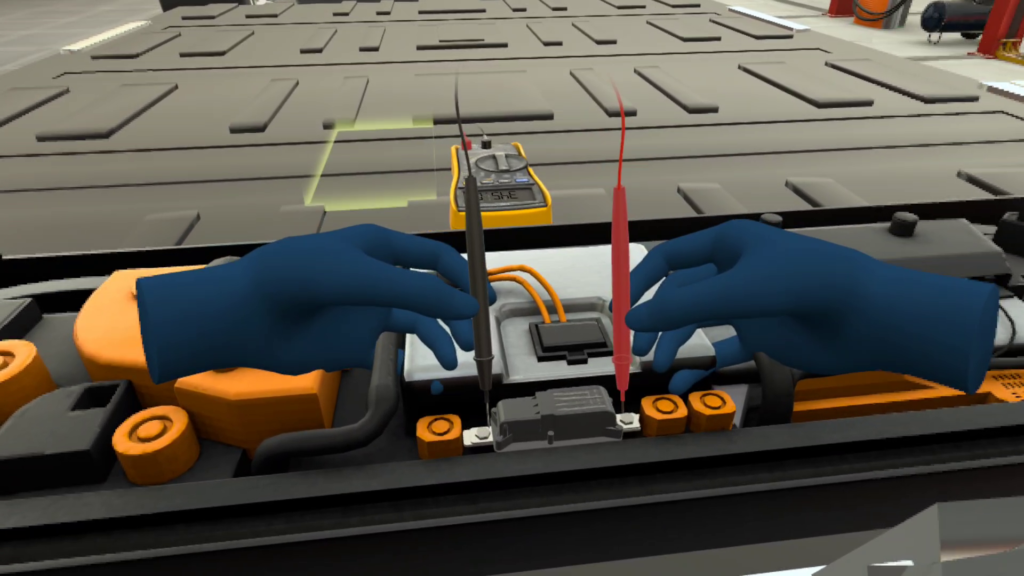
If you want a broader VR-promo overview of EV systems practice, see the existing post on certified EV technician training with VR simulations. This paper stays focused on certification-online enrollment choices and how VR labs support exam and job readiness.
Skills you practice in immersive EV labs

The program page lists key modules that map cleanly to what EV shops and service teams expect entry-level technicians to understand. In VR and LMS study, you work across areas such as:
- EV powertrains and charging infrastructure
- Vehicle diagnostics and troubleshooting high-voltage systems (safety-first awareness)
- Electric motor systems, energy storage concepts, and power electronics in an EV service context
- Thermal management and related system behavior
- High-voltage safety procedures and compliance awareness
- ADAS / software control concepts found on modern EVs
- EV maintenance and system optimization habits
Wall note for readers comparing programs: this paper and CTA target Electric Vehicle (EV) Technician training - not a battery-assembly packaging track and not a hybrid (HEV) program. Battery and hybrid pathways are separate ImmerseLearn programs with their own pages. Keep your enrollment choice aligned to the role you want.
Enrollment package: what you get before you pay

Live program highlights on immerselearn.com/electric-vehicle-technician include:
- 15 weeks EV Technician program (flexible / self-paced through the LMS)
- VR headset + simulations included
- Coverage of EV diagnostics, thermal systems, powertrains, and related service topics
- OSHA 10-hour certification from the U.S. Department of Labor as part of the program
- 1:1 weekly student support plus career / job-readiness coaching
- Job placement support via partner network (as described on the program page)
- Final EV Technician Certification Exam - 120 multiple-choice questions, live remote proctoring via MonitorEDU, student-scheduled timing
The enrollment package framing on the money page also emphasizes LMS access for course materials and assessments, plus community support alongside technical help for headset use.
Accreditation note (as stated on the program page FAQ): the page describes the program as ASE-accredited and IACET-recognized. Confirm current partner and accreditation language on the live page before you cite it in applications or employer conversations.
Cost awareness (live facts only)
Do not rely on third-party estimates. As listed on the EV Technician money page:
- Total program cost: $3,800
- Down payment at enrollment: $650 (all payment plans)
- VR headset shipped at enrollment under the published plan options
- Bi-weekly payments available; contact the team for a custom arrangement if needed
- MyCAA: ImmerseLearn is described as an approved MyCAA partner school; eligible military spouses may qualify for up to $4,000 in tuition assistance through MyCAA
If you need the latest plan breakdown or any promotional detail not listed here, check the program page or speak with enrollment. This article does not invent bi-weekly installment amounts beyond what was clearly published as totals and down payment.
How to prepare for the certification exam with VR labs
The money page is clear that the final exam is a required completion step:
- 120 multiple-choice questions
- Fully proctored through MonitorEDU (live remote)
- You choose your exam time and follow MonitorEDU protocols shared in advance
A practical prep rhythm that fits an immersive program:
- Treat VR labs as deliberate practice. Repeat diagnostic and HV-safety awareness scenarios until the sequence is automatic - not until you “get the idea once.”
- Pair each lab with LMS review. Use modules on powertrain, charging, and thermal systems the same week you practice related simulations.
- Use weekly 1:1 support as a blocker-clearing session. Bring specific stuck points (fault tree logic, safety lockout awareness, charging interface behavior) instead of a vague status update.
- Schedule the exam only after you can explain procedures out loud. If you can teach a peer the steps you just simulated, you are closer to exam readiness than if you only recognized terms on a quiz.
- Know the interview layer. The program page describes an AI-powered simulated interview after training, with a debrief and an overall pass threshold of 80%. Treat that as job-readiness practice, separate from - but complementary to - the MonitorEDU knowledge exam.
Career-path readers who still want a step-by-step “become an EV tech” overview can soft-reference How to Become a Certified EV Technician. Keep that guide for roadmap intent; use this paper when you are ready to evaluate electric vehicle technician certification online enrollment and VR lab prep.
Who this certification path fits
This enrollment angle is a strong fit if you are:
- An auto tech expanding into EV service skills without leaving your current schedule
- A career-switcher who needs remote enrollment but refuses “video-only” training
- A learner comparing .edu continuing-ed certificates against trade programs that include headset-based practice
- Someone who wants a defined proctored exam plus career services after coursework
It is a weaker fit if you specifically need a battery assembly / packaging role track or a hybrid (HEV) specialization - those are different money pages and should be researched separately.
FAQs: electric vehicle technician certification online
Yes, per the program page: the course is fully online and self-paced through the LMS, with VR-based hands-on learning using a headset delivered to your home.
The money page lists a 15-week program length, with flexible pacing through the LMS.
A 120-question, multiple-choice, live remotely proctored exam via MonitorEDU. Confirm current timing limits and protocols on the program page.
Yes - the page states you earn an OSHA 10-hour certification from the U.S. Department of Labor as part of the program.
Published total cost is $3,800, with a $650 enrollment down payment and flexible payment plans. Eligible military spouses should ask about MyCAA assistance (up to $4,000 noted on the page). Always re-check the live page before enrolling.
No. This paper and CTA cover the Electric Vehicle (EV) Technician program only. Battery assembly packaging and HEV technician training are separate pathways.
Next step: enroll with VR-backed EV technician certification

If your search intent is electric vehicle technician certification online and you want immersive practice - not generic e-learning - review the live enrollment package, confirm cost and exam details, and start with the official program page.
Review live cost, exam, headset shipping, and MyCAA details on the Electric Vehicle Technician program page, then talk with enrollment before you commit.