

VR Training for Pharmacy Technicians: Job-Ready Skills
Introduction:
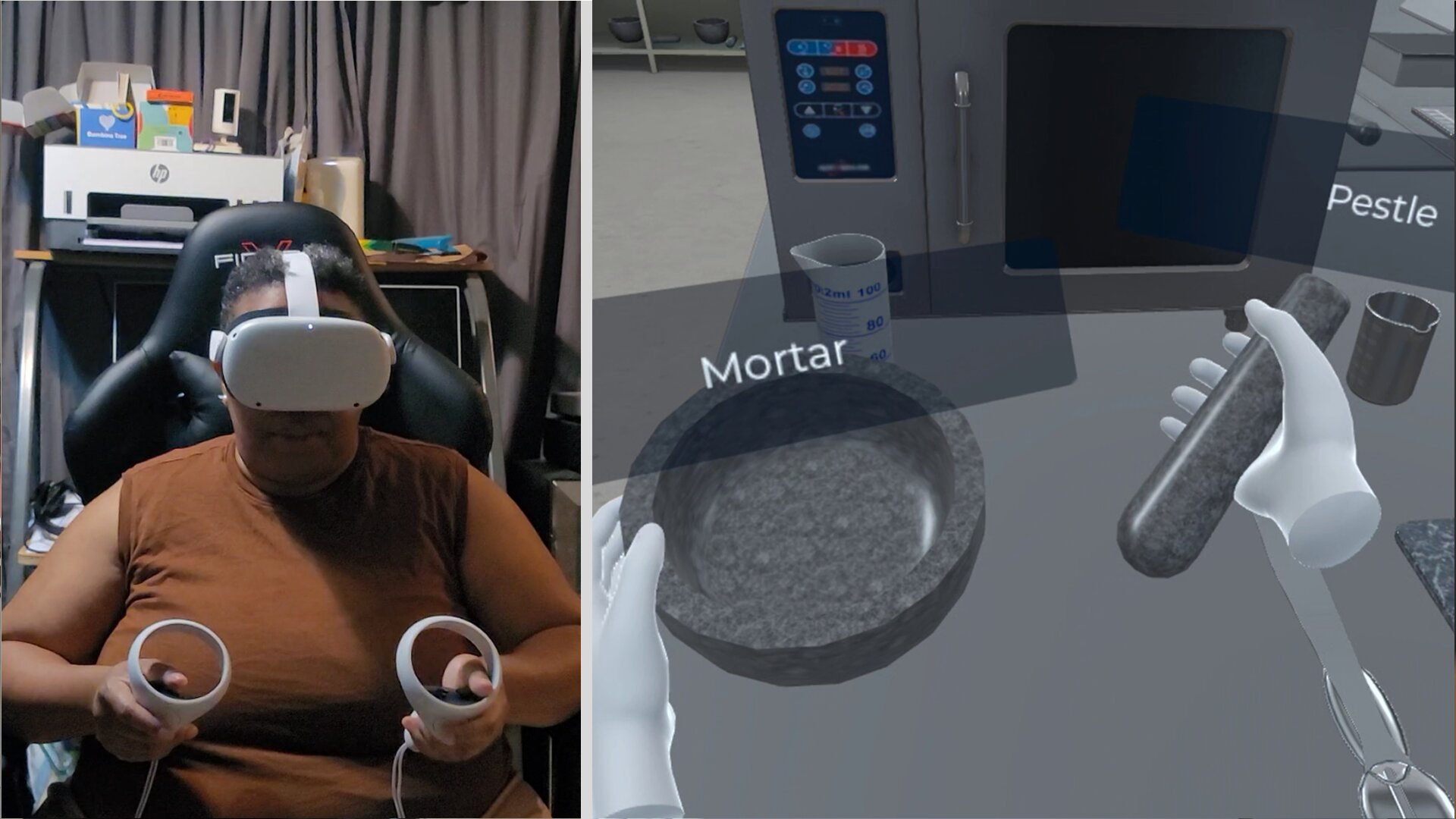
We use immersive VR simulations to help future pharmacy technicians practice real-world medication workflows before entering live healthcare environments. Through VR-based learning, students gain hands-on experience in prescription processing, medication dispensing, inventory management, patient communication, and daily pharmacy operations in realistic virtual settings.
Although many aspiring technicians understand core pharmaceutical concepts, they often feel underprepared during their first pharmacy shift because real healthcare environments require accuracy, communication, multitasking, and confidence under pressure. These are skills that traditional classroom training does not fully develop before externships or employment.
Immersive VR learning bridges this gap through simulation-based education, allowing learners to repeatedly practice essential dispensing procedures and operational tasks in safe, realistic scenarios. This improves workflow familiarity, decision-making speed, and job-ready confidence for modern healthcare environments.
This guide explains how immersive VR education works, the practical skills it develops for pharmacy technician roles, and how simulation-based learning prepares aspiring professionals for careers in healthcare and pharmaceutical services.
Why Traditional Pharmacy Technician Training Falls Short
We often see aspiring pharmacy technicians complete their coursework, yet still feel underprepared during their first real healthcare shift. The issue is not the learner, but that many technician education programs focus more on theory than practical workflow experience.
Limits of Traditional Pharmacy Education
Most pharmacy technician programs rely heavily on lectures, textbooks, videos, and quizzes. While learners study essential topics such as prescription processing, medication dispensing, HIPAA compliance, and medication safety procedures, they often receive limited hands-on exposure in real clinical environments.
Although theory is important, real healthcare settings require workflow speed, accuracy, multitasking, and confidence under pressure. These skills cannot be fully developed through passive learning alone and require repeated practical exposure.
The Gap Between Theory and Hands-On Practice
A common challenge new pharmacy technicians face is realizing how fast-paced real medication workflows can be.
Retail pharmacy environments often include:
- Prescription processing queues
- Insurance verification challenges
- Continuous patient queries
- Time-sensitive medication requests
- Coordination with pharmacists and healthcare staff
Hospital environments can be even more complex, involving sterile medication handling, medication rounds, and clinical coordination procedures.
Without sufficient hands-on practice, students often feel uncertain in early job roles because real pharmacy environments require applied experience, not just theoretical knowledge.
Why Pharmacy Confidence Matters
Pharmacy technicians must maintain high accuracy since even small medication errors can impact patient safety. Without real-world exposure, students may struggle with speed, communication, workflow efficiency, and confidence in clinical environments.
This gap between theory and practice is a key reason simulation-based pharmacy training is becoming increasingly important in modern healthcare education.
What Is Immersive VR Pharmacy Training?
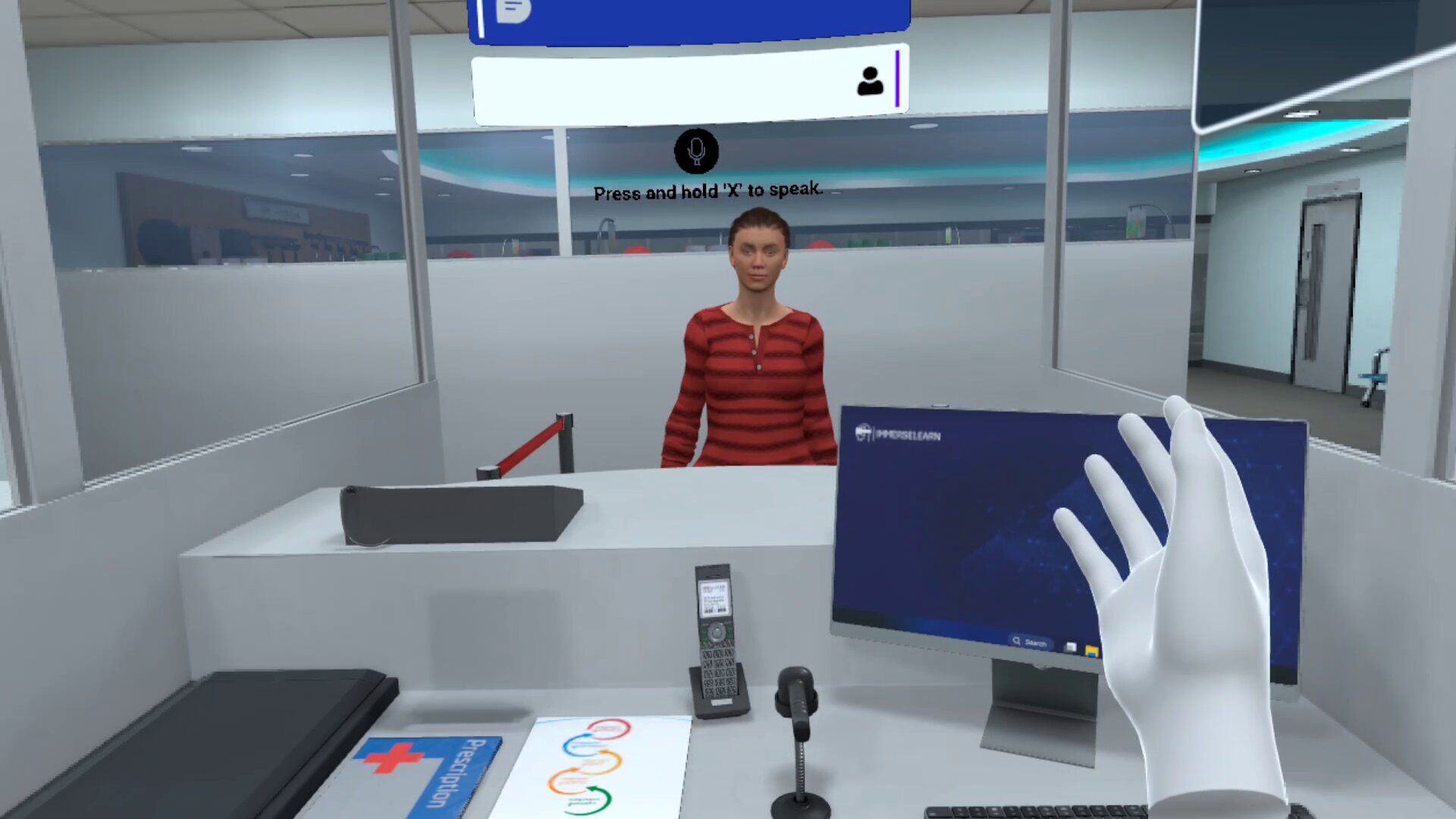
We use immersive VR learning to help pharmacy technician learners practice real-world medication workflows through virtual reality technology. Learners perform key tasks such as prescription processing, medication dispensing, inventory management, and patient communication in realistic simulated healthcare environments.
This hands-on learning approach helps students build practical pharmacy skills and workflow familiarity before entering real healthcare settings.
How VR Pharmacy Simulations Work
We use VR-based pharmacy training systems that combine headset technology with interactive software to place learners inside realistic medication management environments. Participants actively practice workflow-based tasks in a controlled and guided setting.
Inside the simulation, learners may:
- Process prescriptions
- Organize and manage medications
- Navigate healthcare software systems
- Interact with virtual patients
- Practice medication safety procedures
- Respond to real-world workflow scenarios
The goal is to build practical pharmacy competencies through repeated hands-on practice in a safe and controlled learning environment.
Unlike passive video learning, VR simulation improves retention, confidence, and real-world readiness before entering live healthcare environments.
Inside a Virtual Pharmacy Environment
A well-designed virtual simulation replicates real medication workflows and operational structures, preparing learners for retail and hospital pharmacy settings.
A typical simulation includes:
- Dispensing counters with prescription queues and patient interaction areas
- Inventory systems with stock tracking, storage, and low-stock alerts
- Pharmacy software for prescription processing and insurance verification
- Patient communication scenarios focused on confidentiality and safety
- Drug interaction alerts requiring clinical decision-making
- Label preparation and prescription verification workflows
The objective is not to replicate a single pharmacy, but to create a realistic, adaptable training environment for diverse healthcare and pharmaceutical service settings.
VR Simulation vs Traditional Pharmacy Training
| Traditional Classroom Training | Simulation-Based VR Training |
| Focuses mainly on reading, lectures, videos, and quizzes | Focuses on active hands-on pharmacy workflow practice |
| Students learn pharmacy concepts theoretically | Students apply pharmacy concepts in realistic simulations |
| Limited exposure to real workflow pressure | Simulates real pharmacy environments and decision-making |
| Builds declarative knowledge, such as knowing pharmacy procedures | Builds procedural knowledge through repeated workflow practice |
| Limited repetition of real tasks | Allows repeated practice of pharmacy operations |
| Students may still feel unprepared in real settings | Helps improve workflow familiarity and job readiness |
Traditional classroom learning helps students understand pharmacy concepts, while simulation-based learning helps them apply those concepts in real pharmacy workflows.
Pharmacy Technician Skills Learned Through VR
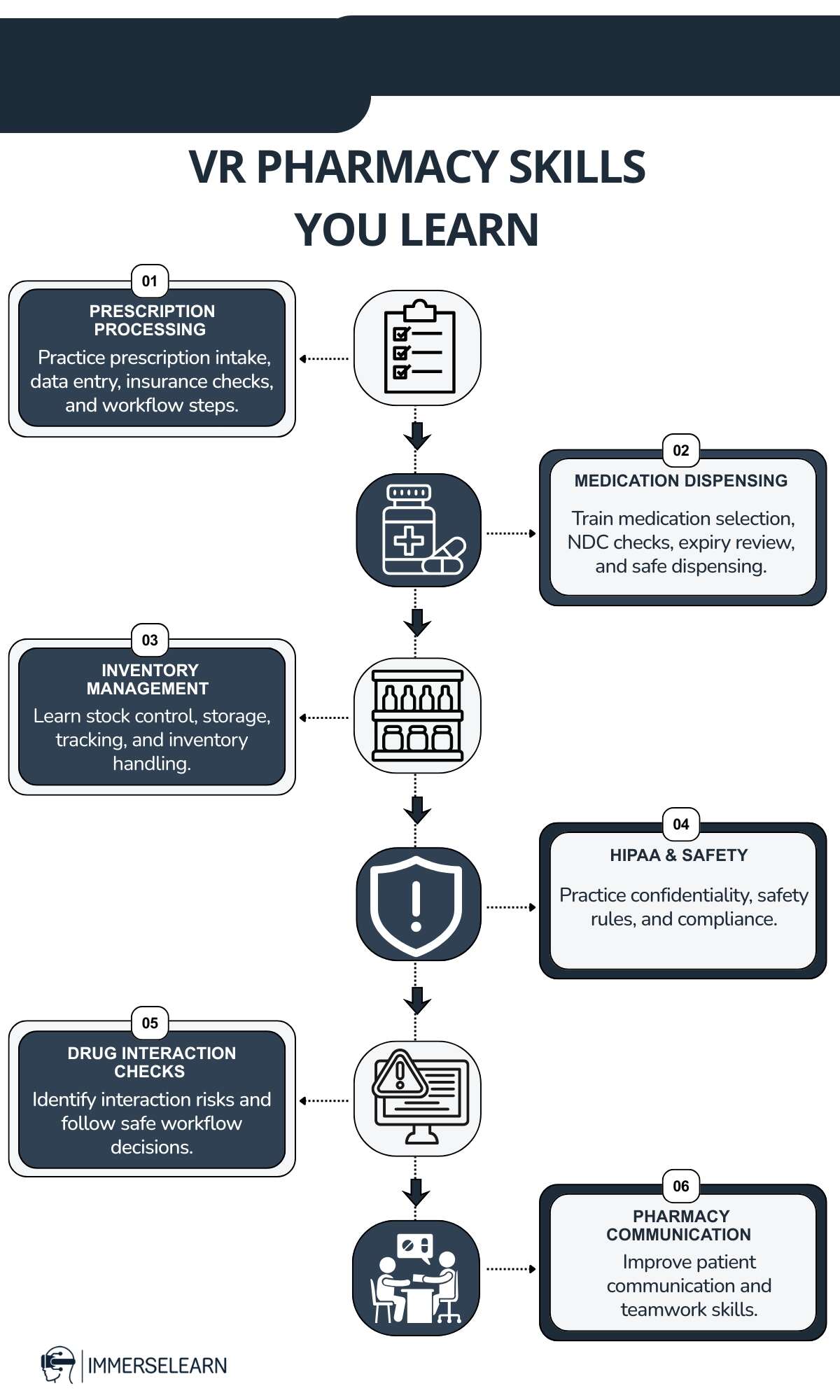
We use immersive VR learning to develop essential pharmacy technician skills by allowing learners to experience real-world healthcare workflow in realistic virtual pharmacy environments. This includes prescription processing, medication dispensing, inventory management, patient safety protocols, HIPAA compliance, and pharmacy communication.
i) Prescription Processing Training:
We help students practice complete prescription workflows through VR simulation, including intake procedures, data entry, insurance verification, pharmacist review, and patient handoff in realistic healthcare scenarios.
Repeated simulation improves accuracy, workflow understanding, and confidence when handling medication management systems in retail and hospital settings.
ii) Virtual Medication Dispensing:
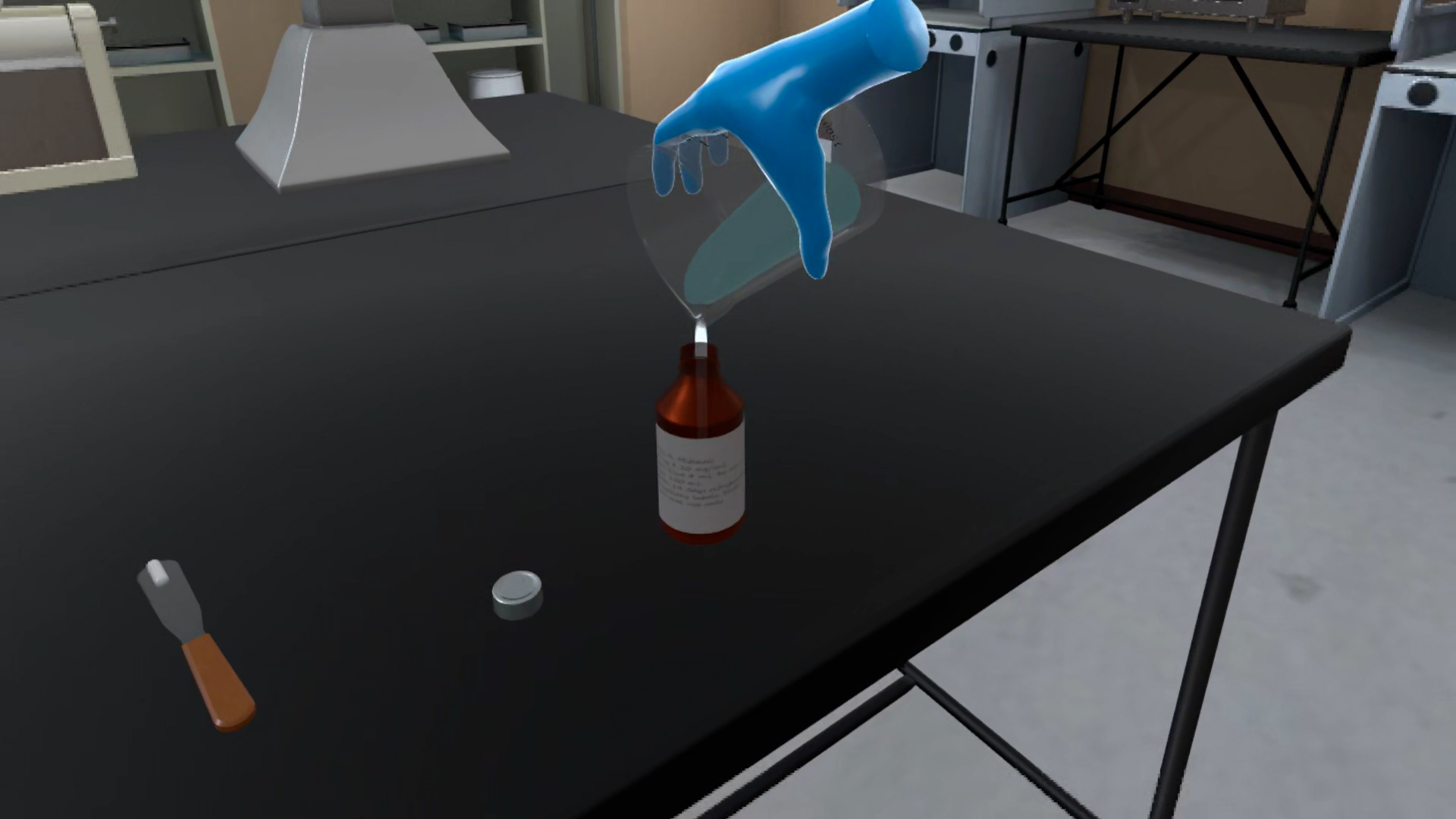
We provide medication dispensing simulations where students practice selecting medications, verifying NDC numbers, checking expiration dates, preparing correct quantities, and identifying dispensing errors.
This repetition improves accuracy and workflow efficiency for safe and effective pharmacy operations.
iii) Pharmacy Inventory Management:
We train students in inventory management using simulated systems that replicate real pharmacy stock control. Participants learn storage procedures, organization, tracking, expiration monitoring, and low-stock management techniques.
This improves operational awareness and reinforces how inventory accuracy impacts workflow efficiency and patient safety.
iv) HIPAA and Patient Safety:
We use scenario-based training to teach HIPAA compliance, patient confidentiality, medication safety protocols, and ethical decision-making in pharmacy environments.
This builds strong awareness of regulatory requirements and quality care responsibilities across healthcare and pharmaceutical services.
v) Drug Interaction Awareness:
We introduce drug interaction alert systems in VR simulations to help learners identify prescription risks in real time. Learners practice reviewing patient profiles, detecting interactions, and recognizing when pharmacist intervention is required.
This strengthens clinical awareness and medication safety decision-making skills.
vi) Pharmacy Communication Skills:
We help students develop pharmacy communication skills through simulated interactions with patients, pharmacists, insurance representatives, and healthcare staff.
Repeated practice improves communication, workflow coordination, and professional interaction skills required in retail and hospital pharmacy settings.
How VR Improves Pharmacy Technician Readiness
We use simulation-based learning to improve pharmacy technician workflow accuracy, hands-on experience, clinical decision-making, and job readiness through immersive virtual learning. This approach strengthens understanding of real healthcare operations through active participation instead of theory-based instruction.
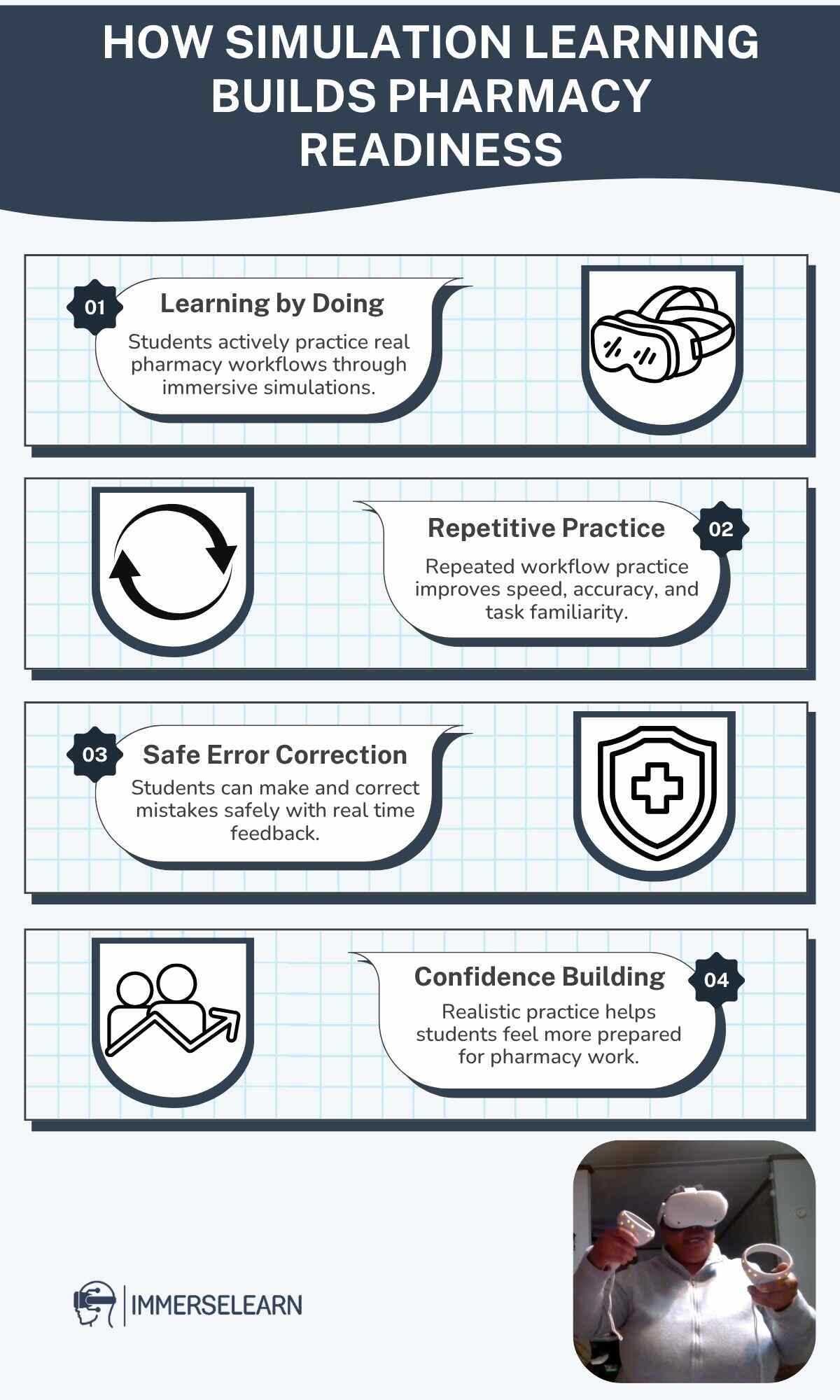
i) Learning Through Hands On Practice:
We enable students to learn by doing VR pharmacy training, where they actively perform real healthcare workflows instead of only reading or watching content. This improves workflow familiarity, practical knowledge, and understanding of retail and hospital operations.
ii) Repetitive Skill Development:
We allow students to repeatedly practice key tasks such as prescription processing, medication dispensing, and communication in a controlled virtual environment. This improves accuracy, consistency, and competency for pharmacy technician roles in healthcare and pharmaceutical services.
iii) Safe Error Correction in VR:
We provide VR environments where learners can make mistakes safely without patient risk. Immediate feedback helps correct errors and strengthens pharmacy workflow decision-making and continuous improvement.
iv) Building Job Confidence:
We design realistic pharmacy simulations that replicate actual workflows. Repeated exposure builds confidence in handling prescriptions, patient interactions, and operations, improving job readiness before entering real healthcare environments.
How VR Replicates Real Pharmacy Workflows
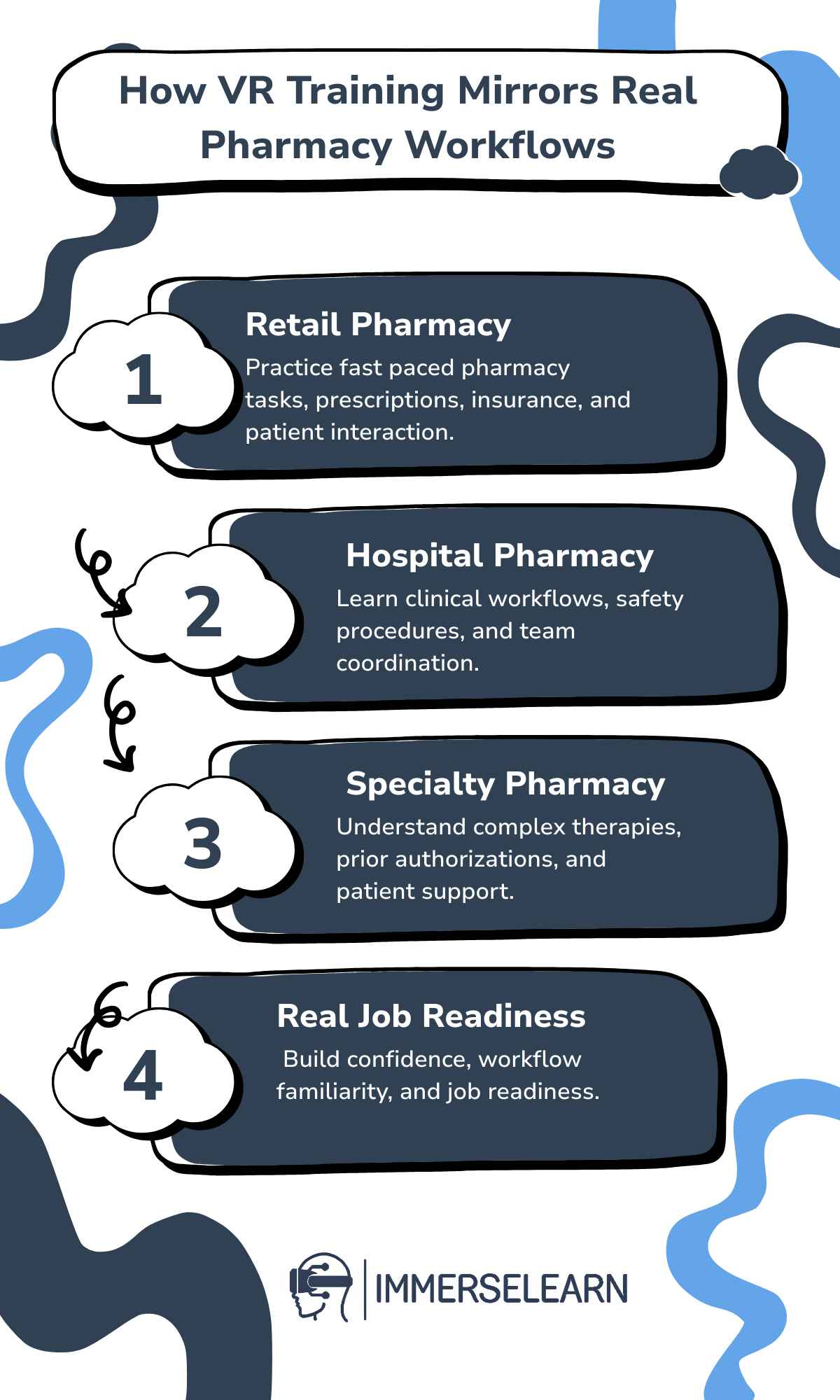
We use immersive VR pharmacy training to help students practice real-world pharmacy workflows across retail, hospital, and specialty pharmacy environments, building practical familiarity before entering real healthcare workplaces.
i) Retail Pharmacy Simulations:
Retail pharmacies are fast-paced and customer-focused. Pharmacy technicians handle prescription processing, insurance claims, medication dispensing, patient communication, and HIPAA-compliant operational procedures.
We use immersive virtual learning environments to train learners in multitasking, insurance coordination, operational efficiency, and communication, improving performance in high-volume healthcare settings.
ii) Hospital Pharmacy Training:
Hospital pharmacies require higher clinical precision, medication safety, and coordination with healthcare teams. Tasks include sterile preparation, unit-dose dispensing, compounding, automated dispensing systems, and clinical support.
We use VR hospital simulations to build familiarity with procedures, safety protocols, and professional communication required in clinical environments.
iii) Specialty Pharmacy Simulations:
Specialty pharmacy settings often manage complex therapies and long term patient treatment plans. VR simulations may introduce:
- Specialty medication workflows
- Prior authorization procedures
- Complex therapy management
- Patient communication and support
- Medication handling requirements
- Advanced pharmaceutical terminology and operations
These simulations help students better understand advanced pharmacy workflows and patient care processes. Learners interested in compounding can also explore this complete guide to pharmacy compounding to better understand specialty pharmacy workflows.
Preparing Students for Real Pharmacy Jobs:
A key benefit of VR pharmacy training is building workflow familiarity before externships or employment. Learners enter real healthcare environments with prior hands-on experience instead of starting from zero.
This improves confidence, communication, efficiency, and workplace readiness across community, clinical, and advanced medication management settings.
How VR Training Supports NHA CPhT Preparation
We use VR pharmacy training to help students build job-ready skills aligned with the NHA Certified Pharmacy Technician (CPhT) exam competencies. Through interactive simulations, participants gain hands-on experience with prescription processing, medication dispensing, pharmaceutical calculations, inventory control, HIPAA compliance, insurance workflows, and healthcare software navigation in realistic clinical environments.
Instead of relying only on memorization, we use repeated simulation-based learning to strengthen practical experience. This improves exam readiness, workflow understanding, confidence, and real-world pharmacy preparedness before externships or employment.
Explore our online Pharmacy Technician program to develop real-world healthcare competencies through immersive learning.
VR Pharmacy Training vs Traditional Learning
We use VR pharmacy training to deliver hands-on, immersive pharmacy workflow practice through realistic simulations and real-world scenarios. Traditional pharmacy technician training, in contrast, focuses mainly on classroom instruction, textbooks, and theoretical pharmacy concepts.
Benefits of VR Pharmacy Training:
We design simulation-based education to strengthen practical abilities, operational familiarity, and workplace confidence.
Key advantages include:
- Repetition at Scale: We allow students to repeat pharmacy scenarios multiple times without real medications, systems, or patient interaction. This improves accuracy and workflow consistency.
- Safe Error Correction: We provide controlled virtual environments where mistakes do not impact real individuals but still create valuable opportunities for clinical decision-making and operational improvement.
- Workflow Immersion: We place learners in realistic pharmacy environments where they manage multiple tasks like prescription processing, patient communication, and medication handling, offering deeper learning than theory alone.
- Flexible Availability: We enable training anytime, anywhere without requiring clinical sites or costly equipment beyond a VR headset, making pharmacy technician training more accessible and scalable.
Why Externships Still Matter
We recognize that traditional education and externships remain essential in pharmacy technician training:
- Classroom learning builds foundational knowledge in pharmacology and pharmacy operations
- Externships provide real patient interaction and live healthcare exposure
- Students gain experience with workplace systems, teamwork, and employer expectations
- Real healthcare environments improve adaptability and professional confidence
The Hybrid Pharmacy Training Model
We believe the most effective pharmacy technician training combines VR simulation with supervised externships. VR builds foundational skills and workflow familiarity, while externships provide real-world healthcare experience and professional exposure.
This hybrid model ensures learners are both practically skilled and job-ready for careers in retail, hospital, and specialty pharmacy settings.
What to Look for in a VR Pharmacy Program
We guide learners to choose a pharmacy technician VR training program that offers realistic pharmacy simulations, NHA CPhT exam preparation, externship support, career services, and hands-on operational learning for real-world healthcare and pharmaceutical environments.
i) Certification and Exam Preparation:
We ensure pharmacy technician training programs align with NHA CPhT certification competencies, including prescription processing, medication safety, pharmacy calculations, inventory control, and healthcare operations. This alignment improves exam readiness and strengthens foundational knowledge for technician careers.
ii) Realistic Pharmacy Simulations:
We emphasize high-quality VR pharmacy simulations that replicate real workflows, including prescription processing, medication dispensing, pharmacy software systems, patient interactions, and inventory management.
These interactive learning experiences strengthen practical competencies required in community, clinical, and advanced medication management settings.
iii) Externship and Clinical Experience:
We recognize that externship experience is essential in pharmacy technician education. Programs offering clinical placement support help students gain real-world exposure in retail, hospital, and specialty pharmacy environments, improving confidence, communication, and job readiness.
iv) Career Support Services:
We recommend programs that include career services such as resume building, interview preparation, employer connections, and job guidance. These services improve job readiness and help learners transition smoothly into pharmacy technician employment.
v) VR Equipment and Accessibility:
We highlight VR training programs that include headsets and learning equipment as part of enrollment. This improves accessibility by allowing students to access immersive pharmacy simulations without additional hardware costs, supporting broader adoption of VR-based education.
.jpg)
Is VR Pharmacy Training Right for You?
Immersive virtual learning helps learners evaluate whether simulation-based education aligns with their pharmacy technician career goals. It connects classroom instruction with real healthcare workflows, helping build confidence from day one.
Through VR simulations, learners gain hands-on experience in prescription processing, medication dispensing, patient communication, and daily healthcare operations in a safe and structured environment. This improves workflow familiarity and job readiness before entering clinical settings.
Employers expect accuracy, communication, speed, and confidence. Repeated immersive practice helps strengthen these skills while reinforcing professional habits in realistic healthcare scenarios.
Pharmacy technician careers remain in high demand across retail, hospital, and specialty healthcare settings. Programs combining VR training, NHA CPhT preparation, externships, and career support help learners transition more effectively from education to employment.
We recommend structured programs like ImmerseLearn that integrate VR simulation, certification prep, externships, and career guidance, helping learners enter their first pharmacy role with clarity, confidence, and real-world readiness.
Frequently Asked Questions:
1) What is immersive VR pharmacy training and how does it work?
Ans. Immersive VR pharmacy training uses virtual reality simulations to recreate real healthcare environments where learners practice prescription processing, medication dispensing, inventory management, and patient communication through interactive learning.
2) Can VR training replace hands-on pharmacy externship experience?
Ans. No. VR training prepares learners before entering supervised externships and real healthcare environments.
3) What pharmacy skills can be practiced in virtual simulations?
Ans. VR simulations may include prescription processing, medication dispensing, inventory management, HIPAA compliance, patient safety procedures, communication, and navigation of healthcare software.
4) Is VR-based training accepted for NHA CPhT certification eligibility?
Ans. Eligibility depends on whether the program meets the educational requirements established by the certifying organization. Many VR pharmacy training programs support competencies aligned with NHA CPhT exam preparation.
5) How does simulation-based learning improve pharmacy technician confidence?
Ans. Simulation-based learning allows learners to repeatedly practice real healthcare workflows, improving familiarity, confidence, and job readiness before entering clinical environments.