

Top Skills Every Sterile Processing Technician Should Know
Introduction:
Every successful surgery depends on properly sterilized instruments, which require expert Sterile Processing Technician Skills. Before a surgeon begins, we as sterile processing technicians (SPTs) have already cleaned, inspected, assembled, and sterilized every tool. Our work safeguards patients, prevents infections, and ensures operating rooms run efficiently. Skilled SPTs are essential to hospital operations.
Effective sterile processing relies on a combination of technical sterilization expertise, surgical instrument knowledge, infection control practices, attention to detail, organization, and professional soft skills. Mastery of these areas ensures instruments are safe, sterile, and ready for every procedure, making SPTs indispensable in healthcare.
This guide covers the essential skills every SPT must develop, ways to strengthen both technical and soft skills, earn certifications, and grow in their careers. Whether you’re new to healthcare, seeking a stable career without a four-year degree, or looking for a behind-the-scenes role that supports patient safety, this guide provides the roadmap to succeed.
What Does a Sterile Processing Technician Do?
Sterile processing technicians (SPTs) ensure all operative tools are thoroughly cleaned, disinfected, and prepared for use. In the central sterile supply department (CSSD), they transform used medical devices into safe, ready-to-use equipment, often under tight deadlines. Their role is vital for patient safety and smooth operating room procedures.
Key Responsibilities of Sterile Processing Technicians:
- Receiving and sorting used instruments and medical tools
- Cleaning and decontaminating equipment
- Inspecting items for damage, wear, or missing components
- Assembling trays according to procedural count sheets
- Packaging tools to maintain sterility
- Operating sterilization systems, including autoclaves
- Monitoring sterilization cycles and recording results
- Delivering trays and equipment to surgical and clinical areas
- Managing inventory and tracking systems
SPTs work closely with surgical teams and infection prevention staff to ensure each procedure has the correct tools on time. By maintaining strict standards, they directly support patient safety, efficient procedures, and overall healthcare quality.
Why Instrument Sterilization Expertise Is Vital in Healthcare
Healthcare professionals in central supply understand that mastering Sterile Processing Technician Skills is crucial because there is no room for error. Even a single missed step, such as residue on a tool, a compromised package, or an incorrectly assembled tray, can cause infections, delayed procedures, or patient harm. Worldwide, surgical site infections impact 2% to 11% of patients, making them one of the most common and preventable complications in operative care.
Professional organizations such as the Association for the Advancement of Medical Instrumentation (AAMI) and the International Association of Healthcare Central Service Materiel Management (IAHCSMM) enforce strict standards for cleaning, sterilizing, packaging, and documenting surgical instruments.
Detail-oriented reprocessing specialists who develop strong technical expertise improve hospital outcomes, reduce infection rates, enhance procedural efficiency, extend instrument lifespan, and maintain consistent compliance with accreditation requirements. Skilled reprocessing personnel are essential to patient safety and the overall success of healthcare operations.
Core Technical Skills for Sterile Processing Technicians
As technicians in central supply, mastering Sterile Processing Technician Skills is crucial because this role demands specialized expertise beyond general healthcare knowledge. These core competencies are essential for patient safety and smooth surgical operations.
1) Instrument Decontamination and Cleaning Techniques:
Decontamination forms the foundation of instrument reprocessing, since no sterilization method can fully eliminate biological residue. Professionals use manual cleaning with brushes and enzymatic detergents, ultrasonic cleaning systems, and automated washer-disinfectors. They carefully manage cleaning solution concentrations, soaking durations, water quality, and safe handling of sharps and contaminated tools, all while following proper PPE and safety protocols.
2) Sterilization Equipment Operation and Safety:
Mastering Sterile Processing Technician Skills requires accurate handling of sterilization equipment to ensure surgical instruments are completely free of microorganisms before clinical use. Technicians work with multiple sterilization methods to maintain patient safety and preserve instrument integrity:
- Steam autoclaves (gravity or pre-vacuum): Monitor temperature, pressure, exposure time, and correct load arrangement.
- Low-temperature systems (hydrogen peroxide plasma): Used for heat-sensitive instruments such as endoscopes.
- Ethylene oxide (ETO) sterilization: Designed for delicate devices, following strict safety protocols.
- Liquid chemical sterilants: Maintain proper concentration and contact duration.
Daily quality control includes Bowie-Dick tests and biological indicators, along with accurate cycle logs and lot tracking. Verification encompasses load configuration, sterilization parameters, indicator results, and complete documentation before releasing trays for clinical use.
3) Surgical Instrument Identification:
Accurate recognition of medical instruments across specialties such as general surgery, orthopedics, neurosurgery, cardiothoracic, and ophthalmology is a core skill for sterile processing technicians. Many tools look similar but have distinct functions, so knowing their names, purposes, and condition is vital for patient safety and procedural efficiency.
Errors in tray assembly, like missing clamps, incorrect retractors, or substituted instruments, can cause delays or compromise patient care. Technicians build this expertise through structured training, instrument count sheets, and hands-on practice, gradually developing a mental catalog of hundreds of instruments.
Expert Insight:
Frequent exposure to instrument sets enhances identification skills. Regular use of count sheets and tray layouts ensures quick recognition and precise assembly, supporting seamless workflows and reliable clinical outcomes.
4) Sterile Packaging and Storage Best Practices:
As part of mastering Sterile Processing Technician Skills, we ensure that cleaned and assembled surgical instruments maintain sterile barrier integrity until use. Instrument trays are packaged with AAMI-approved wrapping, sealed peel pouches, or rigid sterilization containers with functional filters and gaskets, using chemical and internal indicators to confirm proper sterilization.
Accurate labeling, including sterilization date, load number, sterilizer, and shelf life, ensures full traceability. Sterile storage procedures control temperature and humidity, protect instruments from dust and moisture, and prevent package damage, keeping surgical instruments safe, sterile, and ready for clinical use.
5) Infection Control and Safety Protocols:
Sterile processing technicians are critical to hospital infection prevention. We follow strict guidelines for:
- Contamination control
- Hazardous material handling
- Instrument transport procedures
- Environmental sanitation
We also adhere to infection prevention standards from organizations like the Centers for Disease Control and Prevention (CDC). Mastery of these protocols helps minimize the risk of healthcare-associated infections (HAIs) and ensures a safe environment for patients and staff.

Essential Soft Skills for Sterile Processing Technicians
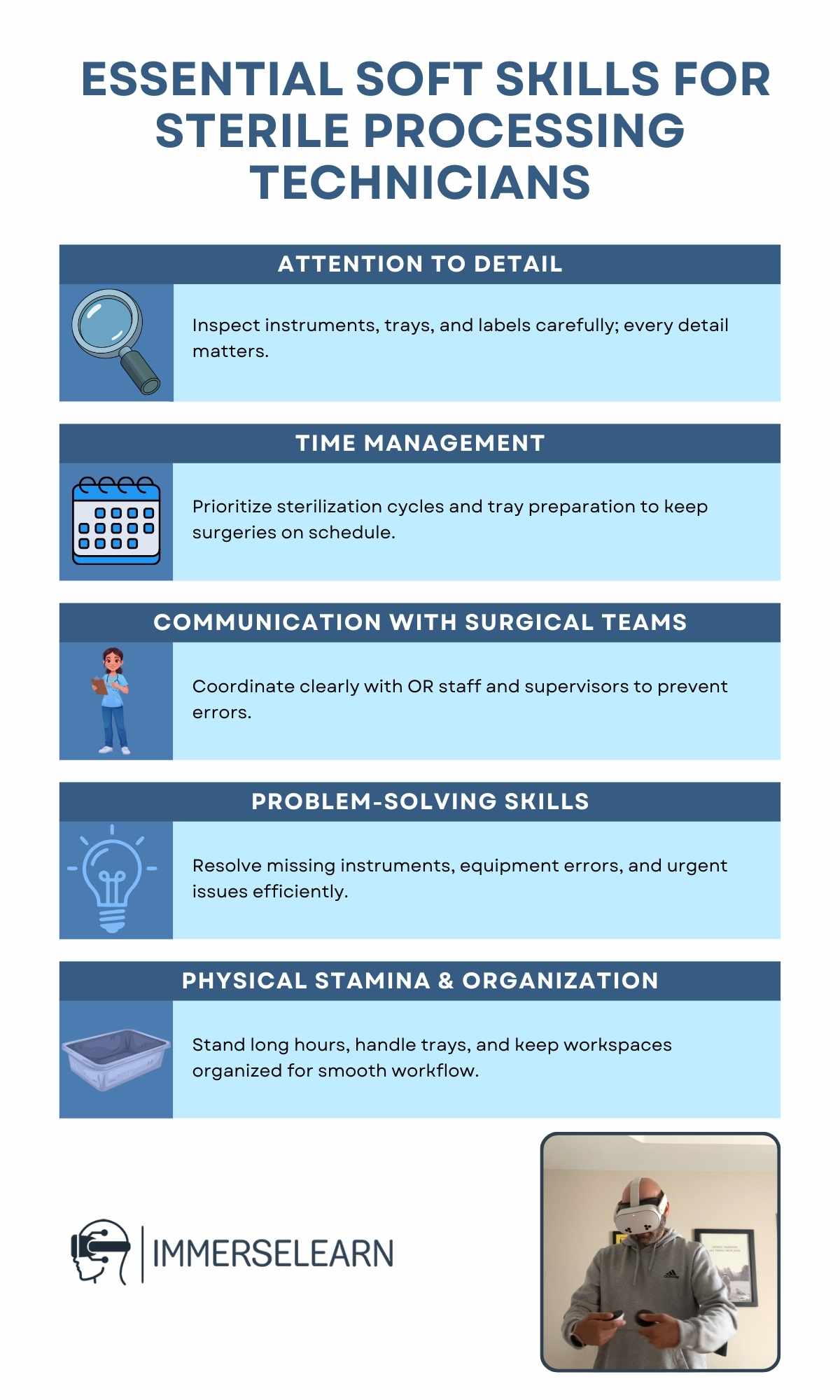
Technical skills get you in the door, but soft skills define effectiveness and value. Top sterile processing technicians combine precise technical execution with strong workplace behaviors. Developing Sterile Processing Technician Skills requires mastering both technical abilities and interpersonal skills to support patient safety and surgical success.
1) Attention to Detail for Patient Safety:
Even minor issues, like a chipped scissor blade, missing hinge screw, or misaligned peel pouch, can compromise patient safety. We inspect instruments against count sheets, verify tray assembly, check seals, and confirm labeling; every detail matters.
2) Time Management in Sterile Processing:
Operating room schedules depend on instrument readiness. We manage multiple sterilization cycles, tray assemblies, and distributions, prioritizing urgent requests while maintaining routine workflow. Planning and communication prevent delays and keep surgical teams on track.
3) Effective Communication with Surgical Teams:
We coordinate with scrub nurses, surgical coordinators, biomedical teams, and supervisors. Clear, professional communication ensures smooth operations and reduces errors in the central sterile supply department.
4) Problem-Solving and Critical Thinking Skills:
Unexpected issues, such as missing instruments, autoclave errors, or damaged trays, require quick thinking. Skilled technicians follow proper protocols to find safe, practical solutions, keeping surgical teams confident.
5) Physical Stamina and Organized Workflows:
Technicians often work long shifts and handle heavy instrument trays. Organized workspaces make instruments easy to locate, trays consistent, and storage areas error-free, enhancing department efficiency.
By combining these soft skills with technical expertise, we strengthen Sterile Processing Technician Skills, making sterile processing technicians indispensable members of the healthcare team.
Technology Used in Modern Instrument Reprocessing
Sterile processing has shifted from manual, paper-based workflows to fully digital operations. Developing strong Sterile Processing Technician Skills now requires proficiency with modern technologies, making technicians more efficient, effective, and in high demand.
Instrument Tracking Systems (ITS) use barcode or RFID technology to monitor surgical instruments through decontamination, tray assembly, sterilization cycles, and distribution. Each scan provides a timestamp and chain of custody, ensuring accuracy and traceability if sterilization issues arise.
Technicians also rely on digital monitoring software to log cycle parameters, biological indicator results, and equipment maintenance. Inventory management systems track instrument quantities, alert staff to shortages, and identify items needing repair or replacement. Hands-on experience with these tools ensures personnel can manage modern reprocessing workflows effectively and reliably.
How to Develop Sterile Processing Technician Skills Effectively
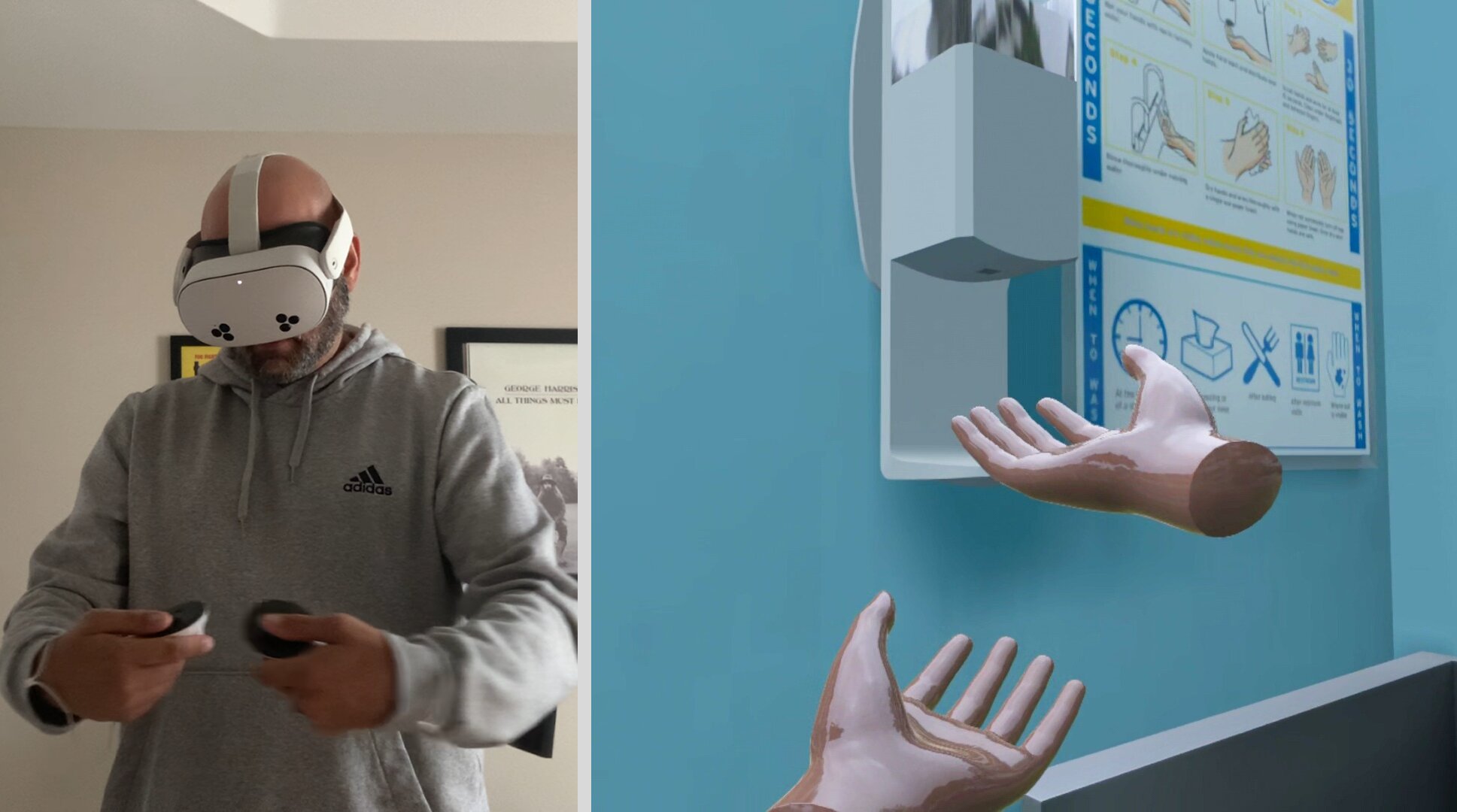
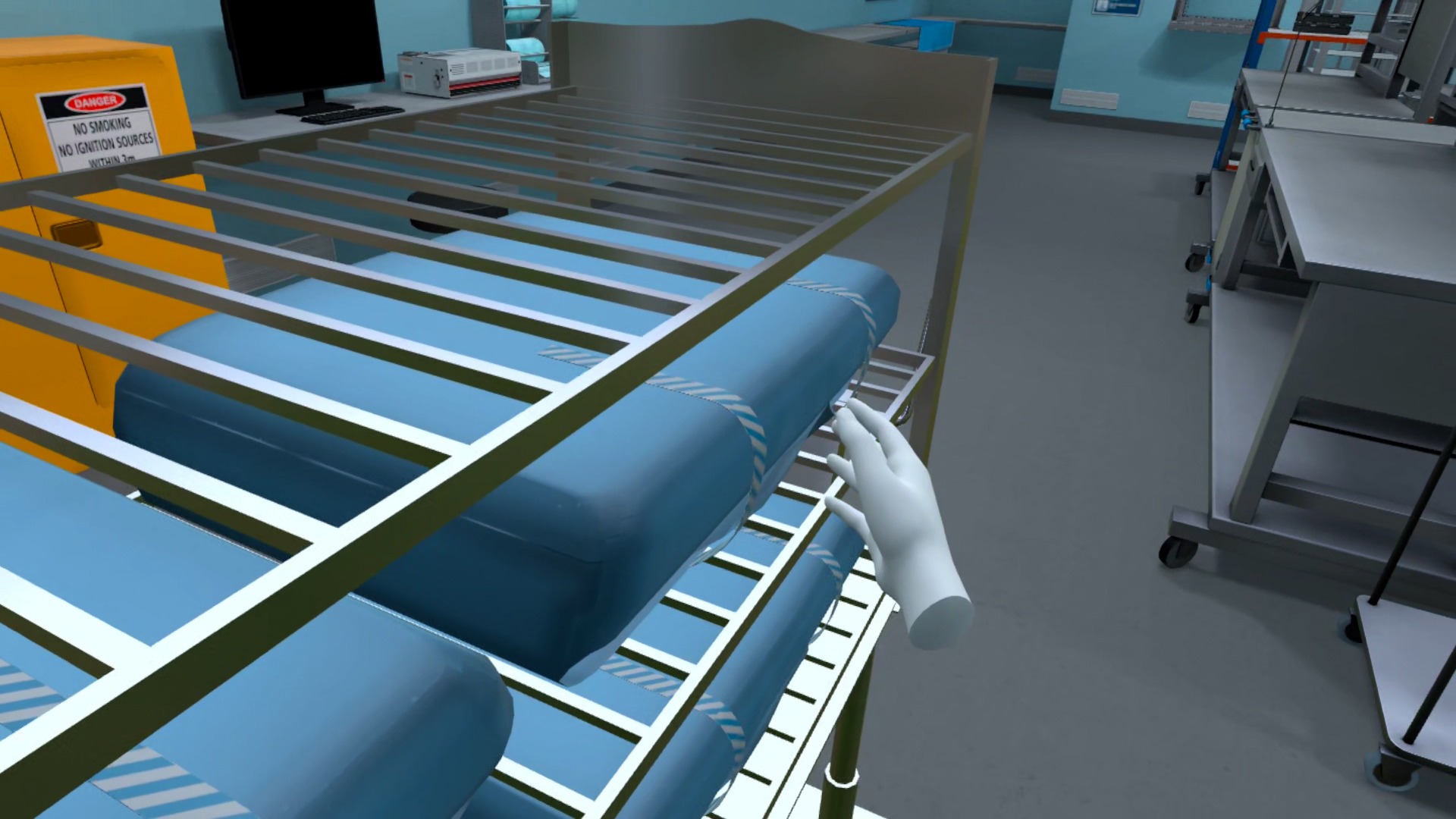
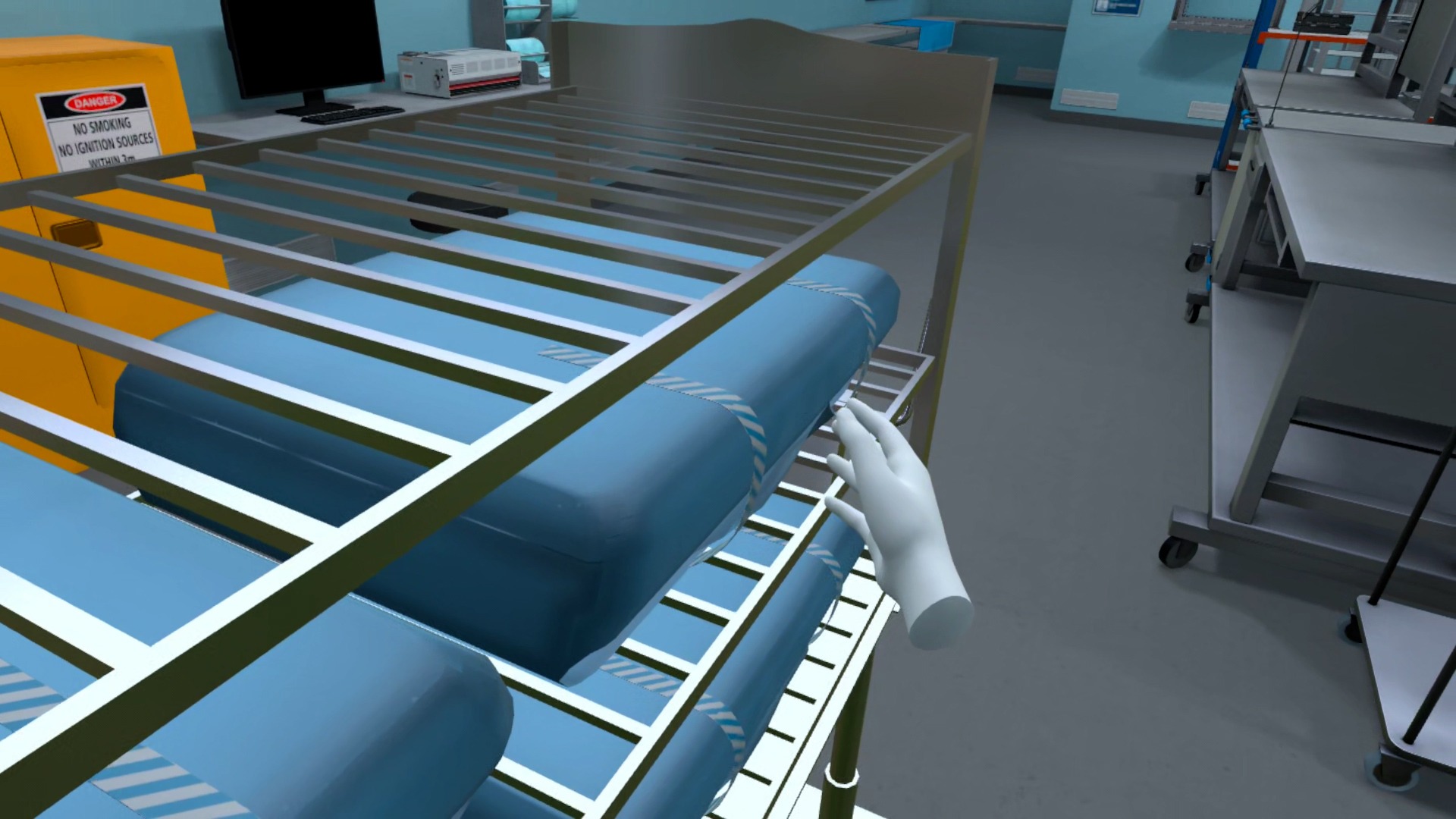
Developing strong Sterile Processing Technician Skills requires structured training, hands-on practice, and real-world experience. Vocational programs cover decontamination science, sterilization methods, instrument identification, packaging, infection control, and healthcare regulations. The most effective programs combine classroom instruction with simulated labs, allowing practice in tray assembly, sterilizer operation, and instrument processing before entering hospital environments.
Simulation training exposes students to realistic scenarios, including missing instruments, equipment issues, or urgent requests, turning mistakes into valuable learning opportunities. Hospital internships and externships translate theory into practical skills under the guidance of experienced technicians within actual surgical schedules.
Programs like the ImmerseLearn Sterile Processing Technician Program integrate technical instruction with hands-on preparation for clinical environments, accelerating skill development and preparing students for success in modern sterile processing roles.
Certifications to Boost Sterile Processing Technician Skills
Earning professional credentials is a crucial step for any central sterile supply technician to improve employability, credibility, and career growth. Many hospitals prefer or require credentialed technicians, and in some regions, formal certification is mandatory.
The main credentialing bodies include:
- Healthcare Sterile Processing Association (HSPA) – formerly IAHCSMM
- Certification Board for Sterile Processing and Distribution (CBSPD)
Key Sterile Processing Certifications
- CRCST (Certified Registered Central Service Technician): HSPA’s entry-level credential; requires a written exam and practical competency.
- CSPDT (Certified Sterile Processing and Distribution Technician): CBSPD’s credential covering similar core skills.
- Advanced credentials: CIS (Certified Instrument Specialist) and CHL (Certified Healthcare Leader) for specialization or supervisory roles.
These exams evaluate competencies such as decontamination, sterilization methods, instrument identification, tray assembly, packaging, storage, infection prevention, regulatory compliance, and department management. Completing these programs ensures mastery, supports career advancement, and strengthens leadership potential. Obtaining recognized credentials builds confidence, expertise, and professional recognition within healthcare facilities.
Want to explore certification and career pathways? Read our Certified Sterile Processing Technician guide.
Career Path and Growth Opportunities in Central Sterile Services
Career advancement is strengthened by certifications, hands-on experience, and demonstrated leadership. Technicians who focus on developing Sterile Processing Technician Skills early position themselves for faster, meaningful growth and long-term opportunities in healthcare.
Sterile processing is more than an entry level healthcare role; it offers significant room for growth and advancement. Professionals who start as central sterile supply technicians can develop strong Sterile Processing Technician Skills and advance into leadership, specialized surgical support, or broader healthcare operations positions.
Sterile Processing Technician Career Progression
- Entry Level SPT: Learn the full processing cycle, build instrument knowledge, and develop procedural accuracy.
- Senior SPT: Manage complex instrument sets, train new staff, and specialize in areas like orthopedics or robotic surgery instruments.
- Team Lead / Coordinator: Oversee workflow, scheduling, and daily operations for a shift.
- Supervisor / Manager: Supervise the department, ensure compliance, and collaborate on strategy and budgeting.
- Central Service Manager: Take on broader responsibilities across supply chain, inventory, and distribution systems.
- Surgical Technologist (with additional education): Transition into the operating room in a scrub role.
- Healthcare Operations or Compliance Roles: Apply expertise in instrument reprocessing to infection control, accreditation, or biomedical equipment management.
Career advancement is strengthened by certifications, hands-on experience, and demonstrated leadership. Technicians who focus on developing Sterile Processing Technician Skills early position themselves for faster, meaningful growth and long-term opportunities in healthcare.
Read more about how to become a sterile processing technician.
Common Challenges in Surgical Instrument Reprocessing
Sterile processing is rewarding but demanding. Understanding these key challenges helps newcomers succeed:
A) High Responsibility Under Pressure:
Every action impacts patient safety. On busy surgical days, technicians rely on sterile processing protocols, checklists, and thorough documentation to ensure accuracy and safety.
B) Strict Compliance and Regulatory Standards:
Departments are monitored by accreditation bodies, health inspectors, and internal audits. Technicians must understand and apply standards and regulations for every procedure.
C) Fast-Paced, Unpredictable Workflow:
Surgical schedules change, emergencies arise, and instruments may return damaged. Flexibility, quick reprioritization, and accuracy under pressure are essential for smooth operating room workflow.
D) Physical Demands and Ergonomics:
Long hours standing, lifting instrument sets, and working near sterilizers require endurance. Proper body mechanics, supportive footwear, and regular breaks support career longevity.
E) Complex Instrument Inventory Management:
Hospitals manage thousands of instruments. Tracking location, condition, and processing status using instrument tracking systems requires disciplined inventory management, precise documentation, and strong system knowledge.
Who Should Consider a Career in Central Sterile Services?
Sterile processing is ideal for individuals who notice details, value precision, and take pride in work that directly impacts patient safety. Gaining expertise in this role allows you to perform confidently and excel in every task.
This field is accessible without a four-year degree. With focused training, hands-on practice, and certification, career changers can enter healthcare in just a few months, making it an excellent entry point for meaningful and rewarding work.
Entry-level job seekers and hospital support staff, such as transport, environmental services, or supply chain personnel, can transition into sterile processing, leveraging familiarity with hospital operations and workflow management. Developing proficiency ensures responsibilities are handled efficiently and accurately.
Though largely behind the scenes, this work is critical. Technicians ensure instruments are properly disinfected, safe, and ready for use, supporting patient care, surgical efficiency, and overall hospital operations. For those seeking a skilled, high-impact, and fulfilling healthcare role, strong Sterile Processing Technician Skills are essential.
Tips for Building Strong Sterile Processing Technician Skills
To excel as a sterile processing technician, focus on developing both technical expertise and professional habits. Strong skills ensure instruments are safe, sterile, and ready while supporting smooth surgical workflows.
Key steps to strengthen your skills:
- Master instrument identification: Use flashcards, photos, and count sheets to quickly recognize instruments and minimize errors.
- Practice sterilization procedures: Learn cycle times, parameters, and tests until second nature.
- Follow infection control rigorously: PPE, hand hygiene, and proper workflow protect you and patients.
- Stay updated on standards: Track AAMI, HSPA, and CBSPD guidelines to remain inspection-ready.
- Learn from mentors: Hands-on guidance accelerates skill development beyond textbooks.
- Document thoroughly: Accurate records ensure traceability and departmental compliance.
- Communicate with surgical teams: Collaboration improves patient care, reduces errors, and streamlines workflow.
Consistently applying these practices develops highly effective Sterile Processing Technician Skills, improves efficiency, and contributes to safer surgical environments.

Frequently Asked Questions:
Q1) What skills do sterile processing technicians need?
Ans. They require technical expertise in instrument cleaning, decontamination, tray assembly, packaging, and infection control, along with soft competencies such as attention to detail, time management, communication, problem-solving, stamina, and digital tracking.
Q2) Is sterile processing difficult to learn?
Ans. Ans: While there is a learning curve, it is manageable for committed, detail-oriented individuals. Expertise becomes intuitive with structured training and hands-on experience.
Q3) Do sterile processing specialists need certification?
Ans. Credentials (e.g., CRCST) are highly recommended and often required. Certification validates proficiency, enhances career prospects, and supports professional growth.
Q4) Can anyone start a career in surgical instrument processing?
Ans. Yes. Entry-level candidates, career changers, and hospital support staff can begin with structured programs and certifications; no four-year degree is needed.
Q5) What technical skills are most important in sterile processing?
Ans. Top skills: decontamination, sterilization, and instrument identification. Sterilizer operation, packaging, infection control, and digital tracking are also essential
Conclusion: Advance Your Sterile Processing Skills
Sterile processing technicians are the unseen backbone of surgical teams, ensuring instruments are clean, sterilized, and ready for use. Their expertise in precision decontamination, tray assembly, infection control, and communication directly protects patient safety, surgical efficiency, and healthcare outcomes.
Mastering Sterile Processing Technician Skills requires technical knowledge, attention to detail, and disciplined habits. With proper training, hands-on experience, and recognized certifications, this role offers a stable healthcare career with a measurable impact in every operating room.
Behind the scenes, technicians support clinical teams and safeguard patients in ways most will never see but everyone relies on. Developing these skills lets you make surgeries safer and build a rewarding, high-impact healthcare career.
Are you ready to master the skills that make a real difference in patient safety and surgical success?