

Clinical Medical Assistant Duties and Skills for Patient Care
Introduction
According to the U.S. Bureau of Labor Statistics Occupational Outlook Handbook, Clinical Medical Assistant jobs are projected to grow by 12% from 2024 to 2034, which is much faster than the average for most occupations. If we are exploring a hands-on career in healthcare, this is one of the most promising opportunities we can consider today.
Before we move forward, we should ask an important question: What does a Clinical Medical Assistant actually do every day?
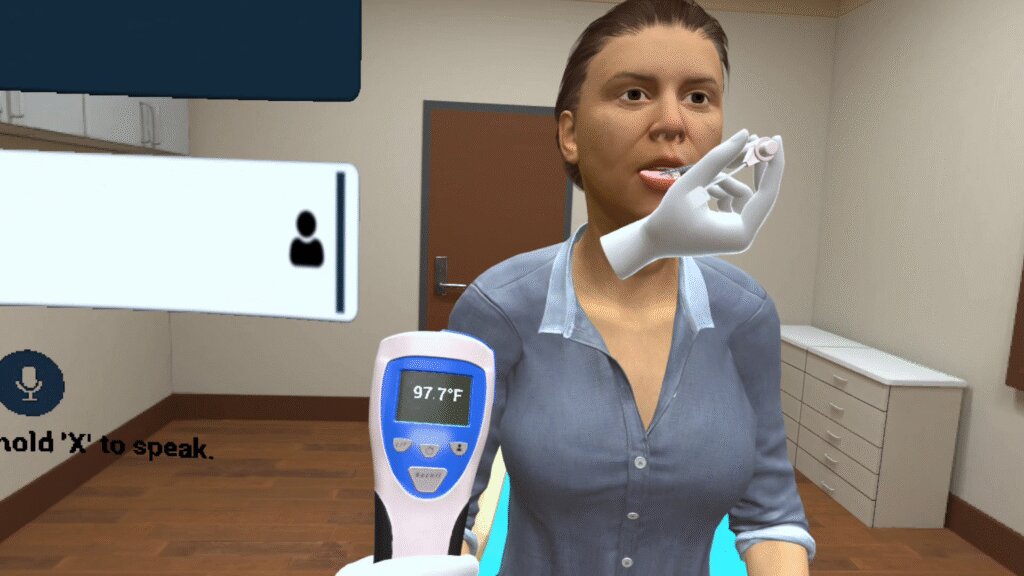
In this role, we support physicians with clinical procedures, perform diagnostic tests, and assist during patient examinations to ensure individuals feel informed, comfortable, and well cared for.
In this guide, we will explore the Clinical Medical Assistant role in 2026, including daily responsibilities, essential skills, certification requirements, salary insights, and the steps to start a successful career in medical assisting.
What Does a Clinical Medical Assistant Do?
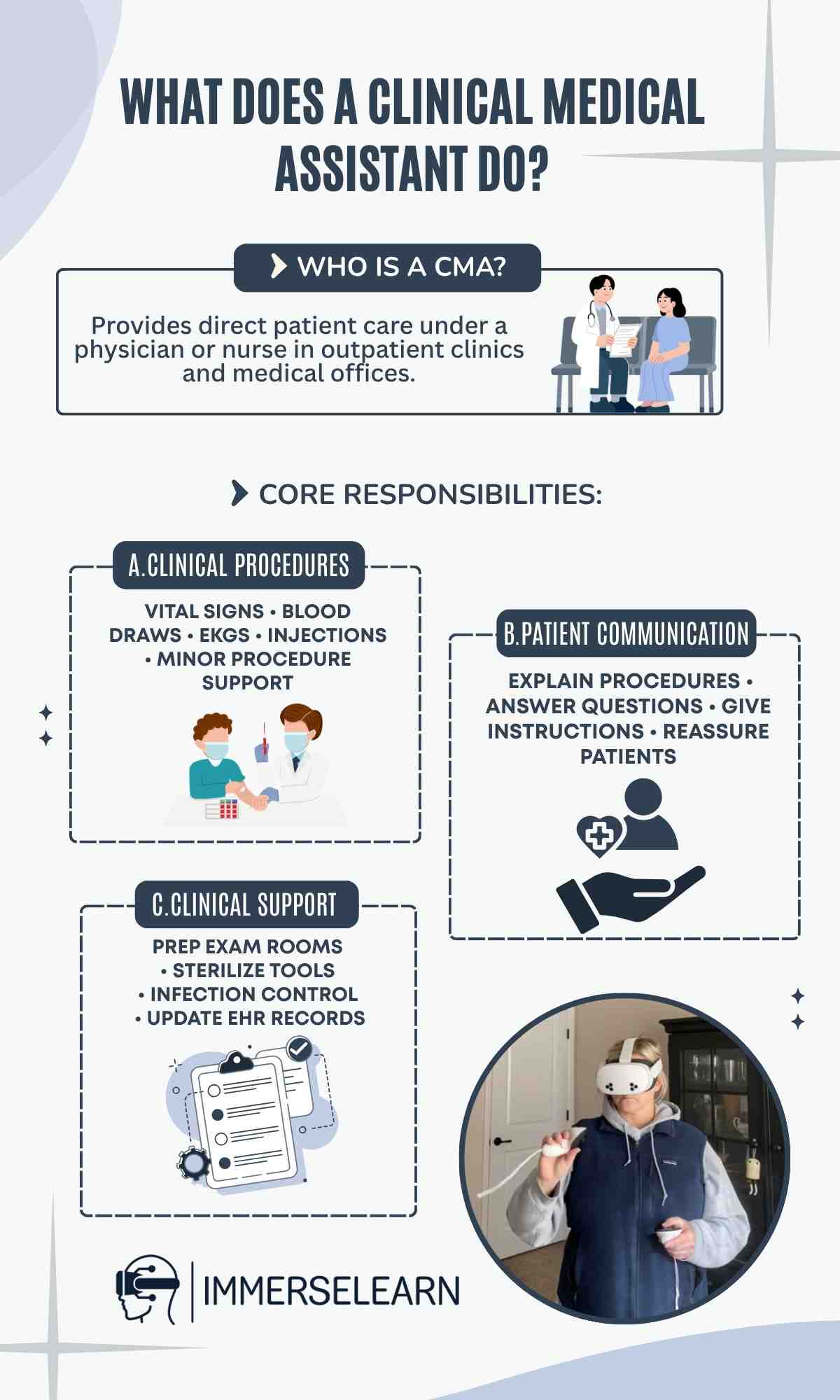
A Clinical Medical Assistant (CMA) is a multi-skilled healthcare professional who provides direct care under the supervision of a physician or nurse. We typically work in outpatient clinics, physician offices, specialty practices, and urgent care centers, which clearly defines the scope of this role.
CMA Responsibilities in Three Key Areas
i) Clinical Procedures:
We handle essential tasks such as measuring vital signs, performing phlebotomy, recording EKGs, administering injections, and assisting with procedures. This hands-on work is what distinguishes this role from administrative positions in healthcare.
ii) Patient Communication and Care:
We prepare individuals for exams, explain procedures, answer questions, and reinforce discharge instructions, helping improve overall experience and continuity of care.
iii) Clinical Support and Workflow Management:
We prepare exam rooms, sterilize instruments, maintain infection control standards, and document medical data in electronic health records EHR to ensure smooth operations.
To perform these responsibilities effectively, we need a strong combination of technical skills and communication abilities.
To learn more, we can explore a complete guide on essential CMA skills.
Clinical Medical Assistant Duties and Responsibilities
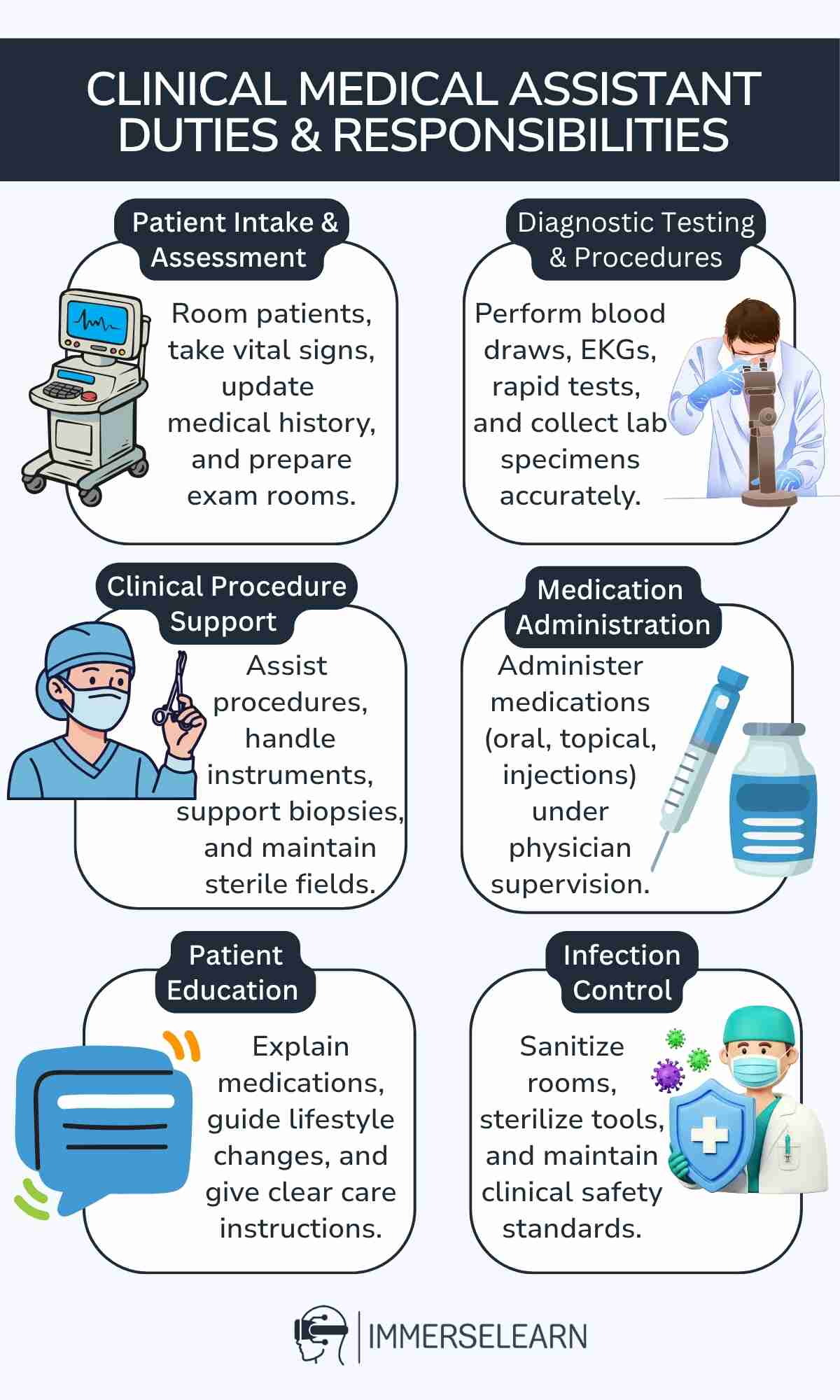
The role of a Clinical Medical Assistant includes a wide range of tasks. In a single shift, we may draw blood, perform an EKG, assist during procedures, and guide patients in managing conditions like diabetes. This variety makes a career in medical assisting dynamic and rewarding.
Here is what these daily responsibilities look like in real healthcare settings.
i) Patient Intake and Initial Assessment:
We are often the first point of contact, and this interaction shapes the patient experience. We bring patients in, record vital signs such as blood pressure, heart rate, temperature, respiratory rate, and oxygen saturation, and update medical history.
We listen carefully to patient concerns and make sure the exam room is ready, the patient is prepared, and all details are accurately documented in the EHR for a smooth workflow.
ii) Diagnostic Testing and Clinical Procedures:
Our technical skills are essential in daily practice.
- Phlebotomy: We perform blood draws with precision while keeping patients calm.
- EKG or ECG: We place leads correctly, capture accurate readings, and ensure clear results for physician review.
- Point of Care Testing: We conduct tests such as urinalysis, blood glucose checks, pregnancy tests, and infection screenings with quick results.
- Specimen Collection: We handle samples carefully, ensuring proper labeling, storage, and documentation for accurate diagnosis.
iii) Assisting with Medical Procedures:
When a physician performs a procedure, a well trained Clinical Medical Assistant helps ensure everything runs smoothly and efficiently.
- Handing instruments during minor surgeries
- Assisting with suturing and suture removal
- Supporting skin and punch biopsies
- Managing wound care and dressing changes
- Maintaining sterile fields throughout
The best professionals do not wait for instructions. We anticipate what the physician needs next and stay prepared at every step.
iv) Medication Administration:
Under a physician’s order, we administer medications through oral, topical, intramuscular, and subcutaneous routes, including vaccines and insulin.
Scope of Practice Note: Medication administration for a Clinical Medical Assistant is regulated by each state’s Medical Practice Act. Requirements vary, so we must always verify guidelines through the State Medical Board or recognized certification bodies.
v) Patient Education and Communication:
- Patient education is a key part of patient care and treatment success.
- Explaining medications including purpose, dosage, and possible side effects
- Guiding patients through recommended dietary and lifestyle changes
- Preparing patients for upcoming tests or procedures with clear instructions
- Reviewing aftercare and discharge steps in simple and easy to understand language
Strong communication directly improves patient outcomes, satisfaction, and trust in healthcare.
vi) Infection Control and Room Setup:
We maintain a clean and safe clinical environment. We sanitize between patients, sterilize instruments, follow OSHA guidelines, manage biohazard waste, and restock supplies.
A well organized exam room is essential for patient safety and quality care in every healthcare setting.
Clinical Medical Assistant Salary Guide (2026)
One of the first questions we usually ask when considering this career is simple: how much does a Clinical Medical Assistant earn?
According to the U.S. Bureau of Labor Statistics, the median annual salary was $44,200 in 2024, or about $21.25 per hour. Entry level professionals earned under $35,020, while experienced candidates earned over $57,830, showing strong earning potential in healthcare roles.
Salaries continue to rise due to growing demand in the healthcare industry, and those with CMA certification often earn more than non certified candidates. Developing strong clinical skills, gaining hands-on experience, and earning certifications can significantly improve income and career growth.
CMA Salary by Experience Level:
| Experience Level | Annual Salary | Hourly Rate |
| Entry Level (0-2 Years) | $35,000 - $38,500 | $16.80 - $18.50 |
| Mid Level / National Median | ~$44,200 | ~$21.25 |
| Experienced / Certified CMA | $48,000 - $55,000+ | $23.00 - $26.45+ |
Does Certification Impact CMA Salary?
Yes, and the impact is significant. As a Clinical Medical Assistant, certification directly influences salary, job opportunities, and career growth.
Certified professionals, such as those with a CCMA, often earn higher salaries, get hired faster, and handle a wider range of clinical responsibilities. Many employers in the healthcare industry now prefer or require this credential when hiring.
If long term growth and earning potential matter to us, it becomes essential. Organizations like the National Healthcareer Association (NHA) and the American Association of Medical Assistants (AAMA) offer recognized credentials that require completing an accredited program and passing a national exam.
A Day in the Life of a Clinical Medical Assistant
To understand this role, we can look at a typical day as a Clinical Medical Assistant in a busy clinic. We start by preparing the work area, checking supplies, sterilizing instruments, and reviewing the schedule.
As people arrive, we bring them into exam rooms, record vital signs, update medical histories, and document details in electronic health records EHR so the physician is fully informed. As the pace increases, we assist with phlebotomy, perform EKGs, conduct tests, support procedures, and answer questions.
Midday, we reset by restocking supplies, sterilizing equipment, and following up on communication. The afternoon continues with patient care, tasks, and physician support, where communication is as important as technical skills.
By the end of the day, we complete documentation, prepare exam rooms, and get everything ready for the next day. This fast paced, hands on environment makes a Clinical Medical Assistant career both challenging and rewarding.
Common Mistakes New Clinical Medical Assistants Make
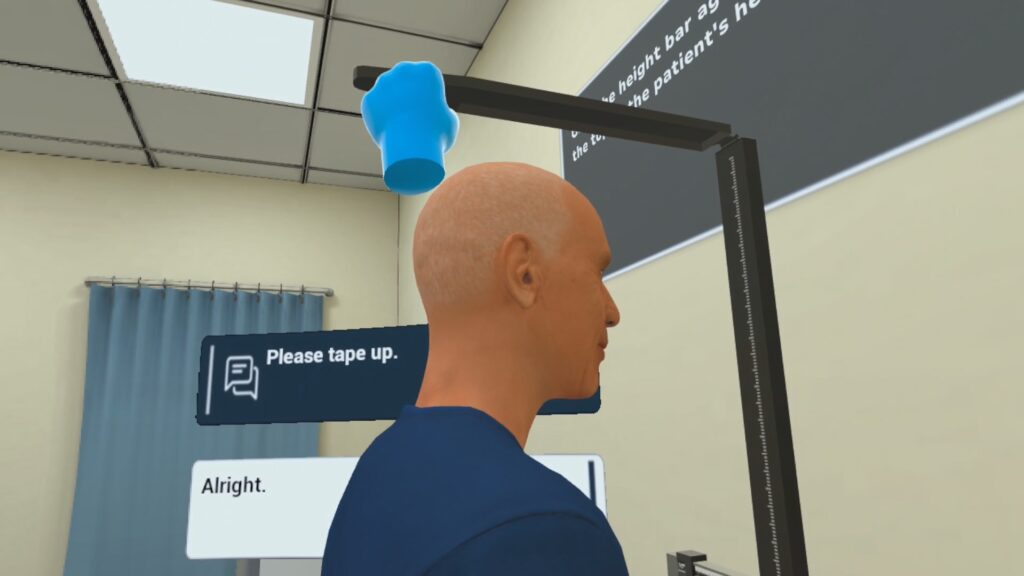
Starting as a Clinical Medical Assistant may feel overwhelming, and many of us make similar mistakes early on. With awareness and practice, we improve quickly and build strong skills.
- Rushing interactions: In a busy healthcare setting, moving too quickly may lead to missed symptoms, inaccurate documentation, and poor care. Taking a few extra moments to listen carefully makes a real difference.
- Not double checking data: Errors like incorrect sample labeling or wrong entries in electronic health records EHR may delay diagnosis and treatment. Attention to detail is essential.
- Hesitating during procedures: As new Clinical Medical Assistants, we may hesitate during phlebotomy or EKG tasks, which affects efficiency. Confidence improves with practice and repetition.
- Poor communication with providers: Unclear communication of patient concerns may impact decisions. Strong communication skills are as important as technical ability.
These challenges are part of the learning process. What matters is how we adapt, improve, and grow into a confident Clinical Medical Assistant.
First Month Challenges as a CMA
The first month as a Clinical Medical Assistant is where training turns into real experience. We begin applying clinical skills, communication, and knowledge in a fast paced healthcare environment.
- Adjusting to clinic workflow: Every practice operates differently. We learn how patients move, how providers manage time, and how documentation works in electronic health records EHR. This takes time and observation.
- Building confidence in procedures: Tasks like injections or phlebotomy may feel challenging at first. With hands-on experience, confidence improves steadily.
- Managing multiple responsibilities: We often handle patient care, documentation, and provider support at the same time. Prioritizing tasks is essential for efficiency and quality care.
- Handling unexpected situations: Healthcare is unpredictable. Patients may present new symptoms, schedules may change, and urgent cases can arise. Staying adaptable and calm is key.
Most new Clinical Medical Assistants feel unsure in the beginning, but with consistent practice, confidence builds quickly and daily responsibilities become easier.
Key Factors That Shape a CMA’s Duties
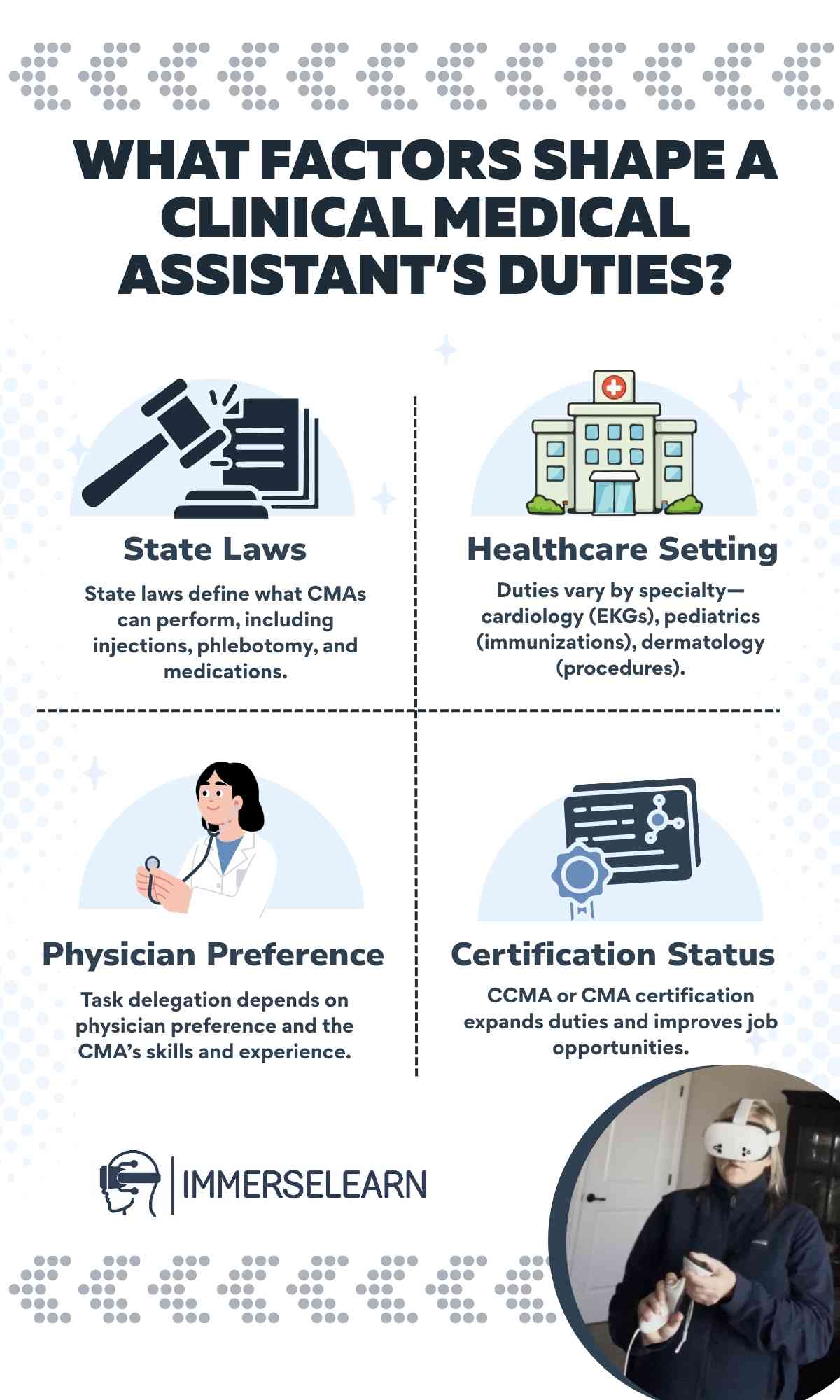
The responsibilities of a Clinical Medical Assistant vary based on key factors within the healthcare setting. Understanding these helps us prepare for real world work.
1) State Laws and Scope of Practice :
Each state's Medical Practice Act defines what a Clinical Medical Assistant can perform. Some states allow tasks like injections, phlebotomy, and medication administration with fewer restrictions, while others follow stricter guidelines. We must understand state regulations before starting practice.
2) Healthcare Setting and Specialty:
The type of practice directly influences the skills we use on a daily basis.
- In cardiology, we perform EKGs and monitor heart conditions.
- In pediatrics, we focus on immunizations, growth tracking, and child care.
- In dermatology, we assist with procedures like biopsies and treatments.
3) Physician Preference and Delegation:
Different providers may delegate tasks based on their comfort level and our proven competence. In this role, responsibilities expand as we demonstrate strong skills, accuracy, and reliability.
4) Certification and Skill Level:
Holding a recognized certification such as CCMA or CMA can increase the range of responsibilities we are trusted with. It also shows employers that we have verified skills and knowledge. Many healthcare practices now prefer certified candidates when hiring a Clinical Medical Assistant.
CMA vs Administrative Medical Assistant
Many of us begin training without fully understanding the difference between a Clinical Medical Assistant and an administrative role. Choosing the right path depends on our interests, strengths, and long term career goals in healthcare.
| Aspect | Clinical Medical Assistant (CMA/CCMA) | Administrative Medical Assistant |
| Primary Focus | Direct patient care and clinical procedures | Front office operations and patient scheduling |
| Key Responsibilities | Vital signs, EKGs, Phlebotomy, injections, procedure support | Appointment scheduling, billing, coding, and desk management |
| Work Environment | Exam rooms, clinical labs, procedure areas | Front desk, Administrative office |
| Certifications | CCMA (NHA), CMA (AAMA), RMA (AMT) | CMAA (NHA) |
| Best For | Learners who prefer hands-on care and real-time interaction | Individuals who enjoy organisation, systems, and technology. |
Clinical Medical Assistant vs CNA: Key Differences
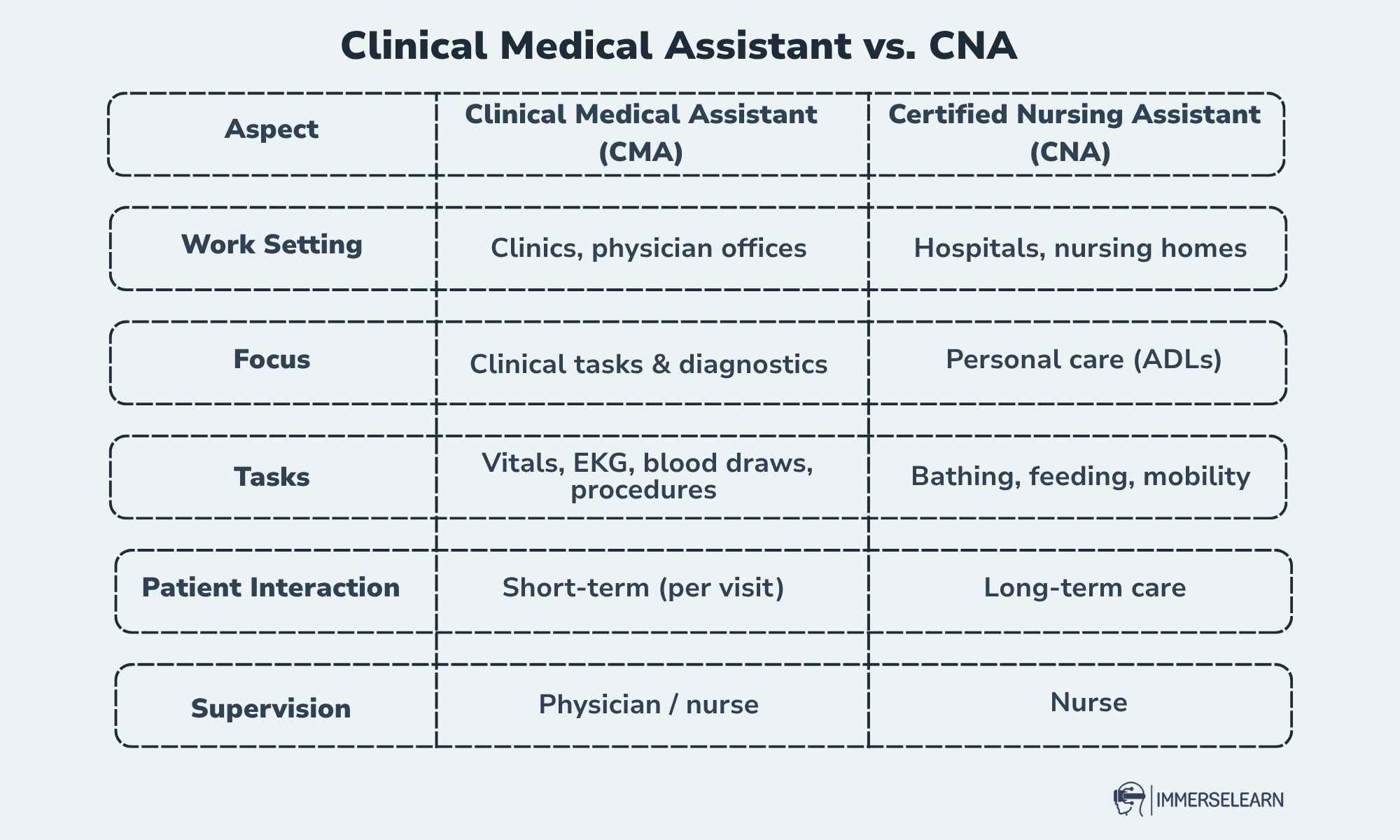
This is a common question when exploring entry level roles in healthcare. Understanding the difference between a Clinical Medical Assistant and a Certified Nursing Assistant helps us choose the right career path.
A Certified Nursing Assistant focuses on patient care and daily support such as bathing, dressing, feeding, and mobility. CNAs typically work in hospitals, nursing homes, and long term care settings, supporting individuals over extended periods.
A Clinical Medical Assistant works mainly in outpatient clinics and physician offices. We perform procedures, assist with diagnostic testing, and support physicians during exams. Our responsibilities include phlebotomy, EKGs, and exam room support.
In simple terms, CNAs focus on daily care and long term support, while this role focuses on technical tasks and the diagnostic process. Both are essential in healthcare, but differ in responsibilities, work environments, and required skills.
Steps to Becoming a Certified Medical Assistant
Becoming a Clinical Medical Assistant is a clear and achievable career path for anyone interested in healthcare. With the right training and guidance, we can move from learning to a professional role in a short time.
1) Complete Training Program (4 to 12 Months):
We start by enrolling in a recognised program where we learn medical terminology, procedures, and patient care skills required for this role.
Choosing the right program is important for building strong hands-on skills and becoming job-ready. We should look for training that includes practical experience, externship opportunities, and exam preparation.
To get started, we can explore an Clinical Medical Assistant training program that helps us build real world skills and get jobs ready faster.
2) Gain Hands On Experience Through Externship:
Most quality programs include an externship. This allows us to apply our skills in a real healthcare setting under supervision, build confidence, and strengthen our resume.
3) Earn Your National Certification:
Although certification may not always be required by law, it significantly improves our job opportunities. After completing training, we can take a national exam such as the CCMA certification to validate our skills as a Clinical Medical Assistant.
4) Start Your Medical Assistant Job Search:
With training, internship experience, and certification, we become strong candidates in the job market. We can apply for Clinical Medical Assistant roles in outpatient clinics, physician offices, and urgent care centers within the healthcare system.
5) Continue Professional Development:
Ongoing learning is important for growth. Many professionals specialize in areas like phlebotomy or EKG, while others use this experience to move into advanced healthcare roles.
Want to go deeper? Read our complete guide on how to become a certified clinical medical assistant.
Job Outlook for Medical Assistants
The healthcare industry continues to grow rapidly, and as a Clinical Medical Assistant, we are at the center of this demand. There are already more than 811,000 active roles, and the need for skilled professionals keeps increasing every year.
This demand is driven by an aging population and the expansion of outpatient care. As a result, certified professionals are trusted with more clinical responsibilities, increasing the value of this role.
These are long term shifts in healthcare delivery, offering strong job stability, clear entry into the field, and solid career growth opportunities.
Frequently Asked Questions:
Q1) What does a clinical medical assistant do?
Ans: A Clinical Medical Assistant (CMA) performs hands-on patient care tasks under physician supervision, including taking vital signs, drawing blood, performing EKGs, administering injections, and assisting with procedures in outpatient settings.
Q2) How much does a clinical medical assistant make in the US?
Ans: The average salary is about $44,200 per year ($21.25 per hour), with entry level roles starting around $35,000 and experienced certified CMAs earning $50,000 or more.
Q3) How long does it take to become one?
Ans: Accelerated programs take as little as 4 months. Certificate programs typically run 9 to 12 months, while associate degree programs can take up to 2 years. Many enter the workforce through a 4 to 6 month accredited training program.
Q4) Do you need certification to become a clinical medical assistant?
Ans. Certification is not always legally required, but most employers prefer or require credentials like CCMA (NHA) or CMA (AAMA) for hiring and career advancement.
Q5) Can a clinical medical assistant draw blood or give injections?
Ans. Yes, CMAs are trained to perform phlebotomy and administer injections, but their scope of practice depends on state laws and physician supervision.
Q6) What is the difference between a CMA and a CNA?
Ans. A CMA works in outpatient settings performing tasks like vital signs, EKGs, and blood draws, while a CNA provides basic care such as bathing, feeding, and mobility support in hospitals or long term care environments.
Q7) Where do clinical medical assistants work?
Ans. Clinical medical assistants primarily work in physician offices, outpatient clinics, urgent care centers, and specialty practices, rather than hospitals.
Q8) What is the most challenging part of this career?
Ans: Managing difficult interactions, such as anxious or non compliant individuals, is often the biggest challenge. Strong communication, empathy, and staying calm are just as important as technical skills.
Q9) Is clinical medical assisting a good career in 2026?
Ans. Yes, it is a strong career choice with 12 percent job growth, rising demand, competitive salaries, and a fast entry path into healthcare. (Source: BLS Occupational Outlook Handbook, 2024–2034 projections)
Q10) What skills does a clinical medical assistant need?
Ans. Both technical and interpersonal skills matter. On the technical side: phlebotomy, EKG performance, infection control, and medication administration. On the personal side: clear communication, empathy, attention to detail, and the ability to stay calm under pressure.
Is a Clinical Medical Assistant Career Worth It?
We are not here just to learn about procedures or healthcare tasks. If we are exploring a Clinical Medical Assistant career, we want to know if it is truly worth our time, effort, and investment.
The short answer is yes, but the real value goes beyond salary and job growth. In this role, we gain a stable career in the healthcare industry, with strong demand, practical training, and clear opportunities to grow.
What makes this path meaningful is the impact we have on patient care. We are often the ones people rely on during important moments, helping them feel comfortable, informed, and supported throughout their visit. This level of trust and responsibility defines the profession.
We are actively involved in clinical work, building strong relationships, and improving healthcare outcomes. If this aligns with our goals, it is a career worth considering.
To move forward, we can explore a Clinical Medical Assistant training program that helps us build real world skills and become job ready in a short time.
Sources & References:
- U.S. Bureau of Labor Statistics: Medical Assistants Occupational Outlook Handbook
- U.S. Bureau of Labor Statistics: Employment Projections 2024–2034
- National Healthcareer Association (NHA): CCMA Certification
- American Association of Medical Assistants (AAMA)
- Federation of State Medical Boards: Find Your State Medical Board