
Clinical Medical Assistant Skills for Career Success
In today’s fast-paced healthcare environment, Clinical Medical Assistants (CMAs) play a vital role in ensuring that patients receive quality care and that healthcare facilities operate smoothly. From taking vital signs and assisting with procedures to managing records and communicating with patients, medical assistants serve as the essential link between patients, providers, and the administrative system that keeps healthcare running efficiently.
But success in this dynamic career depends on more than just technical know-how. Employers are increasingly looking for candidates who combine clinical competence, professional communication, and organizational efficiency, skills that not only support patient outcomes but also reflect the professionalism of the healthcare facility.
At ImmerseLearn, the Clinical Medical Assistant (CCMA) program, approved by the National Healthcareer Association (NHA), is designed to help learners master these critical skills through a combination of virtual reality (VR) simulations, interactive coursework, and hands-on externships.
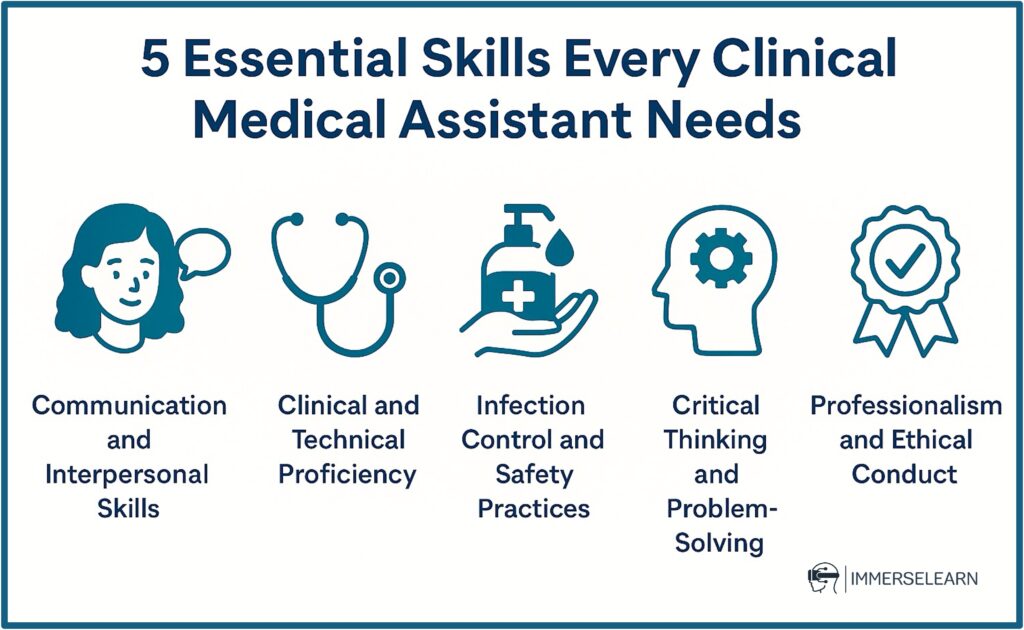
This blog explores the five essential skills every Clinical Medical Assistant needs and how ImmerseLearn’s innovative training approach helps learners build them with confidence.
Explore our Clinical Medical Assistant training for hands-on clinical learning
1. Communication and Interpersonal Skills
Healthcare is, at its core, about human connection. As a Clinical Medical Assistant, you are often the first and last point of contact for patients during their visit. Effective communication, both verbal and non-verbal, ensures that patients feel informed, supported, and respected.
Why This Skill Matters
- Patients often experience anxiety or confusion during medical visits. Clear, empathetic communication helps build trust and reduces stress.
- CMAs also serve as the communication bridge between physicians, nurses, and administrative staff, ensuring accurate information flow across departments.
- Miscommunication in healthcare can lead to errors, misunderstandings, or dissatisfaction, which makes this skill mission-critical.
How ImmerseLearn Builds It
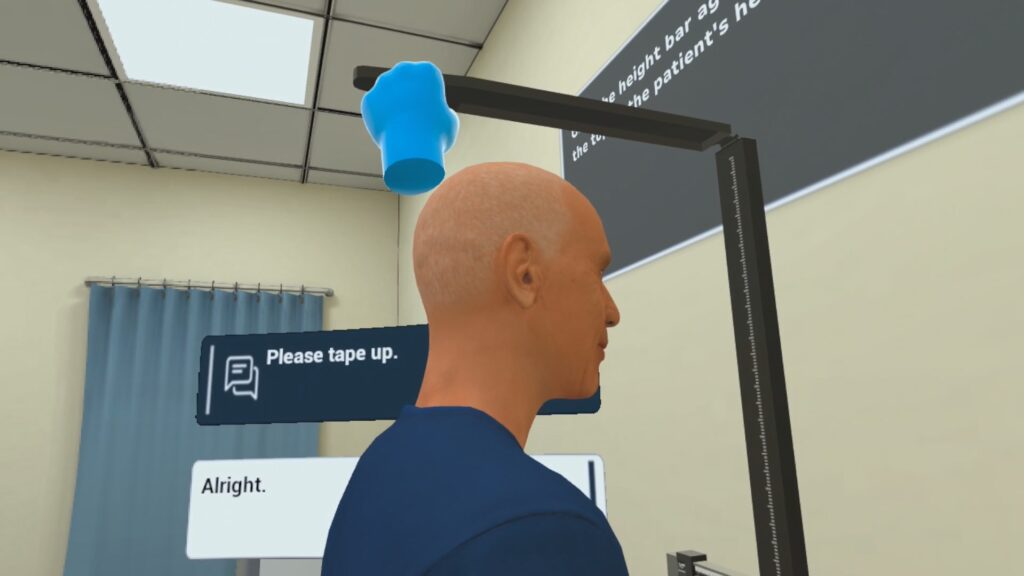
ImmerseLearn integrates VR-based patient interaction modules that simulate real-world communication scenarios. Learners engage with virtual patients displaying different emotions like anxiety, frustration, or confusion, and practice appropriate responses, tone, and empathy.
Through feedback and repetition, learners refine their ability to:
- Explain procedures in simple terms.
- Practice active listening and empathy.
- Maintain professionalism under pressure.
- Communicate medical information accurately to the care team.
By the time learners enter externships, they have already practiced numerous virtual patient conversations which serves as a confidence booster for real-life interactions.
2. Clinical and Technical Proficiency
Clinical skill is the backbone of a CMA’s job. Whether performing phlebotomy, assisting with exams, or conducting EKGs, a medical assistant’s technical abilities directly impact patient safety and quality of care.
Why This Skill Matters
- CMAs perform a wide range of procedures that require precision, safety, and adherence to clinical protocols.
- Employers seek candidates who can handle equipment confidently and follow infection control standards meticulously.
- Clinical competence ensures seamless collaboration with physicians and nurses, enabling more efficient care delivery.
How ImmerseLearn Builds It
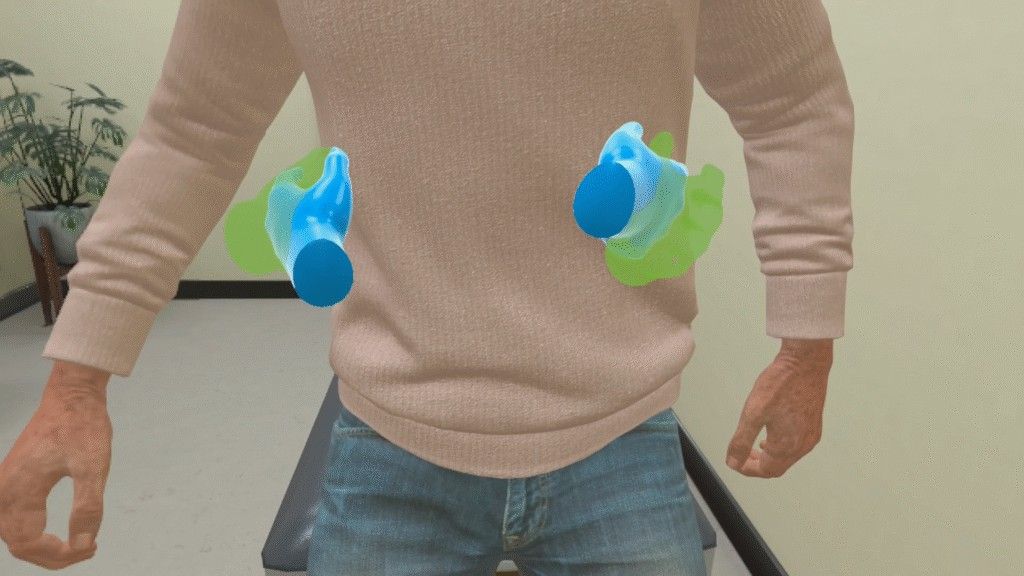
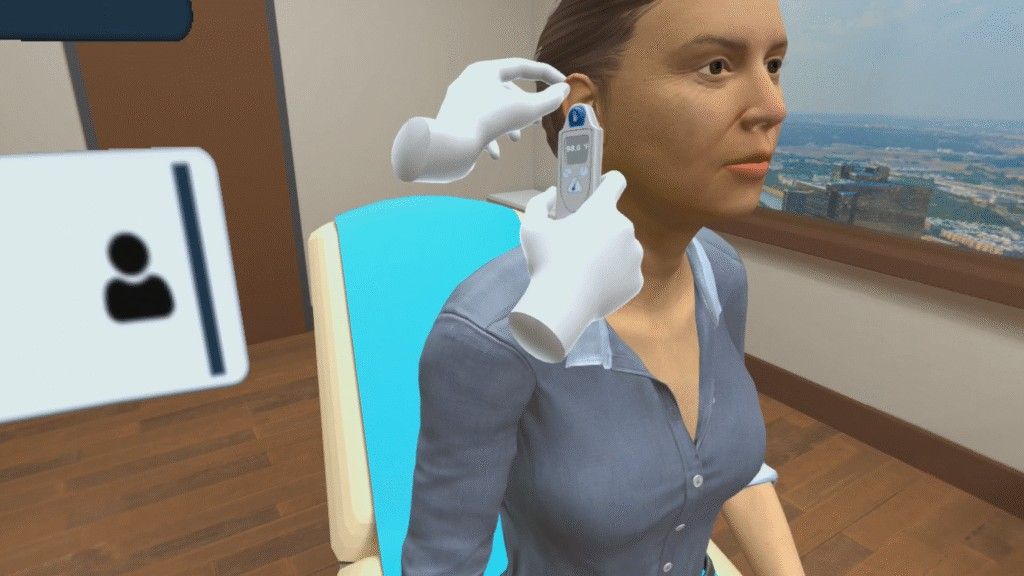
ImmerseLearn’s Virtual Reality simulations replicate authentic clinical environments spanning across outpatient clinics to examination rooms. Learners practice essential tasks such as:
- Measuring and recording vital signs.
- Performing EKGs and specimen collection.
- Administering injections and preparing examination rooms.
- Applying aseptic and infection control techniques.
Each simulation provides immediate feedback, allowing learners to correct mistakes in real-time. For example, if a learner fails to maintain aseptic technique, the VR system highlights the error and suggests corrective steps.
This combination of guided learning and repetition ensures that learners not only understand procedures conceptually but also build the muscle memory required to perform them accurately.
Upon completing their VR modules, learners move into externships with confidence, ready to apply what they have practiced repeatedly in virtual settings.
3. Infection Control and Safety Practices
A Clinical Medical Assistant’s first responsibility is to ensure a safe, sterile, and compliant clinical environment. Infection prevention isn’t just a regulatory requirement: it’s a moral and professional commitment that protects both patients and healthcare staff.
Why This Skill Matters
- Proper infection control prevents cross-contamination and reduces healthcare-associated infections (HAIs).
- CMAs are directly involved in specimen collection, sterilization, and equipment handling: tasks that demand strict adherence to aseptic protocols.
- Understanding and maintaining infection control standards helps facilities stay compliant with OSHA, CDC, and state health regulations.
How ImmerseLearn Builds It
ImmerseLearn’s Virtual Reality simulations replicate realistic clinical settings where learners practice safe procedures and infection control measures in real time.
Through immersive modules, learners gain experience in:
- Hand hygiene and PPE usage following CDC guidelines.
- Sterile field maintenance during specimen collection and procedures.
- Proper disposal of biohazardous waste and sharps management.
- Environmental cleaning and cross-contamination prevention.
In these simulations, learners are challenged with real-world scenarios such as identifying breaches in aseptic technique or responding to potential exposure risks. The VR environment allows them to correct mistakes instantly, reinforcing safety-first behavior through repetition and feedback.
ImmerseLearn’s emphasis on infection control ensures graduates enter the workforce not only certified but also confident in maintaining the highest standards of clinical safety: a critical expectation in every healthcare setting.
4. Critical Thinking and Problem-Solving
In healthcare, no two days are alike. Medical assistants must think critically, make quick decisions, and adapt to unexpected challenges ranging from identifying potential safety hazards to prioritizing patient care tasks.
Why This Skill Matters
- Critical thinking minimizes medical errors and improves clinical outcomes.
- It allows CMAs to recognize when something is outside their scope of practice and escalate appropriately.
- Effective problem-solving improves patient satisfaction and workplace efficiency.
How ImmerseLearn Builds It
ImmerseLearn’s immersive training environments are designed to simulate real-world challenges where learners must analyze, decide, and act.
For example:
- A VR scenario may involve identifying an abnormal pulse reading and determining the correct reporting procedure.
- Another simulation may require balancing multiple patient tasks; testing prioritization and time management skills.
These interactive experiences strengthen learners’ ability to assess situations logically, apply medical knowledge in context, and make informed, ethical decisions, all essential qualities for CCMA certification and clinical practice.
This skill development continues in externships, where learners apply critical thinking under real supervision, preparing them for fast-paced clinical environments.
5. Professionalism and Ethical Conduct
Professionalism defines the reputation of a medical assistant and, by extension, the reputation of the healthcare facility. From patient confidentiality to appearance and conduct, professionalism is an essential soft skill that influences both career longevity and patient trust.
Why This Skill Matters
- CMAs handle sensitive patient data, making ethical responsibility and confidentiality non-negotiable.
- Professional conduct establishes credibility with both patients and healthcare colleagues.
- Ethical decision-making ensures compliance with healthcare laws, protecting both patients and employers.
How ImmerseLearn Builds It
ImmerseLearn emphasizes professionalism from day one through modules on medical law, ethics, and HIPAA compliance. Learners explore real-world case studies that challenge them to think critically about ethical boundaries and professional expectations.
Throughout the program, students receive guidance on:
- Patient confidentiality and documentation ethics.
- Cultural sensitivity and inclusivity in patient interactions.
- Time management and teamwork in multidisciplinary care settings.
Instructors and career coaches also provide mentorship on workplace professionalism, from interview preparation to maintaining composure under pressure.
By graduation, ImmerseLearn learners understand that professionalism isn’t just a skill. It’s a mindset that defines their success in healthcare.
How ImmerseLearn Integrates These Skills into Certification Readiness
Each of these essential skills aligns directly with the competencies assessed in the NHA Certified Clinical Medical Assistant (CCMA) exam.
ImmerseLearn’s NHA-approved curriculum ensures that learners gain both the knowledge and practical abilities needed to meet exam standards confidently. The program includes:
- Comprehensive course modules aligned with the NHA exam blueprint.
- Practice assessments and review tests to track progress.
- Program completion exam as a preparation milestone before certification testing.
- Dedicated advisor support to help learners register for and succeed in the NHA CCMA exam.
This structured approach transforms learners into certified, job-ready professionals who not only pass the exam but also excel in the workplace.
The ImmerseLearn Difference
What sets ImmerseLearn apart is the integration of immersive technology, certification alignment, and career development in one complete training ecosystem.
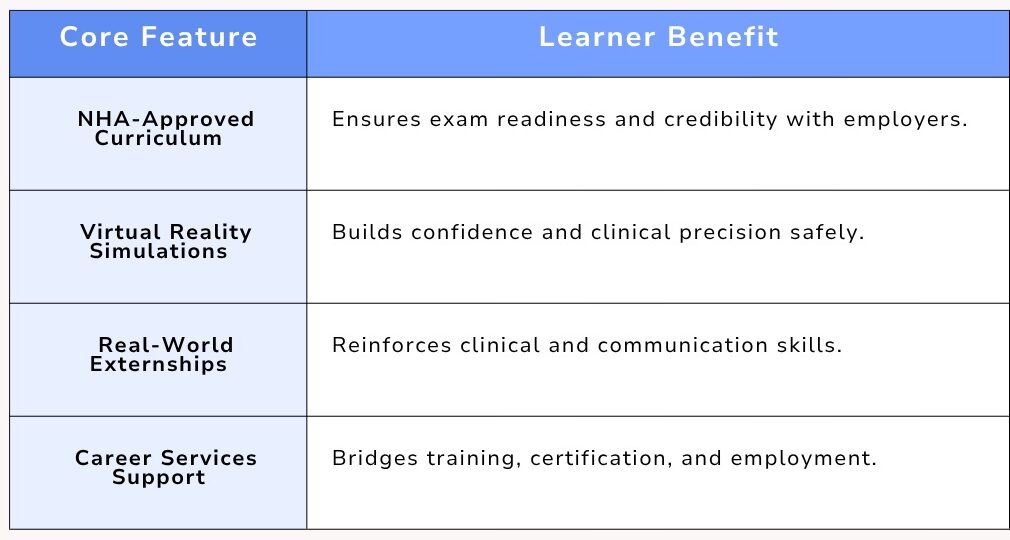
ImmerseLearn doesn’t just teach skills, it transforms learners into competent, compassionate, and career-ready healthcare professionals.
Conclusion
The role of a Clinical Medical Assistant requires both technical precision and compassionate patient care. Career success depends on strong communication skills, clinical and technical proficiency, critical thinking, infection control practices, and consistent professionalism.
ImmerseLearn’s NHA-approved Medical Assistant training program develops these essential skills through immersive VR simulations, expert-led instruction, and hands-on clinical externships, helping learners gain real-world experience before entering the workforce. Graduates complete the program job-ready, confident, and prepared for certification and high-quality patient care from day one.
As healthcare continues to evolve, ImmerseLearn prepares future medical assistants with the clinical skills, confidence, and professional mindset needed to succeed in modern healthcare settings.