
Gas Line Installation with Black Iron Piping


Credits : - 0.3

About the Course:
This Gas Line Installation with Black Iron Piping microcredential trains technicians to safely install, assemble, and test black iron piping systems used for residential and light commercial natural gas distribution while developing hands-on skills relevant to Plumbing Training programs.
Learners will practice real-world installation techniques including pipe measuring and cutting, threading, fitting assembly, pipe support installation, gas line routing, leak detection, pressure testing, and system verification. The course emphasizes safety, code compliance, and precision to ensure secure and reliable gas piping installations.
Technicians will gain hands-on experience in installing black iron gas piping systems, minimizing installation errors, and ensuring safe gas flow and long-term system reliability.
Learning Objectives:
- Identify black iron pipe components, fittings, and their applications in natural gas systems
- Safely prepare the work area and gather the required tools and materials
- Measure, cut, and thread black iron pipes accurately for installation
- Install and connect gas pipes, fittings, valves, and supports properly
- Follow manufacturer guidelines and local gas code requirements during installation
- Apply pipe joint compounds and sealants correctly to prevent gas leaks
- Route and secure gas piping to maintain proper alignment and support
- Perform pressure testing and leak detection procedures safely and effectively
- Verify proper gas flow and overall system functionality after installation
- Maintain safe work practices when handling gas piping systems and installation tools
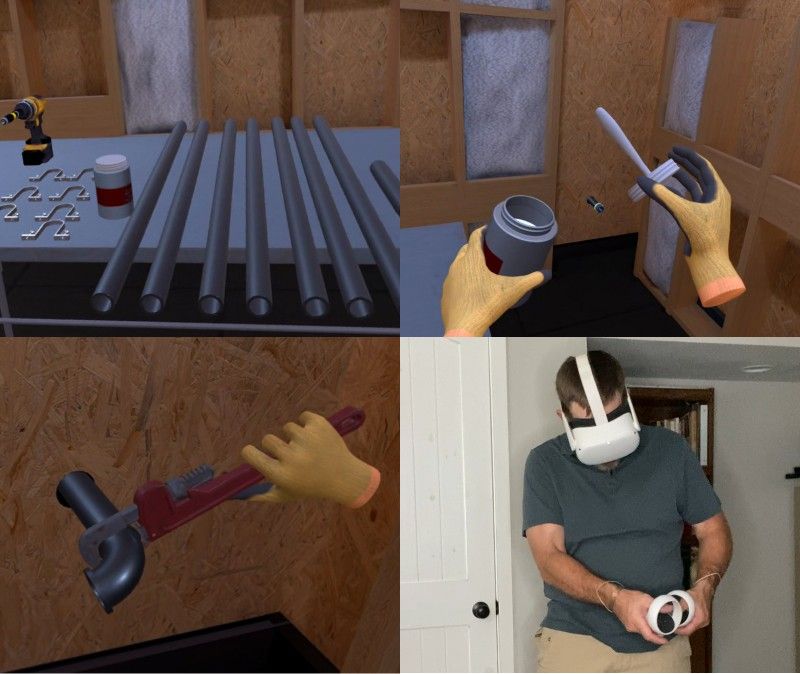
Course delivered through our LMS and accessible in both VR and web. Learn on the web anytime, or enjoy immersive VR training with your own Oculus VR headset.
Workforce Development

At ImmerseLearn, we equip plumbing technicians with the practical piping and gas system installation skills required for modern residential and commercial applications. This microcredential strengthens installation accuracy, troubleshooting ability, and safety awareness through immersive VR-based learning.
Learners exploring plumbing careers can also explore this complete guide to plumbing training to understand industry skills and career preparation.
By completing this microcredential, technicians will gain the confidence and technical expertise needed to install black iron gas piping systems accurately, prevent leaks, and ensure safe, efficient, and long-lasting natural gas system performance.