Pharmacy Technician Skills for Your Resume: What to List and How

Most pharmacy technician job posts ask for the same core abilities: accurate prescription work, clear communication, and safe medication handling. Your resume has a few seconds to show a hiring manager you have them. This guide shows which skills to list, how to word them, and how to back them up with proof, even if you are new to the field.
Why your skills section matters so much
Many pharmacies and hospitals use software to screen resumes before a person reads them. That software looks for skills that match the job post. A clear skills section helps you get past that first screen, and it helps the pharmacist or manager see quickly that you can do the work.
If you want a deeper look at the skills themselves, read our guide to pharmacy technician skills employers hire for. This article focuses on how to put those skills on paper.
Technical skills to list
These are the hands-on, job-specific skills. List the ones you can truly do:
- 1. Prescription intake, entry, and verification support
- 2. Counting, measuring, and packaging medications accurately
- 3. Pharmacy math: dosage calculations, conversions, and days supply
- 4. Medication names, brand and generic, and common drug classes
- 5. Inventory control, ordering, and checking expiration dates
- 6. Insurance processing and claim basics
- 7. Sterile and nonsterile compounding basics, including hand hygiene and garbing
- 8. Pharmacy software and point of sale systems
- 9. Following privacy rules for patient information
Soft skills to list
Pharmacy work is fast and busy. Managers want people who stay calm and careful. Good soft skills to include:
- 1. Attention to detail
- 2. Clear, friendly communication with patients and pharmacists
- 3. Customer service under pressure
- 4. Teamwork
- 5. Time management and multitasking
- 6. Professional ethics and keeping information private
How to word skills so they stand out
A plain list is a start. Bullet points that show results are stronger. Use an action word, the task, and a result or detail.
Weak: Good with medications.
Better: Filled and labeled prescriptions in a high volume practice setting, double checking drug, strength, and quantity before pharmacist review.
Weak: Knows inventory.
Better: Pulled expired stock and logged reorder needs during weekly inventory checks.
Only list tasks you have actually done in a job, externship, or training lab. Hiring managers often ask about them in the interview.
Where to put skills on your resume
- 1. Summary: Two or three lines at the top that name your strongest skills and your certification status.
- 2. Skills section: A short list of 8 to 12 skills that match the job post.
- 3. Experience or training: Bullet points that prove those skills with real tasks.
- 4. Certifications: List the credential by its exact name, such as the NHA Certified Pharmacy Technician (CPhT). If you have not passed the exam yet, you can write that you are eligible or scheduled to sit for it.
No experience yet? Use your training
If you are changing careers, your training counts. List your program, the hands-on tasks you practiced, and any externship. Skills from past jobs also transfer well. Retail, food service, and office work all build customer service, cash handling, accuracy, and teamwork.
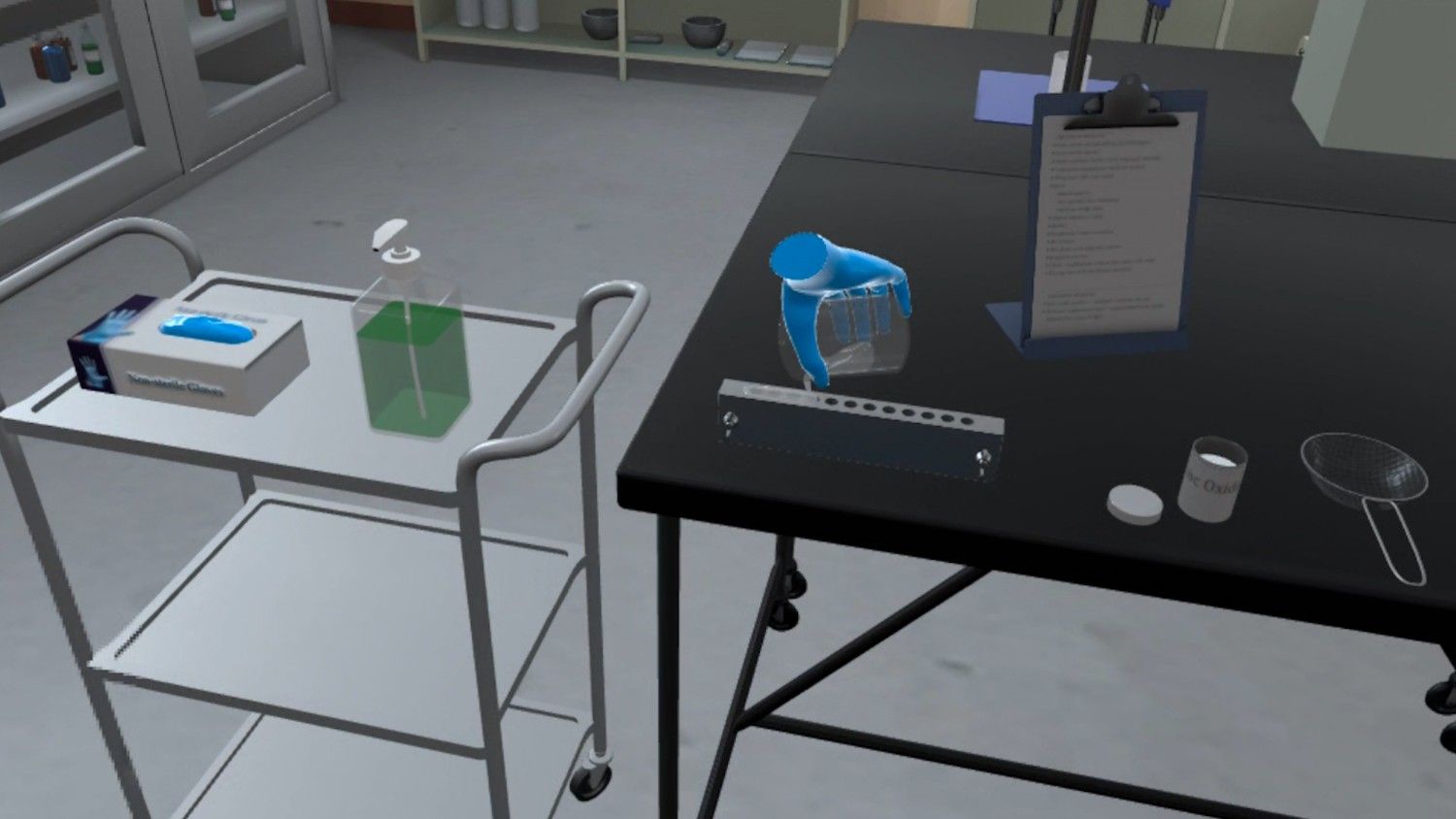
Hands-on practice gives you real examples to write about. At ImmerseLearn, students practice pharmacy tasks in virtual reality, such as preparing medications, working in a sterile compounding area, and following safety steps. Short skill lessons like USP 797 hand hygiene procedures also give you specific, named skills you can list.
Common resume mistakes to avoid
- 1. Copying a long list of skills you cannot explain in an interview
- 2. Using the wrong name for your certification
- 3. Spelling errors, which are a red flag in a job built on accuracy
- 4. Sending the same resume to every job without matching the words in the post
- 5. Leaving out your externship or hands-on training
How ImmerseLearn helps you build these skills
The ImmerseLearn Pharmacy Technician program combines online, hands-on, self-paced, IACET-accredited VR certification training with an externship. It takes about 20 weeks. After you complete a proctored final exam, you are eligible to sit for the NHA CPhT exam. A certificate of completion is not a state license or registration. Check your state board of pharmacy for its rules.
Across our programs, students see an 82% completion rate and an 87% job placement rate.
Career services and job placement after you graduate
Getting your resume right is one part of getting hired. ImmerseLearn offers 100% placement support through Career Services. Support includes:
- 1. Resume help, including your skills section
- 2. Interview practice
- 3. Job search guidance and connections with employer partners
For more on how this works, read how we train job ready pharmacy technicians.
Program cost
- 1. VR Program (headset shipped at enrollment): $3,800
- 2. Non-VR / web-based program (no headset, LMS only): $2,000 (6-month)
Payment plans are available. Eligible military spouses may qualify for MyCAA funding.
FAQs
What skills should a pharmacy technician put on a resume?
List technical skills like prescription entry, pharmacy math, medication knowledge, and inventory control, plus soft skills like attention to detail and customer service. Match them to the job post.
How many skills should I list?
Aim for 8 to 12 in your skills section, then prove the most important ones in your experience or training bullets.
Can I write a pharmacy technician resume with no experience?
Yes. Lead with your training, externship, and hands-on practice, and include transferable skills from past jobs.
How do I list the NHA CPhT on my resume?
Use the full name, NHA Certified Pharmacy Technician (CPhT), in a Certifications section. If you have not taken it yet, note that you are eligible or scheduled.