

Top HVAC Skills You Will Learn During Training
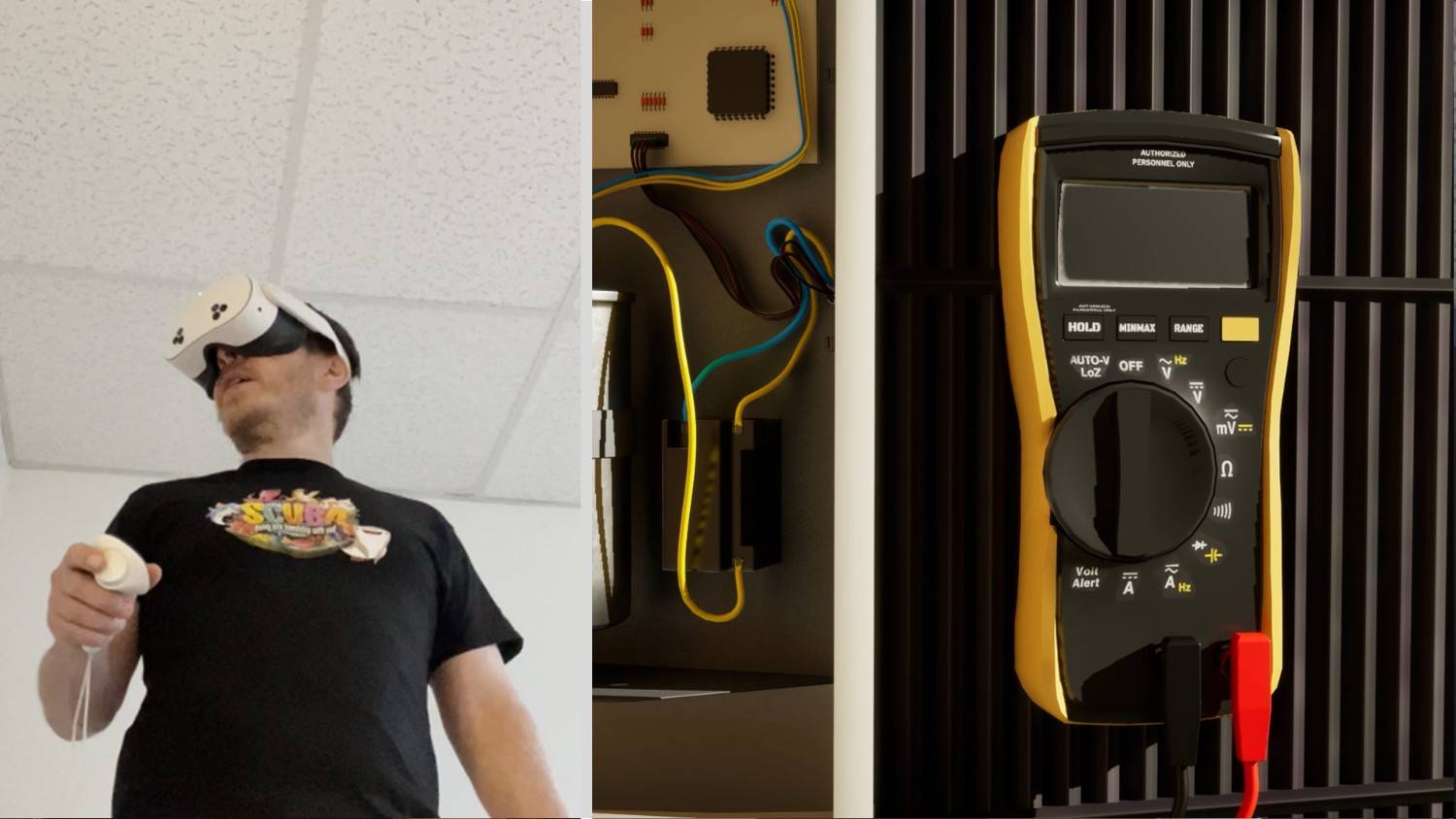
The HVAC industry continues to evolve as smart climate control systems, heat pumps, energy efficient equipment, and modern refrigerants transform heating and cooling technology. As a result, technicians need strong technical expertise, diagnostic abilities, and problem solving capabilities.
Through professional HVAC training, learners develop expertise in installation, troubleshooting, electrical controls, refrigeration, preventive maintenance, workplace safety, and emerging technologies. Many programs also prepare future technicians for industry recognized certifications and real world job responsibilities.
In this guide, we explore the key skills gained through HVAC education, the certifications that support professional growth, and how these qualifications prepare individuals for opportunities in today's heating and cooling sector.
To explore the HVAC training path and career roadmap, read the HVAC Career Guide.
Key Takeaways
- HVAC training develops essential skills in installation, troubleshooting, electrical systems, refrigeration, preventive maintenance, and workplace safety.
- Students gain practical experience with heat pumps, HVAC controls, smart thermostats, and other advanced technologies used in modern heating and cooling systems.
- Most technician education programs include preparation for EPA Section 608 Universal Certification and other industry-recognised credentials valued by employers.
- The skills learned through HVAC training can lead to careers as an HVAC installer, service technician, maintenance technician, or refrigeration specialist.
- Hands on learning, fault diagnosis exercises, and real equipment experience help students become workforce ready and confident in the field.
A quality technician program combines technical knowledge, practical experience, and certification preparation to build in demand skills and prepare learners for successful careers in the growing HVAC industry.
Why HVAC Training Matters
The HVAC industry is growing due to rising demand for energy efficient HVAC systems, advanced climate control technologies, and modern heating and cooling solutions. Combined with workforce retirements, this trend is increasing demand for professionals with strong HVAC skills.
According to the U.S. Bureau of Labor Statistics, employment for heating, air conditioning, and refrigeration mechanics and installers is projected to grow 8% from 2024 to 2034, faster than the average for all occupations. This growth highlights the need for trained professionals skilled in installation, maintenance, troubleshooting, and modern climate control technologies.
For those exploring the skills taught in technician education programs, quality HVAC Associate training helps build in demand technical abilities and provides a direct path to long term opportunities in the heating and cooling workforce.
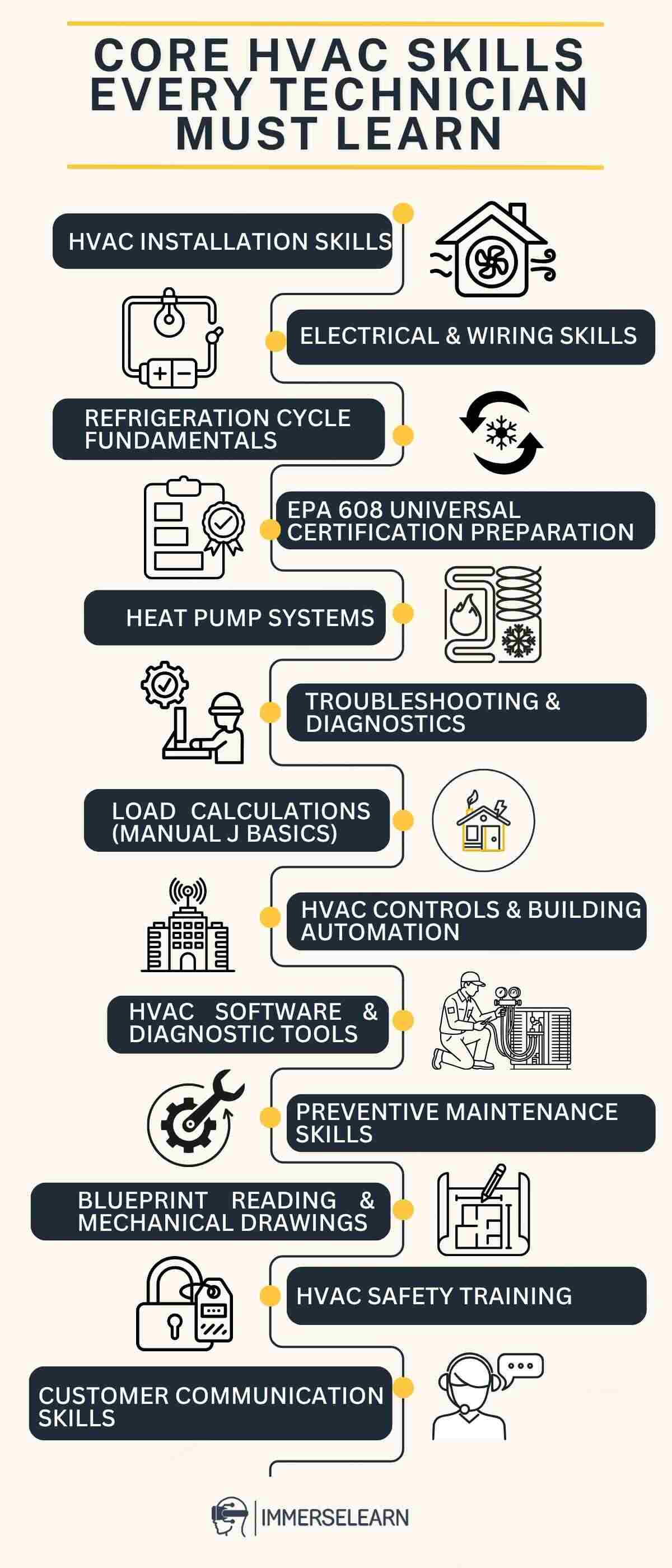
Core HVAC Skills Taught in Training
1. HVAC Installation Skills
One of the most important skills taught during HVAC training is equipment setup and commissioning. Proper installation improves performance, energy efficiency, safety, and long term reliability. Because setup errors can lead to costly repairs and customer dissatisfaction, quality programs emphasize correct procedures from the start.
Improper duct sealing is a common issue that can reduce airflow, cause uneven cooling, and increase energy costs.
Skills You'll Learn:
- Installing split systems, packaged units, and ductless mini split units
- Gas furnace installation, including venting requirements, combustion air management, and gas line connections
- Ductwork fabrication, sizing, and sealing techniques to reduce air leakage
- Equipment placement for accessibility, serviceability, and code compliance
- Startup procedures, performance testing, and customer handoff processes
Common beginner mistake: Undersized or poorly sealed ductwork can reduce airflow and overall performance. Through HVAC training, students learn proper duct sizing and sealing techniques that improve energy efficiency and equipment operation.
2. Electrical and Wiring Skills
Electrical troubleshooting and circuit knowledge are essential for diagnosing and servicing modern climate control equipment. Technicians work with control boards, variable speed motors, smart thermostats, sensors, relays, capacitors, and other components used in today's heating and cooling technology.
Skills You'll Learn:
- Circuit theory, including voltage, amperage, resistance, and Ohm's Law
- Reading wiring and ladder diagrams for diagnostics and repairs
- Testing and replacing contactors, capacitors, relays, and control boards
- HVAC controls and wiring, including thermostat wiring, communicating thermostats, and low voltage control systems
- Low voltage connections used in variable refrigerant flow equipment
Why It Matters:
As the HVAC industry adopts inverter driven compressors, communicating thermostats, and advanced controls, diagnostic expertise becomes increasingly valuable. Employers seek technicians who can identify and resolve power, control, and component related issues in modern HVAC equipment.
3. Refrigeration Cycle Fundamentals
The refrigeration cycle is the foundation of diagnostics, troubleshooting, and performance evaluation in heating and cooling equipment. Understanding how each stage works helps technicians identify problems accurately in residential and commercial applications. These concepts are typically taught through HVAC Refrigeration Cycle and Components training.
The Four Stages of the Refrigeration Process:
- Compression: The working fluid is compressed in the compressor, increasing pressure and temperature.
- Condensation: High pressure vapor releases heat through the condenser coil.
- Expansion: Pressure drops at the metering device, creating a cooling effect.
- Evaporation: The cooled substance absorbs heat from indoor air within the evaporator coil.
In HVAC diagnostics, incorrect superheat readings are often linked to airflow issues rather than charge related problems. Understanding this process improves troubleshooting accuracy and helps identify the true cause of performance issues.
4. EPA 608 Universal Certification
Any technician who works with refrigerants is required to hold an U.S. Environmental Protection Agency Section 608 certification. This is a federally recognized requirement for handling, recovering, and disposing of refrigerants safely in HVAC systems.
What EPA 608 Covers:
- Safe refrigerant recovery procedures
- Leak detection requirements and reporting thresholds
- Proper use of recovery and recycling equipment
- Environmental rules for refrigerant handling and disposal
- Classification of systems: Type I, Type II, Type III, and Universal certification
Modern Refrigerant Requirements:
The HVAC industry is transitioning from R 410A to lower global warming potential refrigerants such as R 32 and R 454B. To safely install, maintain, and service modern HVAC equipment, technicians must understand both traditional and next generation refrigerants.
Read More: EPA Section 608 Certification Exam Preparation Guide
5. Heat Pump Systems
Heat pump systems are increasingly used in residential and commercial HVAC applications because they provide both heating and cooling while improving energy efficiency. During HVAC training, students learn how this technology operates, including reversing valves, defrost cycles, auxiliary heating equipment, unit configurations, and troubleshooting techniques.
As these energy efficient solutions become more common, employers increasingly value technicians with strong diagnostic abilities and practical experience servicing modern climate control equipment.
6. Troubleshooting and Diagnostic Skills
HVAC troubleshooting skills help technicians identify the root cause of equipment problems using testing, measurements, and performance analysis. A structured approach improves repair accuracy, efficiency, and customer outcomes.
Diagnostic Skills You'll Learn:
- Identifying operating issues through unusual sounds, temperature differences, and pressure readings
- Tracing symptoms to their root causes
- Using manufacturer error codes with field measurements
- Distinguishing between compressor, refrigerant, airflow, and electrical equipment malfunctions
Real World Diagnostic Example:
An air conditioning unit that runs continuously but cannot reach the desired temperature may indicate a refrigerant leak, dirty evaporator coil, faulty metering device, or duct leakage. Structured testing helps identify the actual cause and avoid unnecessary repairs.
In real service environments, capacitor problems are often mistaken for compressor issues. Developing strong troubleshooting abilities improves fault detection accuracy and repair efficiency.
7. Load Calculations (Manual J Basics)
Manual J load calculations help technicians determine the correct equipment size for a building. During HVAC training, students learn how insulation, window placement, building orientation, occupancy, and climate conditions influence heating and cooling requirements.
Understanding these sizing principles helps professionals recommend properly matched equipment that improves energy efficiency, indoor comfort, and overall performance. Correct equipment selection can also reduce energy consumption and extend equipment lifespan.
8. HVAC Controls and Building Automation Systems
HVAC controls and building automation systems help manage temperature, airflow, energy consumption, and building performance in commercial HVAC systems. Technicians with expertise in automation and control technologies often qualify for advanced roles in large scale climate control environments.
Skills You'll Learn:
Students learn how thermostats, sensors, variable air volume equipment, economizers, and automation platforms work together to improve operational efficiency. Training also covers sensor calibration, damper control strategies, and sequence of operations used in modern facilities.
As smart building technology expands, HVAC controls remain one of the top skills you will learn during HVAC training and a highly valued skill among commercial employers.
9. HVAC Software and Diagnostic Tools
Modern HVAC professionals rely on connected technologies, advanced testing equipment, and field service platforms alongside traditional hand tools. As a result, employers increasingly value technicians with technology and data management expertise.
Tools Covered in Training:
- Digital manifold gauges with Bluetooth connectivity and data logging
- Estimating and dispatch platforms such as ServiceTitan and Housecall Pro
- Manual J load calculation applications
- Manufacturer troubleshooting apps for communicating climate control equipment
- Electronic leak detectors, including heated diode, infrared, and ultrasonic technologies
Why This Matters:
Technology proficiency is becoming an important requirement in the HVAC industry. Understanding testing equipment, reporting platforms, and field service applications can improve efficiency and provide a competitive advantage during job interviews.
10. Preventive Maintenance Skill
Preventive maintenance is essential for HVAC system performance, equipment reliability, and customer satisfaction. Strong maintenance skills help technicians identify issues early, prevent costly repairs, and build customer trust.
Maintenance Skills You'll Learn:
- Condenser and evaporator coil cleaning procedures
- Electrical connection inspection and tightening
- Capacitor and contactor testing
- Heat exchanger inspection for cracks and safety concerns
- Refrigerant charge verification using superheat and subcooling measurements
- Air filter evaluation and replacement recommendations
Why It Matters
A properly maintained HVAC system can use 15 to 20% less energy than a neglected system. Effective preventive maintenance improves efficiency, reliability, and long term system performance.
Source: Florida Solar Energy Center / ACEEE Study (FSEC-PF-474-18)
11. Blueprint Reading and Mechanical Drawings
Blueprint reading is an essential skill for commercial and industrial HVAC careers. During technician training, students learn to interpret mechanical drawings, equipment schedules, duct layouts, airflow diagrams, and zone maps used for installation and service work.
They also gain an understanding of HVAC symbols, design intent, equipment specifications, and trade coordination requirements. This knowledge improves installation accuracy, troubleshooting efficiency, and maintenance performance while helping reduce costly errors, making plan interpretation a valuable competency for HVAC professionals.
12. HVAC Safety Training
HVAC safety training helps technicians work safely with electricity, pressurized refrigerants, gas piping systems, rooftop equipment, and confined spaces while supporting regulatory compliance.
Key Safety Skills Covered:
- Lockout and tagout procedures for electrical isolation
- Personal protective equipment selection for refrigerant handling, electrical work, and rooftop service
- Fall protection and ladder safety procedures
- Confined space awareness and hazard recognition
- Gas leak detection and emergency evacuation procedures
- EPA Section 608 Certification requirements for refrigerant safety and environmental protection
Why It Matters
Employers value technicians with strong HVAC safety skills, and certifications such as NATE Certification include workplace safety topics. Commercial and industrial employers often seek candidates committed to workplace safety.
13. Customer Communication Skills
Strong interpersonal abilities are essential for long term success in the HVAC industry. Clear and professional interactions help technicians build trust, improve client satisfaction, and strengthen working relationships.
Skills You'll Develop:
i) Explaining HVAC system problems in clear, simple language
ii) Discussing findings, repairs, and service expectations effectively
iii) Presenting maintenance and repair options professionally
iv) Addressing concerns and disagreements with confidence
v) Building trust with homeowners during service visits
Smart HVAC Technology Skills:
The HVAC industry is evolving rapidly, and these skills are becoming essential for today's technicians.
| Technology | What You Need to Know |
| Smart Thermostats | Installation, configuration, and troubleshooting for Nest, Ecobee, Honeywell |
| VRF/VRV Systems | Multi-zone, variable capacity systems common in commercial applications |
| SEER2 / HSPF2 / AFUE | Current efficiency rating standards (updated from SEER/HSPF in 2023) |
| R-32 and R-454B | Low-GWP refrigerants replacing R-410A under EPA regulations |
| Demand-Controlled Ventilation | CO₂ sensors, ASHRAE 62.1 compliance, IAQ management |
| Inverter-Driven Compressors | Variable-speed operation, efficiency gains, diagnostic differences from fixed-speed |
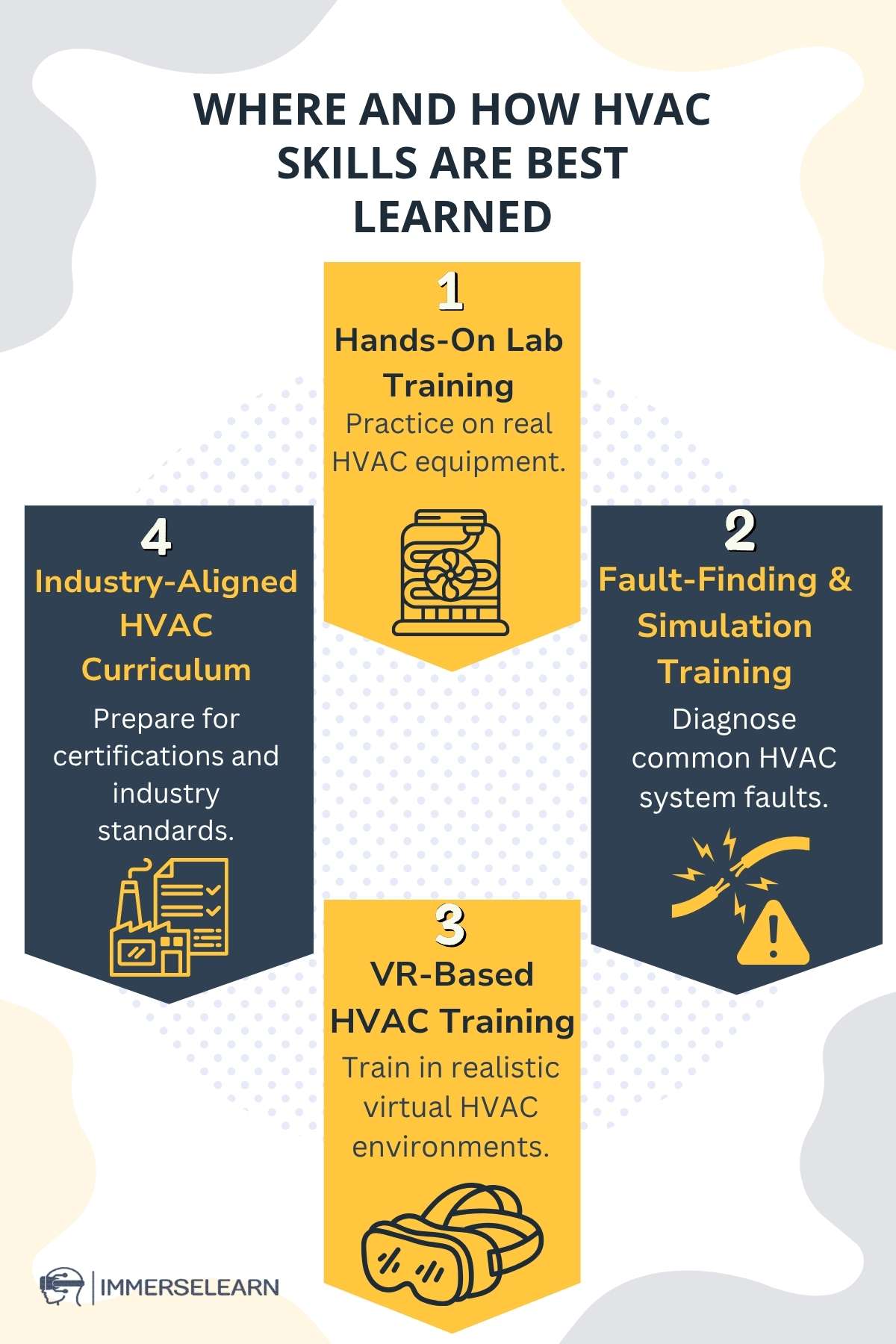
Where and How These Skills Are Best Learned
A) Hands-On Lab Training
Hands on HVAC instruction helps learners apply refrigeration cycle theory in real equipment. Working with condensing units, air handlers, furnaces, refrigerant recovery, leak repair, and recharging procedures builds practical experience and confidence.
B) Fault-Finding and Simulation Training
Quality programs use simulated faults such as failed capacitors, disconnected wires, and refrigerant undercharge conditions. This approach helps participants develop troubleshooting and diagnostic expertise in realistic field scenarios.
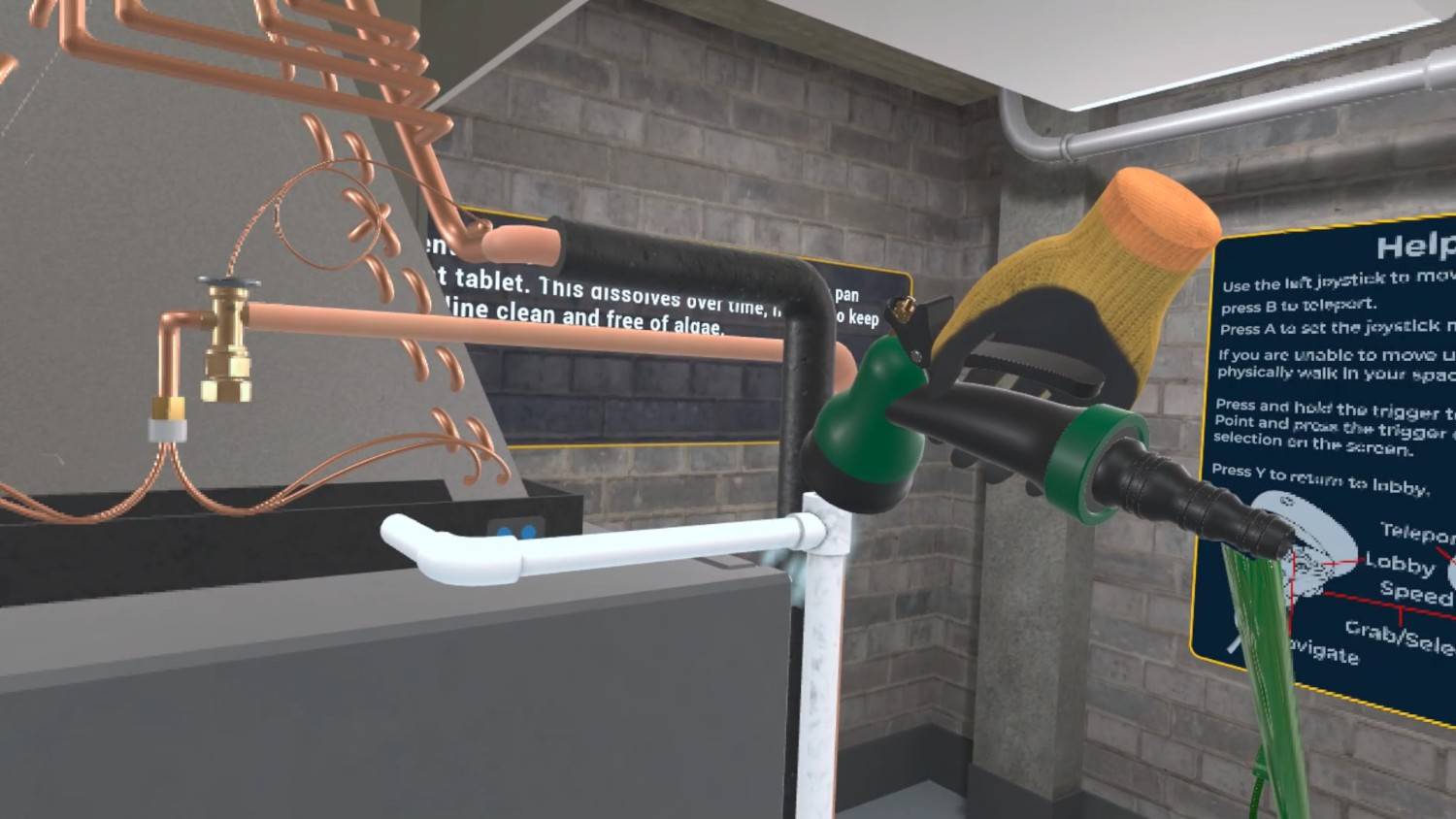
C) VR-Based HVAC Training
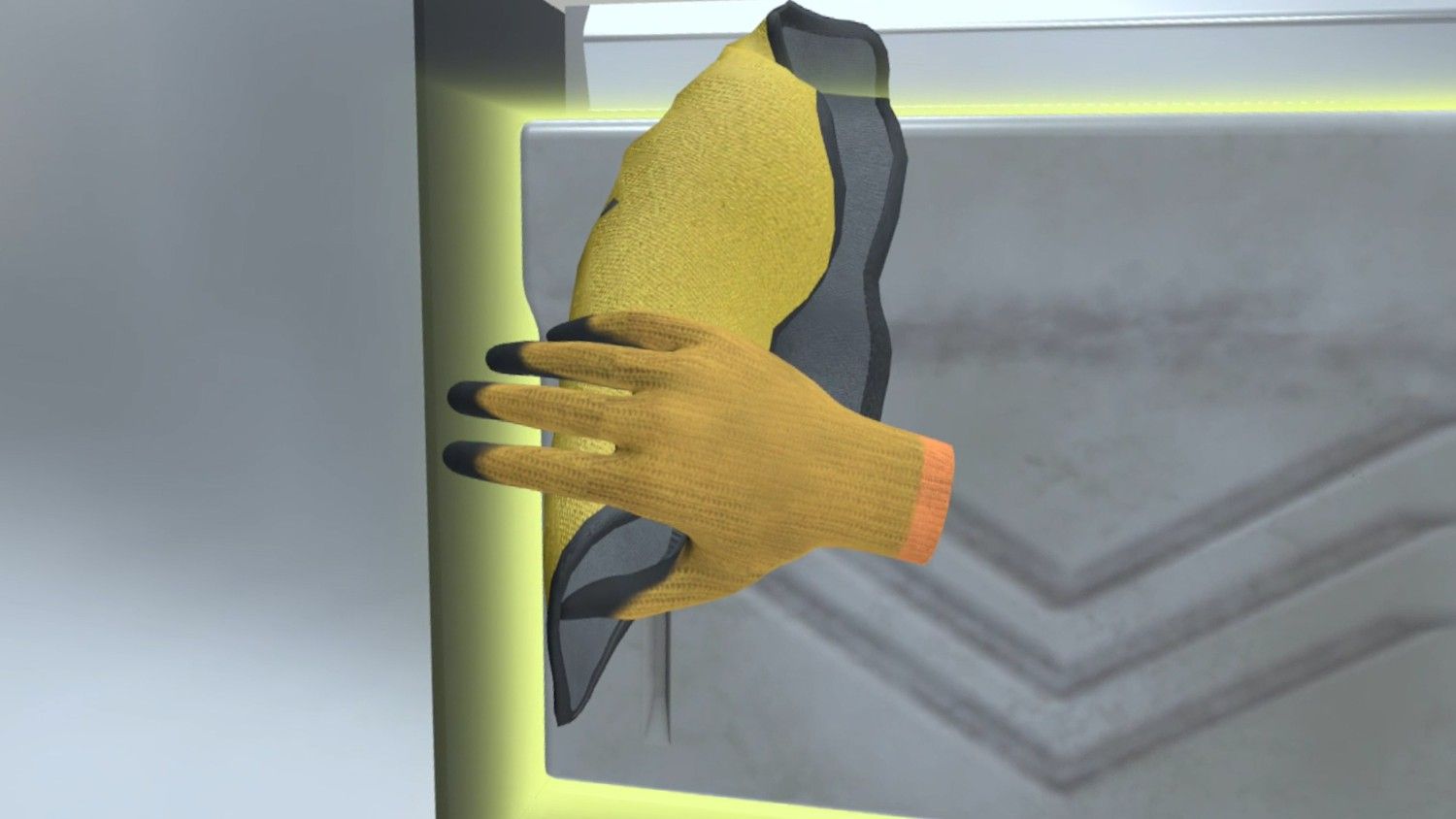
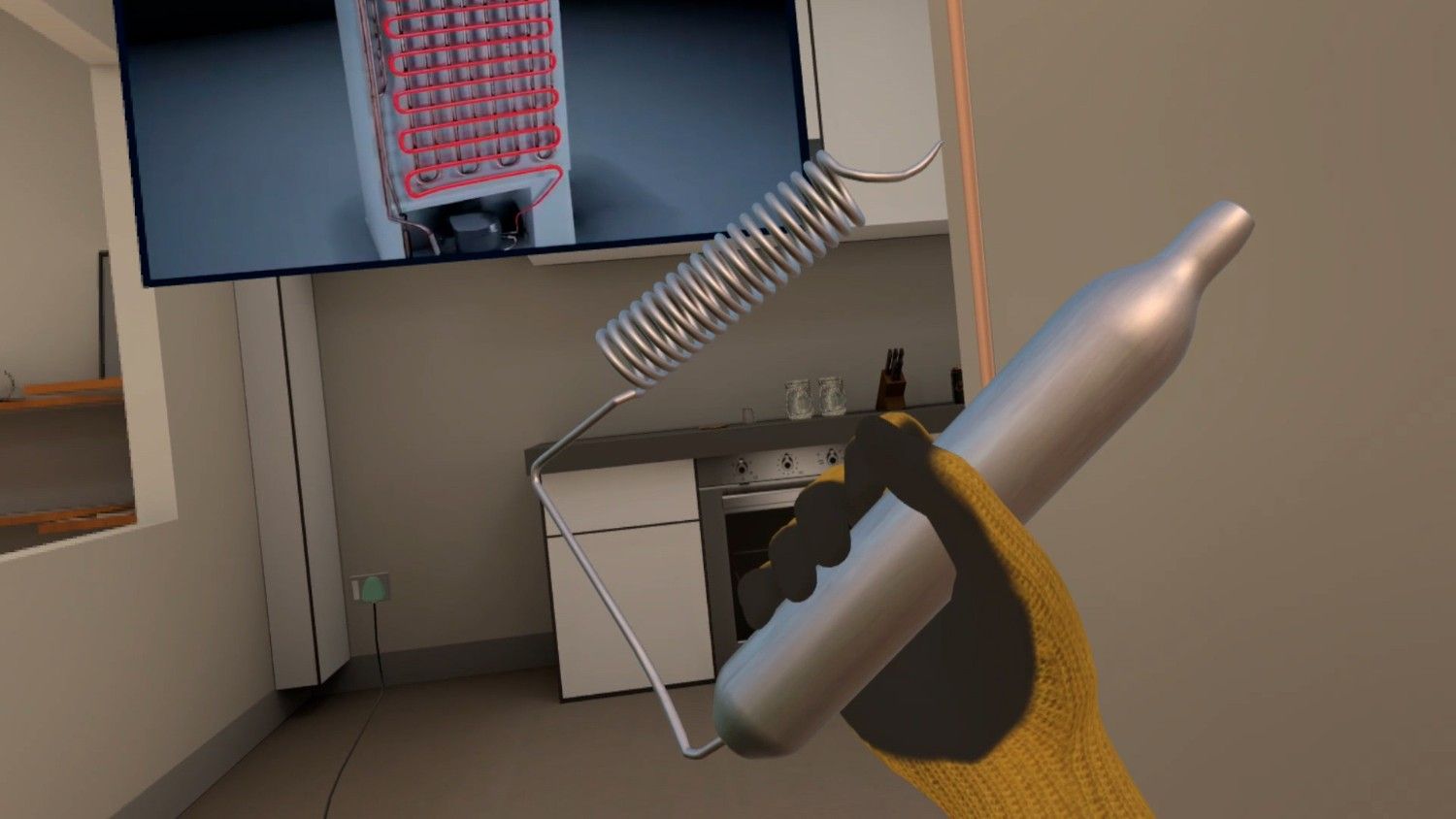
Virtual reality simulations allow learners to practice situations that are difficult to recreate safely, including rooftop equipment, confined space entry, and commercial climate control walkthroughs. VR enhances hands on experience but does not replace it.
D) Industry-Aligned HVAC Curriculum
Programs aligned with standards such as ACCA, ASHRAE, and NATE help prepare students for industry-recognized certifications. When evaluating a program, it’s useful to ask: Does the curriculum align with NATE certification requirements? Does it include EPA 608 exam preparation? If the answers are unclear, it may be worth comparing alternatives.
Students can build job-ready skills through an HVAC career training program with hands-on learning and certification preparation.
How HVAC Skills Translate Into Careers
The skills gained through HVAC training can lead to opportunities across residential, commercial, and industrial heating and cooling environments. Expertise in installation, diagnostics, electrical systems, refrigeration, controls, and preventive maintenance supports both entry level and advanced technical positions.
The table below shows how these competencies align with common career paths.
| Skill Learned | Career Application |
| HVAC Installation | HVAC Installer |
| Diagnostics & Troubleshooting | Service Technician |
| Electrical Troubleshooting | HVAC Maintenance Technician |
| Refrigeration Systems | Refrigeration Technician |
| HVAC Controls & BAS | Commercial HVAC Technician |
| Load Calculations | HVAC Design and Planning Support |
Graduates often move into roles such as Service Dispatcher, Install Apprentice, and Residential Service Technician. Developing in demand technical expertise can support long term professional growth throughout the heating and cooling industry.
See real career paths: HVAC Service Dispatcher success story and Install Apprentice journey.
HVAC Career Paths and Outcomes
HVAC careers include installation, maintenance, and repair occupations. Professional growth depends on certifications, hands on experience, specialization, and regional job demand.
| Role | Work Focus | Key Skills Required |
| Residential Service Technician | Residential HVAC system diagnostics and repair | Troubleshooting, refrigeration basics, customer communication |
| HVAC Installer | New system installation in residential or light commercial settings | Installation techniques, blueprint reading, ductwork assembly |
| Maintenance Technician | Preventive maintenance and system upkeep | Preventive servicing, electrical fundamentals, controls |
| Commercial HVAC Technician | Large-scale commercial HVAC systems | Building controls, BAS systems, load calculations, VRF systems |
| Refrigeration Specialist | Commercial and industrial refrigeration systems | Refrigeration cycle, EPA 608 knowledge, system servicing |
| Controls/BAS Technician | Building automation and control systems | BAS platforms, HVAC controls, electrical systems, ASHRAE-aligned concepts |
Demand for skilled professionals remains strong due to infrastructure growth, energy efficiency upgrades, facility modernization, and workforce replacement needs. Developing in demand technical expertise can support diverse opportunities and long term advancement throughout the heating and cooling industry.
Note: Compensation varies by location, employer, certifications, specialization, and experience.
HVAC Certifications That Strengthen Your Resume
- Industry recognized certifications validate technical expertise, improve credibility, and support long term career growth in the heating and cooling field.
- EPA Section 608 Universal Certification: Required for technicians who handle refrigerants in residential and commercial climate control equipment.
- NATE Certification: A respected HVAC credential covering air conditioning, heat pumps, gas heating, and refrigeration systems.
- ACCA Membership: Demonstrates commitment to industry standards and professional best practices.
- R 410A and R 32 Safety Training: Focuses on the safe handling of modern refrigerants used in heating and cooling equipment.
To understand the full certification path and how these credentials connect to HVAC career progression, see the Certified HVAC Technician Guide.
How to Choose an HVAC Training Program
Choosing the right HVAC training program is an important step toward building a successful career in the heating and cooling industry. Before enrolling, consider these key questions:
i) Does the course include EPA Section 608 Certification exam preparation? This credential is essential for technicians who handle refrigerants.
ii) How much hands-on lab training is included? Practical experience helps students develop real world HVAC skills.
iii) Does the curriculum cover heat pumps, VRF systems, and smart thermostats? Modern HVAC careers require knowledge of current technologies.
iv) Is the program aligned with NATE Certification or ACCA standards? Industry recognized standards can support certification and career growth.
v) What are the graduate outcomes and job placement results? Strong student outcomes can indicate program quality and workforce readiness.
Frequently Asked Questions
Q1) Do I need electrical knowledge before starting HVAC training?
No. Most technician education programs teach electrical fundamentals, including circuit theory, wiring, diagnostics, and component testing.
Q2) What is the difference between NATE Certification and EPA Section 608 Certification?
EPA Section 608 Certification is required for professionals who handle refrigerants, while NATE Certification is a voluntary credential that validates technical expertise in heating and cooling systems. Both can support long term professional growth.
Q3) Which HVAC skills are most important for getting hired?
Employers often look for troubleshooting, electrical diagnostics, refrigeration knowledge, preventive maintenance experience, and safety awareness. Strong problem solving abilities help technicians identify and resolve equipment issues efficiently.
Q4) Can HVAC training lead to long term career growth?
Yes. Technical education provides a strong foundation for advancement. With experience and additional credentials, professionals can move into specialized, supervisory, management, or business ownership roles.
Conclusion
HVAC training does more than teach technical skills. It prepares students for real careers. By combining hands-on practice, troubleshooting expertise, certification preparation, and modern HVAC technology training, students gain the confidence and qualifications employers value most.
Whether your goal is to become an HVAC installer, service technician, refrigeration specialist, or controls technician, quality education can help you build in demand expertise and prepare for a stable, rewarding, and long term career.
Are you ready to develop the knowledge and experience needed to succeed in the heating and cooling industry?