
Safe Wheelchair Transfer and Mobility Assistance


Credits : 0.4

About the Course:
Safe Wheelchair Transfer and Mobility Assistance is an essential patient mobility skill for Nursing Assistants working in hospitals, rehabilitation centers, long-term care facilities, and other healthcare environments. In this microcredential, learners are introduced to the purpose and clinical importance of safely transferring patients from bed to wheelchair while minimizing the risk of falls, injuries, and discomfort during patient movement procedures. Ready to build real patient care skills? Explore our online nursing assistant training course focused on safe transfers, mobility support, and patient safety.
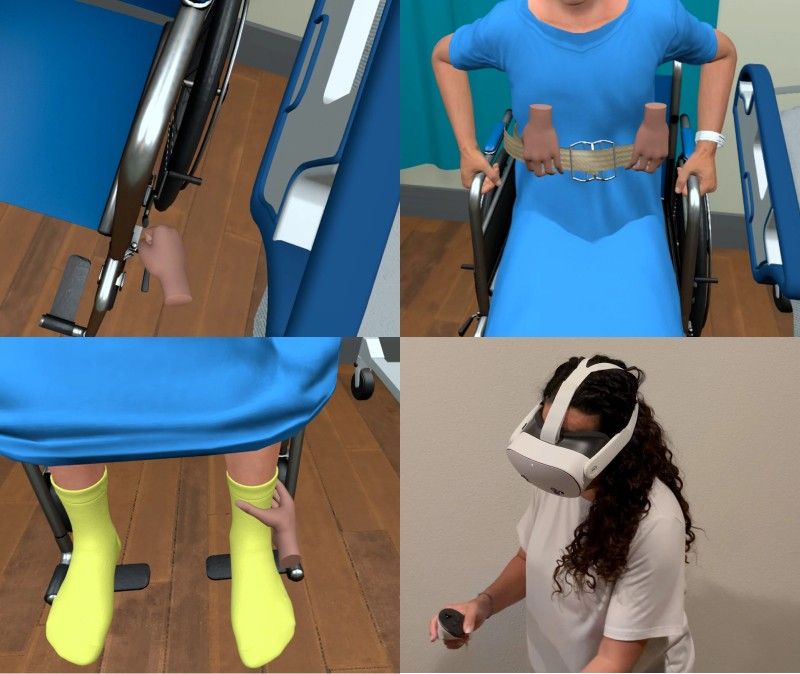
Through immersive VR simulations, learners gain hands-on experience performing wheelchair transfers while following proper patient communication protocols, privacy procedures, patient identification verification, wheelchair positioning requirements, transfer belt application, standing assistance techniques, pivot transfer methods, and safe wheelchair positioning procedures. The course emphasizes patient safety, proper body mechanics, secure transfer techniques, and maintaining patient comfort throughout the transfer process.
Learners will also practice identifying patient readiness for transfer, applying wheelchair brakes correctly, securing transfer belts properly, assisting patients during standing and pivot movements, positioning patients safely in the wheelchair, and completing the procedure according to established patient handling guidelines. The course highlights professionalism, infection prevention, patient communication, mobility assistance techniques, and adherence to healthcare safety standards essential in clinical settings.
Learning Objectives:
- Identify the purpose and importance of safe wheelchair transfer procedures in patient care.
- Understand patient communication, privacy protocols, and patient identification procedures before transfer.
- Demonstrate proper wheelchair positioning, brake application, and transfer belt placement techniques.
- Perform safe patient transfer from bed to wheelchair using correct standing and pivot transfer methods.
- Apply infection prevention, patient safety, and proper body mechanics during mobility assistance.
- Accurately assist patients with final wheelchair positioning and complete transfer according to established protocols.
Learners can continue building mobility support skills through guided patient ambulation training for walking assistance and fall prevention.
Course delivered through our LMS and accessible in both VR and web. Learn on the web anytime, or enjoy immersive VR training with your own Oculus VR headset.
Workforce Development

At ImmerseLearn, we prepare healthcare learners with essential patient mobility and safe handling skills required in modern healthcare environments. This microcredential develops competency in patient transfer procedures, wheelchair safety protocols, transfer belt application, patient communication, mobility assistance techniques, body mechanics, and patient safety procedures necessary for delivering safe and effective patient care.
By completing this microcredential, learners will gain practical knowledge and hands-on experience in assisting patients with wheelchair transfers using transfer belts. Learners will develop essential competencies in patient communication, wheelchair positioning, transfer belt application, standing assistance, pivot transfer techniques, patient safety procedures, infection prevention, and mobility assistance skills necessary to provide safe and effective patient handling in Nursing Assistant and allied health settings.
Want to understand how transfer skills fit into the full training pathway? Read our Nursing Assistant Training guide.