

HVAC Air Filter Replacement Procedures
The course emphasizes equipment safety, proper filter orientation, secure installation, cleanliness, and following established HVAC maintenance procedures.
Details
Credits: 0.3
ImmerseLearn Micro Skill Academy delivers VR skilled trades training and immersive simulations you can practice online. Explore short microcredentials in HVAC, plumbing, solar, EV, manufacturing, and healthcare. Build skills through VR, 3D practice environments, AI roleplay, and web-based modules, one Micro Skill at a time.
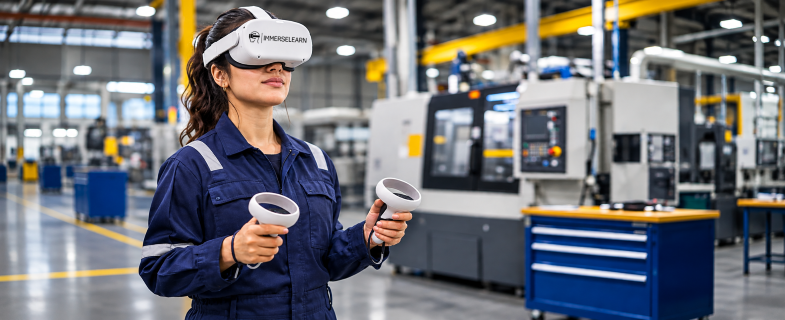
The course emphasizes equipment safety, proper filter orientation, secure installation, cleanliness, and following established HVAC maintenance procedures.

The course emphasizes safe work practices, proper component handling, connection awareness, protection of surrounding equipment, and following established HVAC replacement procedures.

Practice investigating poor cooling and ice formation in a residential air-conditioning system. Communicate with a homeowner, evaluate possible airflow and refrigerant-system problems, identify appropriate diagnostic checks, and recommend corrective actions based on verified findings.

Investigate walk-in cooler temperature issues, inspect controls, door seals, and airflow, prioritize food safety, and recommend corrective actions.

Practice investigating uneven cooling in a commercial office building. Communicate with a facility manager, assess airflow distribution, examine HVAC controls, and recommend corrective actions based on verified findings.

The course focuses on equipment identification, visual condition assessment, safe handling, defect recognition, and reporting inspection findings according to established HVAC workplace procedures.

The course emphasizes fire safety, appropriate PPE, heat management, protection of nearby components, and following established HVAC brazing procedures.

The course emphasizes careful inspection, tool and material condition awareness, safe handling, and identifying items that may require attention before use.

Through immersive training, learners develop practical knowledge needed to work safely and effectively with copper tubing in HVAC environments.

Through immersive VR simulations, they will practice checking tool condition, power cords, plugs, batteries, leads, probes, displays, and other components for visible damage or abnormal conditions.

Through immersive VR simulations, learners will practice inspecting outdoor unit components for damage, dirt, wear, loose connections, corrosion, and other abnormalities while following proper safety procedures.

The course emphasizes electrical safety, proper lockout/tagout procedures, equipment inspection, preventive maintenance, and safe system restoration.


